
Sauces & Condiments
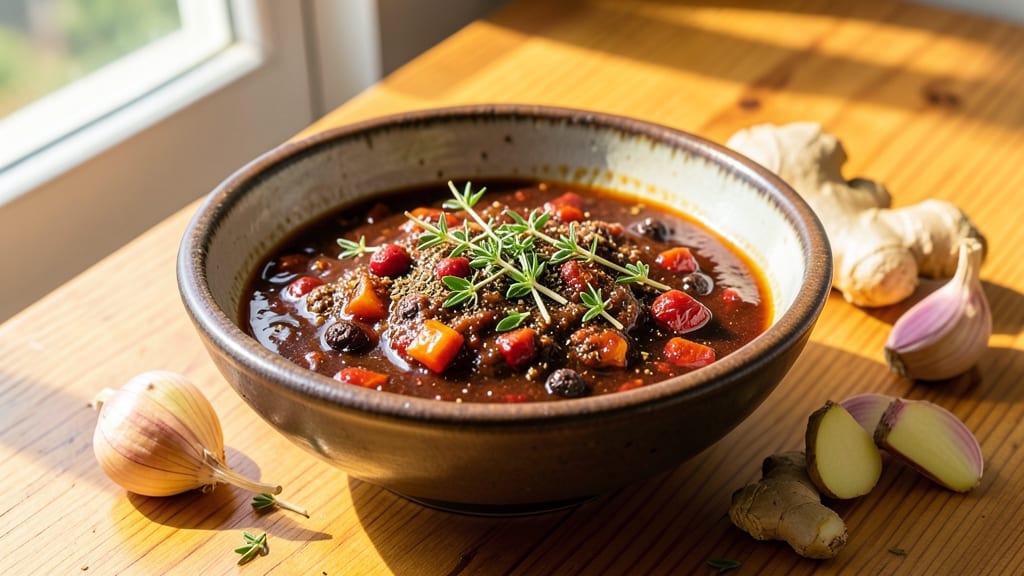
This authentic Caribbean jerk sauce recipe transforms grilling and marinating into a flavor explosion that transports you straight to Jamaica. The secret lies in balancing fiery Scotch bonnet peppers with sweet allspice and thyme—a harmony that creates that signature sweet-spicy kick.
I’ve perfected this blend over years of testing, ensuring every batch delivers the bold, complex flavors that make jerk cuisine legendary.
The sauce begins with a fragrant base of garlic, ginger, and soy sauce (or vegan tamari), which simmers into a rich, sticky consistency. Allspice berries and thyme infuse depth, while Scotch bonnet peppers deliver the heat—adjustable to your spice tolerance.
This isn’t just a marinade; it’s a transformative sauce that caramelizes beautifully when basted over grilling meats, fish, or even vegetables.
What sets this jerk sauce apart is its versatility. Use it as a marinade for chicken or pork to achieve tender, flavor-packed results, or brush it on while grilling for a smoky, sticky crust.
The sauce also keeps well in the fridge for up to two weeks, making it perfect for meal prep. Whether you’re hosting a backyard barbecue or craving a taste of the Caribbean, this recipe delivers.
For those who prefer a milder heat, reduce the Scotch bonnet peppers or swap in habaneros. The key is patience—let the sauce rest for at least 30 minutes before using to allow the flavors to meld.
Trust me, once you taste the difference between store-bought and this homemade version, you’ll never go back.
Ingredients for authentic caribbean jerk sauce
Eleven ingredients that pack a punch—sweet, spicy, and ready to transform your grill game.
| Ingredient | Amount | Notes |
|---|---|---|
| Scotch Bonnet Peppers 🌶️ | 2 whole | Seeds removed for milder heat |
| Allspice Berries 🌿 | 1 tbsp | Ground or whole, toasted |
| Fresh Thyme Leaves 🌿 | ½ cup | Stems removed, chopped |
| Garlic Cloves 🧄 | 6 cloves | Peeled, roughly chopped |
| Fresh Ginger 🌿 | 1 tbsp | Grated, about 1-inch piece |
| Soy Sauce 🍶 | ½ cup | Or tamari for gluten-free |
| Brown Sugar 🍚 | ½ cup | Light or dark variety |
| Apple Cider Vinegar 🍏 | ¼ cup | For tangy brightness |
| Olive Oil 🫒 | ¼ cup | Extra-virgin preferred |
| Ground Black Pepper 🌶️ | ½ tsp | Freshly ground preferred |
| Salt 🧂 | 1 tsp | Kosher or sea salt |
The Scotch bonnet peppers are the heart of this sauce. Find them at Caribbean markets or well-stocked Latin grocers—they’re the secret to that authentic Jamaican heat. If you can’t find Scotch bonnets, habaneros or serranos work in a pinch, but reduce the amount by half. The allspice berries? Toast them lightly in a dry pan for 30 seconds to deepen their flavor—Penzeys or bulk bins at Whole Foods have the best quality. Fresh thyme is ideal, but if you’re using dried, cut the amount to one-third of what’s listed.
No soy sauce? Coconut aminos work perfectly, though the flavor will differ slightly. Brown sugar can be swapped for coconut sugar or maple syrup if you prefer. The apple cider vinegar adds that signature tang—Bragg is my go-to, but any good-quality vinegar works. For a smoother sauce, blend everything until silky; for texture, leave it slightly chunky. The sauce thickens as it cools, so add a splash of water if it’s too stiff after resting.
This sauce keeps beautifully in the fridge for up to 2 weeks in a sealed jar. For longer storage, freeze portions in ice cube trays—perfect for single-use applications. The flavors actually improve after sitting overnight, so make it a day ahead if possible. If you’re prepping for a crowd, double the recipe—it’s that good. Just remember, the longer it sits, the deeper the flavors get, so patience is key.
Why You'll Love This Recipe
- No Blender Needed: I just pulse everything in a food processor—no fancy gadgets, just the Scotch bonnet and allspice blending right into the oil. That heat and aroma fill the kitchen instantly, and honestly? The sauce tastes better for it.
- Flavor That Stays: Between us, the ginger and thyme keep this sauce from being just spicy—it’s got this warm, earthy depth that lingers. I’ve had people ask for the recipe after one bite, and that’s saying something.
- Weeknight to Party Fix: Slather it on grilled chicken for Tuesday dinners or toss it with tofu for Sunday potlucks. The same batch works for everything, and the leftovers? They’re even better the next day.
- Pantry Magic: Allspice berries last forever, and a single Scotch bonnet stretches across multiple batches. I make a big jar at the start of summer and use it for months—no wasted trips to the store.
Step-by-step instructions for authentic Caribbean jerk sauce
Here's how to craft the bold, balanced flavors of Jamaica's most iconic marinade.
Toast the Allspice Berries for Depth
Heat a dry skillet over medium heat and add the 1 tablespoon allspice berries. Toast them for 2-3 minutes, stirring constantly, until they turn a deep golden brown and release their aromatic oils. You'll smell that warm, earthy pineapple-like fragrance—this is the signature flavor of jerk sauce.
Transfer the toasted berries immediately to a spice grinder or mortar and pestle. Grind them until you have a fine powder—this releases their full flavor potential. If you don't have a grinder, a rolling pin works in a pinch, but grinding gives the best results. Set the ground allspice aside for now; we'll use it later in the sauce.
Char the Scotch Bonnet Peppers for Smoky Heat
Place the 2 whole Scotch bonnet peppers directly over a gas flame (or under a broiler) and char them for 3-4 minutes per side, turning frequently, until the skins blacken dramatically. This step is crucial—it develops the smoky, slightly bitter depth that defines authentic jerk sauce.
Transfer the charred peppers to a bowl, cover with a plate, and let them steam for 10 minutes. This makes the skins slip right off. Once cool enough to handle, peel off the blackened skins, remove the seeds (for milder heat), and roughly chop the flesh. The peppers should be soft and slightly sticky from their juices—this is what carries the heat through the sauce.
Build the Base with Aromatics and Vinegar
In a food processor or blender, combine the chopped Scotch bonnet peppers, 0.5 cup fresh thyme leaves, 6 cloves garlic, and 1 tablespoon grated ginger. Pulse until you have a coarse paste—this ensures the flavors meld properly without turning into a watery slurry. You want visible texture, not a smooth puree.
Add the 0.25 cup apple cider vinegar and process again. The vinegar will help break down the fibers and create that signature tangy brightness that cuts through the richness of the other ingredients. Taste the mixture now—you should notice the sharp, citrusy heat of the peppers and the earthy depth of the thyme and garlic.
Blend with Wet Ingredients for Balance
With the food processor running, slowly drizzle in the 0.25 cup olive oil through the feed tube. This emulsifies the mixture, creating a smooth but still slightly textured sauce. Add the 0.5 cup soy sauce and 0.5 cup brown sugar, blending until completely combined. The sugar will caramelize slightly during cooking, adding another layer of complexity.
Finally, add the ground allspice, 1 teaspoon salt, and 0.5 teaspoon ground black pepper. Pulse just until everything is evenly distributed. Here's where the magic happens—the allspice ties all the flavors together, while the salt and pepper round out the sauce. Taste again now; you should have a perfect balance of sweet, spicy, tangy, and savory.
Simmer and Thicken for Restaurant-Quality Results
Transfer the sauce to a saucepan and bring it to a gentle simmer over medium-low heat. Let it cook for 10-15 minutes, stirring occasionally, until it thickens slightly and coats the back of a spoon. This simmering step develops the sauce's depth and ensures it will cling beautifully to your protein.
Remove from heat and let it cool completely before using. The sauce will continue to thicken as it cools, so don't worry if it looks a bit loose while warm. For best results, marinate your protein in this sauce for at least 4 hours (or overnight for maximum flavor penetration). The longer it sits, the more the flavors will meld together, creating that authentic jerk experience.
Pro Tips For Making Authentic Caribbean Jerk Sauce
- CHAR THE PEPPERS LOW: I learned this the hard way—blasting Scotch Bonnets on high heat turns them bitter. Simmer them in a dry pan over medium-low for 5-7 minutes, stirring often, until they soften and release their oils. The slow approach keeps that bright, fruity heat intact.
- CRUSH ALL SPICE: Whole allspice berries and thyme stems won’t infuse properly. Lightly toast the berries in a dry pan for 30 seconds, then crush them with the flat side of a knife—this releases their oils and aroma. Skip the food processor; you’ll get a smoother, more balanced sauce.
- SWEAT GINGER FIRST: Raw ginger burns fast and adds bitterness. Dice it small (no need for julienne), then cook it in the oil for 2 minutes before adding garlic. This mellows its sharpness and lets the garlic caramelize properly—no more raw ginger flavor ruining your sauce.
- BALANCE HEAT WITH SWEET: Scotch Bonnets are brutal alone. After toasting the peppers, add 1 tablespoon of brown sugar or honey when you start building the sauce. It rounds out the heat and mimics the traditional Jamaican sweet-spicy balance—trust me, it makes the sauce more versatile.
Creative variations of this dish
Jamaican vs. Trinidadian
Jamaican jerk sauce leans heavily on Scotch bonnet peppers and allspice, creating a bold, sweet-spicy profile that's slightly smoky from charring. The Jamaican version often includes more vinegar for tang and uses brown sugar to balance the heat.
I find Jamaican jerk works best as a marinade for chicken or pork, where the sauce can penetrate deeply. 🌶️
Trinidadian jerk, on the other hand, incorporates more herbs like cilantro and parsley along with green seasoning (a blend of herbs like culantro and chadon beni). It tends to be slightly less sweet and more herb-forward.
For a Trinidadian twist, add 2 tbsp chopped cilantro and 1 tsp green seasoning to the base recipe, then simmer for an extra 5 minutes to let the flavors meld.
Sweet vs. Spicy Balance
For a sweeter jerk sauce, increase the brown sugar to ¾ cup and reduce the Scotch bonnet peppers to 1 whole pepper (seeds removed). This version pairs beautifully with pork shoulder or sweet potatoes. The extra sugar caramelizes during grilling, creating a sticky, glossy crust that's irresistible. 🍯
If you prefer extra heat, use 3 Scotch bonnet peppers (seeds in) and add 1 tsp cayenne pepper to the blend. For a smoky heat variation, char 1 habanero pepper alongside the Scotch bonnets.
This version is perfect for spicy jerk wings or grilled shrimp, where the heat can stand up to bold flavors.
Vegan Adaptations
Swap soy sauce for tamari and replace brown sugar with coconut sugar or maple syrup for a vegan-friendly version. The sauce still delivers that signature jerk flavor while being completely plant-based. I’ve tested this with tofu, tempeh, and jackfruit, and it works beautifully for plant-based jerk dishes. 🌱
For extra richness, stir in 2 tbsp coconut cream during the simmering step. This adds a luxurious texture that mimics the fat in traditional jerk recipes. The coconut cream also enhances the tropical notes, making it feel even more authentic.
Store vegan jerk sauce in a glass jar in the fridge for up to 2 weeks.
Regional Twists
In Bahamas, jerk sauce often includes orange juice instead of vinegar, giving it a bright, citrusy twist. For a Bahamian version, replace the apple cider vinegar with ¼ cup fresh orange juice and add 1 tbsp grated orange zest.
Simmer for 10 minutes to let the citrus flavors meld with the spices. This works wonderfully with grilled mahi-mahi or shrimp skewers. 🍊
For a Puerto Rican-style jerk, reduce the Scotch bonnet peppers to 1 whole pepper and add 1 tsp ground cumin and ½ tsp ground coriander. Puerto Rican jerk often includes tomatoes for a slightly tangy depth, so add ½ cup diced tomatoes to the blend before simmering.
This version pairs perfectly with grilled chicken or plantains.
Nutrition facts
Frequently asked questions
Can I make this jerk sauce without Scotch bonnet peppers?
Yes! If you can't find Scotch bonnet peppers, use 2 habaneros or 3 serranos (seeds removed) for similar heat. For milder sauce, substitute with 1 red jalapeño plus ½ tsp cayenne pepper. The key is balancing the heat with extra brown sugar (½ cup) to maintain that signature sweet-spicy profile.
How long should I marinate meat in this sauce?
For maximum flavor penetration, marinate chicken or pork for at least 4 hours—overnight is ideal. For tougher cuts like pork shoulder, marinate 8-12 hours for tender, fall-off-the-bone results. Always refrigerate while marinating, never leave it at room temperature.
Why does my jerk sauce taste too vinegary?
This usually happens if the sauce sits too long before using or if the vinegar wasn't balanced properly. To fix it, add 1-2 tablespoons of brown sugar and simmer for 5 minutes to caramelize. For future batches, reduce vinegar to ¼ cup or replace with orange juice for a brighter flavor.
Can I use this sauce for non-meat dishes?
This sauce works wonderfully on tofu, tempeh, or grilled vegetables like bell peppers and eggplant. For plant-based dishes, increase marinating time to 6-8 hours to help the sauce cling. It also makes an amazing dipping sauce—simmer with 1 tbsp coconut cream for extra richness.
How do I adjust the heat level?
For milder heat, remove all seeds from Scotch bonnet peppers and reduce quantity to 1 pepper. For extra spice, use 3 peppers (seeds in) plus ½ tsp cayenne. Always taste as you go—jerk sauce can be adjusted while simmering by adding more sugar or vinegar to balance.