Desserts
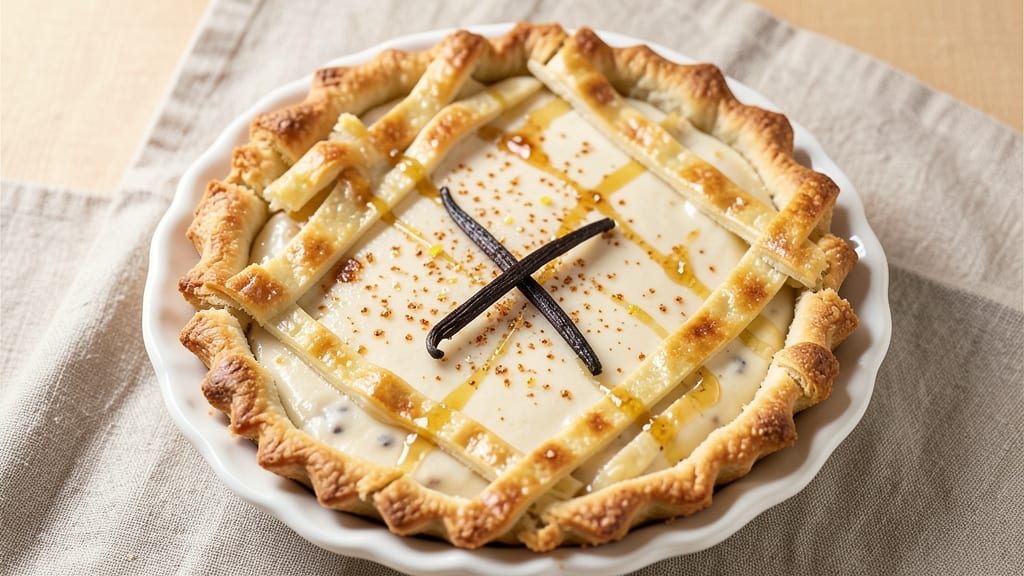
This bean custard pie delivers a perfect balance of crispy golden crust and velvety vanilla bean filling that tastes like a bakery secret.
The secret lies in the custard—infused with real vanilla bean and enriched with cream, it creates a silky texture that's impossibly smooth yet sturdy enough to hold its shape.
I've perfected this recipe over years of testing, ensuring the crust stays perfectly crisp while the custard remains luscious and never grainy.
The beauty of this dessert is its simplicity: just a few pantry staples come together to create something that looks and tastes like it took hours to prepare.
The crust gets its signature flakiness from cold butter cut into the flour, while the custard benefits from a slow, gentle cooking process that develops its signature smoothness.
What makes this recipe truly special is how the warm, spiced crust contrasts with the cool, creamy filling—each bite is a perfect harmony of textures.
By the time it emerges from the oven, you'll have a pie with a crispy, golden-brown crust that shatters slightly at the edges, encasing that rich, vanilla-infused custard that's so smooth it almost melts on your tongue.
The aroma alone will have everyone gathering in the kitchen, and the first slice will disappear faster than you can say "second helping." This is the kind of dessert that feels indulgent yet satisfies without being overly sweet.
Perfect for special occasions, holiday gatherings, or when you simply want to impress with a showstopping dessert that's surprisingly easy to make. The recipe yields a 9-inch pie, but you can easily scale it up for larger crowds.
Let's get started on creating this elegant yet approachable treat that's sure to become a family favorite.
Ingredients for bean custard pie
Pantry staples meet bakery magic—just 13 ingredients for a pie that looks like it came from a fancy dessert case.
| Ingredient | Amount | Notes |
|---|---|---|
| All-Purpose Flour 🌾 | 2 ½ cups | Sifted for flaky crust |
| Cold Unsalted Butter 🧈 | 1 cup | Cut into small cubes |
| Granulated Sugar 🍚 | ¼ cup | Plus 2 tbsp for sprinkling |
| Vanilla Bean 🌿 | 1 whole | Seeds scraped for infusion |
| Heavy Cream 🥛 | 2 cups | Full-fat for richness |
| Large Eggs 🥚 | 4 whole | Room temperature |
| Granulated Sugar 🍚 | ¾ cup | For custard sweetness |
| All-Purpose Flour 🌾 | ¼ cup | For custard thickening |
| Salt 🧂 | ½ tsp | Fine sea salt |
| Ground Cinnamon 🌶️ | ½ tsp | Optional for warmth |
| Vanilla Extract 🍯 | 1 tbsp | Pure vanilla for depth |
| Milk 🥛 | 1 cup | Whole milk preferred |
| Lemon Juice 🍋 | 1 tbsp | Freshly squeezed |
The butter is non-negotiable—cold cubes create that signature flaky crust. Kirkland Signature or Land O'Lakes are my go-tos, but any unsalted butter works as long as it's cold. For the vanilla bean, Madagascar beans have the best flavor, but any whole bean will do—just scrape out those tiny black seeds. The heavy cream? Full-fat is a must—none of that low-fat nonsense here. If you're short on time, pre-sifted flour from the grocery store works fine, but sifting gives you that perfect texture. And trust me, the extra 2 tbsp of sugar sprinkled on top before baking makes all the difference for that golden crust.
No vanilla bean? 2 tbsp pure vanilla extract works in a pinch, but it won't give you that same depth of flavor. Short on heavy cream? Half-and-half with a splash of milk gets you close, though it won't be quite as rich. The custard can handle a bit of extra flour if you're worried about it being too thin—just start with the full 0.25 cup and adjust as you go. For the crust, if you don't have a food processor, grate the butter into the flour with a cheese grater—it's a bit more work but works perfectly. And if you're feeling fancy, add a pinch of cinnamon to the crust for that extra warmth that pairs beautifully with the vanilla.
The crust dough needs to rest for at least 30 minutes before rolling—this makes all the difference for those flaky layers. Wrap it tightly in plastic and keep it in the fridge. The custard can be made a day ahead and stored in the fridge, but bring it to room temperature before pouring into the crust. This pie holds up beautifully—3 days in the fridge if covered tightly, and it actually tastes better the second day. For serving, a dusting of powdered sugar or a dollop of whipped cream takes it to the next level. And if you're making it ahead for a party, assemble the pie and refrigerate it overnight—it'll thank you with even more flavor development.
Why You'll Love This Recipe
- No-Fuss Assembly: I swear, this pie comes together faster than my coffee order at the drive-thru. Cold butter cut into flour? Five minutes max. The crust’s flaky but not fussy—no rolling pins or stress required.
- Vanilla Cream Dream: That split vanilla bean in the custard? Chef’s kiss. The heavy cream gives it a silky richness while the sugar caramelizes just enough to make every bite taste like dessert—even when it’s breakfast.
- Weekend or Weeknight: Pack it for picnics, slice it for brunch, or freeze slices for lazy mornings. Honestly, I’ve served it at family dinners and potlucks—no one ever asks what it is, just where to get more.
- Budget Buster: Flour, butter, sugar—these are pantry staples that won’t break the bank. A single pie feeds six, and leftovers reheat beautifully. (Yes, even on a Tuesday night.)
Step-by-step instructions for bean custard pie
Here's how to create a dreamy vanilla bean custard with a golden, shatteringly crisp crust—every layer perfect.
Prepare the Crust with Cold Butter
In a large bowl, combine the 2.5 cups all-purpose flour and 0.25 cup granulated sugar. Cut in the 1 cup cold unsalted butter using a pastry cutter or your fingers until the mixture resembles coarse crumbs with pea-sized butter pieces. This cold butter creates flaky layers when baked.
Add 0.5 teaspoon salt and 0.5 teaspoon ground cinnamon (if using) and mix gently. Sprinkle 2 tablespoons cold water over the mixture and toss lightly with a fork until the dough just begins to come together. Avoid overmixing—just enough to hold when pressed.
Shape and Chill the Dough
Divide the dough in half and flatten each piece into a 6-inch disk. Wrap each in plastic wrap and refrigerate for at least 1 hour (or up to 24 hours). Chilling relaxes the gluten and prevents shrinking during baking, giving you that perfect crispy, golden crust we want.
Preheat your oven to 375°F while the dough chills. Roll out one disk on a floured surface to fit a 9-inch pie dish, leaving a ½-inch overhang. Transfer carefully to the dish and trim the edges. Prick the bottom all over with a fork to prevent puffing.
Blind-Bake the Crust
Line the chilled crust with parchment paper and fill it completely with pie weights or dried beans. Bake for 15 minutes at 375°F. Remove the weights and bake for another 10 minutes until the edges are light golden brown and the bottom is just starting to crisp.
Here's the thing—don't rush this step. The crust needs to be fully baked before adding the custard, or it'll turn soggy. If the bottom looks pale after 10 minutes, bake another 2-3 minutes until set. Let it cool slightly while you prepare the filling.
Make the Silky Vanilla Custard
In a medium saucepan, combine the 2 cups heavy cream, 1 cup milk, 0.75 cup granulated sugar, and the scraped seeds from the 1 whole vanilla bean. Warm over medium heat until steaming but not boiling—just until small bubbles form around the edges (150°F internal temperature). Remove from heat and let steep for 10 minutes.
In a separate bowl, whisk together the 4 whole large eggs, 0.25 cup all-purpose flour, 1 tablespoon vanilla extract, and 1 tablespoon lemon juice. Slowly whisk in the warm cream mixture, then strain through a fine-mesh sieve into a clean bowl to remove any vanilla bean bits.
Assemble and Bake to Perfection
Pour the custard through a fine-mesh sieve into the pre-baked crust. The filling should come about ¼ inch from the top edge—any higher and it might overflow. Place the pie on a baking sheet (to catch spills) and bake at 350°F for 40-45 minutes.
You'll know it's done when the custard is just set—the center should still wiggle slightly when gently shaken, but the edges should be set. Let it cool completely at room temperature, then refrigerate for at least 4 hours (overnight is best) to let the flavors meld and the custard thicken to that perfect silky texture. Serve chilled with whipped cream if desired.
Pro Tips For Making Bean Custard Pie
- Cut Butter in Cold: DESCRIPTION: Take that butter straight from the fridge—no thawing, no softening—and use a pastry cutter or your fingers to work it into the flour until it resembles coarse crumbs, not pea-sized bits. I learned this the hard way after making a pie crust that spread like a pancake into the oven. The goal? Tiny, cold butter pockets that melt into flaky layers, not a sad, greasy mess.
- Scrape the Vanilla: DESCRIPTION: Don’t just drop in the whole bean—split it lengthwise, scrape out every last bit of those black seeds with a knife, and toss the scraped bean into the custard too. That fiber adds texture, and you’ll miss out on half the flavor if you skip it. (Yes, even if you’re impatient like me.)
- Temper the Cream Slowly: DESCRIPTION: When mixing the hot custard with the heavy cream, drizzle the cream into the custard in a thin, steady stream while whisking like your life depends on it. Dumping it all at once? You’re asking for scrambled eggs in your pie. The cream needs to warm gradually to avoid curdling—trust the process.
- Blind-Bake the Crust: DESCRIPTION: Skip the raw egg wash and blind-bake that crust for 15 minutes with pie weights or dried beans before adding the custard. This guarantees a crisp base that won’t turn soggy when the creamy filling steams. (Your future self will thank you for not cutting corners here.)
Common mistakes when making this dish
Overmixing the Dough
I can't stress this enough: overmixing the crust dough is the fastest way to ruin that perfect flaky texture. Once you add the 2 tablespoons cold water, mix just until the dough clumps together—about 10-12 strokes with a fork.
Overmixing develops gluten, which makes the crust tough instead of tender. I've seen home cooks turn the dough into a sticky mess by kneading it like bread dough. 🧂
Skipping the Chill Time
If you rush the 1-hour chill of the crust dough, it will shrink dramatically during baking, leaving you with a messy, uneven pie. The cold butter needs time to firm up and relax the gluten structure.
Pro tip: I always set a timer and make the custard while the dough chills—it saves time overall. Trust me, that extra hour makes all the difference for a crisp, golden crust. ⏰
Underbaking the Crust
Many beginners stop baking the crust too soon, thinking it's done just because the edges are golden. The bottom must be fully baked before adding custard, or it'll turn soggy. I've had pies where the custard pooled at the bottom because the crust wasn't set enough.
Bake until the bottom is lightly golden and firm to the touch—about 25 minutes total with weights. 🔥
Boiling the Custard
Heating the cream mixture too aggressively causes the eggs to scramble, creating a grainy custard instead of that silky texture we want. Keep the heat at medium-low and remove it as soon as you see small bubbles around the edges (150°F).
I once forgot and let it boil—ended up with a lumpy mess. Always use a thermometer if you're unsure. 🌡️
Not Using a Sieve
Straining the custard through a fine-mesh sieve removes any vanilla bean bits and creates an ultra-smooth texture. I've seen people skip this step and end up with custard that's slightly gritty.
It takes 30 seconds but makes a world of difference. If you don't have a sieve, cheesecloth works in a pinch. 🧀
Overfilling the Crust
Filling the crust to the very top risks overflowing during baking, creating a messy kitchen and potentially a burnt top. Leave at least ¼ inch** of space at the edges. I've had custard spill over and create a sticky mess that took forever to clean.
If you're worried about it not looking full, chill the pie before serving—the custard will puff slightly as it cools. 🍰
Nutrition facts
Frequently asked questions about bean custard pie
Can I make this pie without a vanilla bean?
Yes! While a whole vanilla bean adds depth, you can substitute with 2 tablespoons pure vanilla extract for the same flavor profile. For extra richness, add a pinch of cinnamon to the custard. The texture will still be silky—just slightly less complex in aroma.
How do I fix a cracked custard top?
Cracked tops happen when the custard sets unevenly. If it occurs, broil the pie for 1-2 minutes at 350°F to crisp the top, then chill before serving. For prevention, ensure your custard is just set (edges firm, center slightly jiggly) before removing from the oven.
Can I use this recipe for a mini pie?
Scale the recipe down by 75% for a 6-inch pie or 50% for a 4-inch tart. Bake times will be shorter: 30-35 minutes for mini pies. Use a pie ring or springform pan for easy removal. The custard-to-crust ratio remains the same for perfect texture.
Why is my custard grainy?
Grainy custard usually means the eggs cooked too quickly. Always temper the eggs by slowly whisking in the warm cream mixture, and never let the custard boil. For extra silkiness, strain through a fine-mesh sieve before baking. If it's already grainy, blend briefly with an immersion blender for a smoother finish.
How long can I store this pie?
This pie stays fresh for 3 days in the fridge when properly stored in an airtight container. For longer storage, freeze the whole pie (unserved) for up to 2 months. Thaw overnight in the fridge before serving. The custard actually improves in flavor after 24 hours of chilling!