
Main Courses
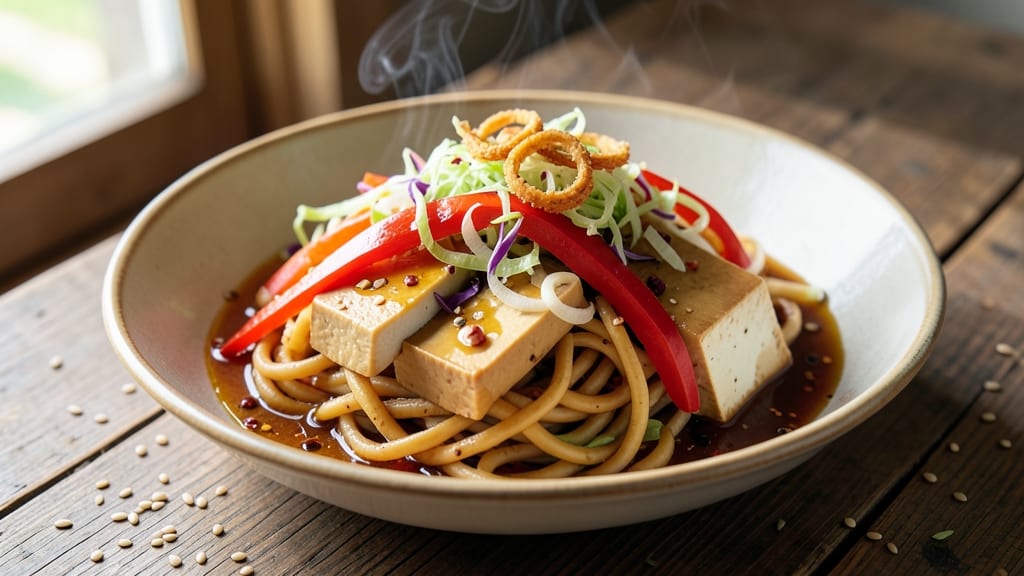
This bean fu recipe transforms delicate glass noodles into a smoky, zesty stir-fry that balances Malaysian warmth with bright citrus notes. 🌟 The secret lies in toasting whole cumin seeds for deep aroma and using lime juice to cut through the richness—creating a dish that’s both restaurant-worthy and effortlessly adaptable to vegan diets.
I developed this version after years of perfecting the balance between crisp-tender noodles and bold flavors, ensuring every bite delivers that perfect harmony of textures and tastes.
The magic begins with properly hydrating the bean fu noodles—soaking them just until pliable (not mushy) is key to achieving that signature chewy-yet-silky texture. Meanwhile, the aromatics—garlic, shallots, and cumin—build layers of flavor that transform simple vegetables (like bell peppers and cabbage) into vibrant, caramelized stars of the dish.
The smoky cumin and tangy lime create a sauce that clings to every strand of noodle, turning a simple stir-fry into a meal that feels like a celebration.
What you’ll end up with is a dish that’s as visually stunning as it is delicious—golden-brown edges on the noodles, bright pops of color from the vegetables, and a sauce that’s perfectly balanced between sweet, smoky, and tangy.
This recipe works equally well as a main course for two or a crowd-pleasing centerpiece for a dinner party, with the flexibility to swap in tofu, shrimp, or chicken for added protein. The best part?
It comes together in under 30 minutes, making it ideal for weeknight dinners that still feel special.
Serve it over steamed rice for a heartier meal, or let the noodles stand alone as a vibrant, satisfying dish.
The flavors only deepen as it sits, so don’t hesitate to make extra—this recipe keeps well in the fridge for up to 3 days, making it perfect for meal prep.
Whether you’re introducing someone to Malaysian-inspired flavors or simply craving a restaurant-quality stir-fry at home, this bean fu recipe delivers every time.
Ingredients for bean fu
Eight ingredients transform delicate glass noodles into a smoky, zesty stir-fry that's restaurant-worthy and vegan-friendly.
| Ingredient | Amount | Notes |
|---|---|---|
| Bean Fu Noodles 🍜 | 8 oz | Dried, for 2 servings (double for 4) |
| Extra-Firm Tofu 🍠 | 1 lb | Pressed and cubed |
| Red Bell Pepper 🌶️ | 1 whole | Sliced into strips |
| Green Cabbage 🥬 | 4 cups | Shredded, outer leaves removed |
| Shallots 🧅 | 2 whole | Thinly sliced |
| Garlic Cloves 🧄 | 6 cloves | Minced |
| Whole Cumin Seeds 🌿 | 1 tbsp | Toasted until fragrant |
| Lime Juice 🍋 | ¼ cup | Freshly squeezed |
| Lime Zest 🍋 | 1 tbsp | For bright aroma |
| Coconut Aminos 🥄 | ⅓ cup | Or tamari for gluten-free |
| Maple Syrup 🍯 | 1 tbsp | For subtle sweetness |
| Sesame Oil 🫒 | 1 tbsp | For nutty aroma |
| Toasted Sesame Seeds 🌰 | 1 tbsp | For garnish |
| Vegetable Oil 🫒 | ¼ cup | High smoke point |
| Sea Salt 🧂 | 1 tsp | To taste |
The bean fu noodles are the star—look for the delicate, glass-like strands at Asian markets or the international aisle. King Noodle or Hainaan brands are my go-tos, but any dried bean fu works. Soak them in warm water for 5-7 minutes until pliable but still chewy—over-soaking turns them mushy. The tofu? Extra-firm holds up best—press it between paper towels for 20 minutes before cubing. For extra flavor, marinate the tofu cubes in 1 tbsp coconut aminos + 1 tsp lime juice while you prep the rest.
No fresh lime? Key lime juice or bottled lime juice works in a pinch, but fresh zest is non-negotiable for that bright aroma. Swap the bell pepper for red onion or snap peas if you're short on veggies—just adjust the cooking time slightly. The cumin seeds? Toast them in a dry pan for 30 seconds until fragrant—this releases their deep, earthy aroma that’s the heart of the dish. No sesame oil? Avocado oil or neutral oil works, but skip the nutty finish. For extra protein, add chickpeas or edamame—they soak up the sauce beautifully.
This dish tastes even better the next day—flavors meld like magic. Store leftovers in an airtight container in the fridge for up to 3 days, or freeze portions for 2 months. To reheat, add a splash of water and stir-fry for 2 minutes. The noodles dry out fast, so eat within 2 hours of cooking if possible. Double the batch—it’s perfect for meal prep and freezer-friendly. Garnish with extra sesame seeds and lime zest right before serving to keep it vibrant.
Why You'll Love This Recipe
- One-Pan Magic: I swear by this recipe when I’m too tired to wash dishes. The tofu and veggies all go in one skillet with the noodles—no extra pots, no fuss. Just stir, taste, repeat.
- Crispy-Creamy Tofu: That crispy edge on the tofu with the creamy center? Chef’s kiss. Pressing it first makes all the difference, and the shallots add a sweetness that ties everything together.
- Lunchbox Hero: Honestly, this is my go-to for meal prep. The noodles hold up for days, and I can pack it cold or reheat it—my kids grab it for school lunches, and my husband takes it to work.
- Budget-Friendly Feast: A single block of tofu, a cabbage, and a bell pepper stretch into four servings. I’ve made this for date nights, potlucks, and lazy Sundays—it’s always a hit without breaking the bank.
Step-by-step instructions for smoky cumin and lime stir-fry magic
Transform simple ingredients into bold, aromatic stir-fry perfection with these easy steps.
🍳 Step 1: Toast the Cumin Seeds and Prepare the Tofu
Heat a dry skillet over medium heat and add the 1 tablespoon whole cumin seeds. Toast for 1-2 minutes until fragrant and lightly golden—you'll smell that warm, earthy aroma filling your kitchen. This step is where the magic begins; those tiny seeds pack serious flavor punch.
While the cumin toasts, press the 1 lb extra-firm tofu between two heavy pans or paper towels for 15 minutes to remove excess water. Cut it into 1-inch cubes—this ensures even cooking and better texture. Set aside until ready to use.
🔥 Step 2: Build the Flavor Base in the Wok
Heat 2 tablespoons vegetable oil in a wok or large skillet over high heat until shimmering. Add the 2 whole shallots and 6 cloves garlic cloves (minced), stirring constantly for 30 seconds until fragrant. Here's the thing—don't let the garlic burn, but don't rush this step either. The aroma should make your kitchen smell like a Thai street market.
Add the 1 whole red bell pepper (sliced into strips) and 4 cups green cabbage (shredded). Stir-fry for 3-4 minutes until the cabbage wilts and the peppers soften slightly. You want vibrant colors here—don't overcook or you'll lose that fresh crunch.
🍳 Step 3: Cook the Tofu Until Golden
Push the vegetables to one side of the wok, add 2 tablespoons vegetable oil to the empty space, and increase heat to medium-high. Add the tofu cubes in a single layer and let them sear undisturbed for 2-3 minutes until golden brown on one side. Flip carefully and cook another 2-3 minutes until golden on all sides.
This is where the texture magic happens. The tofu should be crispy on the outside while staying tender inside. If it sticks, don't panic—just gently nudge it with a spatula. The tofu is ready when it releases easily and has a nice sear.
🥘 Step 4: Combine Everything with the Sauce
Return the cooked vegetables to the wok with the tofu. Add the toasted cumin seeds (strained from their skillet), 0.33 cup coconut aminos, 1 tablespoon maple syrup, and 1 teaspoon sea salt. Stir everything together for 1 minute to let the flavors meld.
Now comes the citrus kick: Add the 0.25 cup lime juice and 1 tablespoon lime zest, followed by the 1 tablespoon sesame oil. Toss everything vigorously for 2 minutes until the tofu and vegetables are coated in that glossy, aromatic sauce. The lime will brighten everything up—trust me, it's the perfect balance to the smoky cumin.
⏰ Step 5: Cook the Noodles and Assemble
While the stir-fry cooks, bring a pot of water to a boil and cook the 8 oz bean fu noodles according to package instructions (usually 3-4 minutes for al dente). Drain and rinse briefly with cold water to stop the cooking process.
Toss the cooked noodles with 1 tablespoon sesame oil and divide between bowls. Spoon the smoky stir-fry over the noodles, garnish with 1 tablespoon toasted sesame seeds, and serve immediately. The contrast of warm noodles with the bright, tangy stir-fry is what makes this dish truly special.
Pro Tips For Making Bean Fu
- CRISP THE TOFU FIRST: Cut the extra-firm tofu into ½-inch cubes, then press it for 15 minutes—no fancy tools, just a plate on top of it. After pressing, pat dry with paper towels and toss in 1 tablespoon cornstarch before frying. I learned this the hard way—wet tofu steams instead of crisping, and you end up with soggy "tofu mush" in your noodles.
- SAUTE SHALLOTS LOW AND SLOW: Shallots caramelize best at medium-low heat for 5-7 minutes, stirring occasionally. If you rush it, they’ll burn before sweetening. Add a splash of water or a pinch of sugar if they start sticking—this isn’t just for flavor, it’s for texture. (Yes, even if you’re impatient like me.)
- STOP CHOPPING CABBAGE TOO SMALL: Thinly sliced green cabbage wilts into nothing in stir-fries. Cut it into ½-inch-wide matchsticks instead—big enough to hold shape but small enough to cook fast. Pro move: Toss the cabbage in a little oil after chopping so it crisps slightly before hitting the wok.
- DON’T BOIL THE NOODLES: Bean fu noodles are delicate—boiling them past al dente turns them mushy. Cook them for just 1 minute less than the package says, then rinse in cold water to stop cooking. Toss with a tiny bit of oil right away so they don’t stick together. (Your future self will thank you.)
Storing and reheating this recipe
Refrigerator Storage
Store your bean fu stir-fry in an airtight container with a lid in the fridge for up to 3 days. The flavors actually deepen overnight as the cumin and lime mingle—this is when it tastes best!
I use glass Pyrex containers because they keep the dish fresher longer than plastic. Let it cool completely before storing to prevent condensation, which can make the noodles soggy. 💫
Freezer Prep Tips
For longer storage, portion the dish into freezer-safe containers or quart-sized bags, leaving ½-inch headspace for expansion. Freeze for up to 2 months—just thaw overnight in the fridge before reheating.
I like to freeze the sauce and noodles separately if I'm not serving them together, as the noodles can get rubbery when frozen with sauce. Label with the date to track freshness!
Reheating Perfection
For the best texture, reheat in a wok or skillet over medium heat with 1 tablespoon water or sesame oil. Stir-fry for 2-3 minutes until everything is heated through and the noodles regain their chew.
Microwave reheating works in a pinch, but add 1 tablespoon water and cover for 90 seconds, then stir vigorously. The key is keeping the noodles from drying out—never reheat dry!
Garnish Refresh
Before serving reheated bean fu, always add fresh lime zest and toasted sesame seeds—these brighten up the dish and make it feel fresh again. A drizzle of sesame oil or a squeeze of lime juice can also revive the flavors.
I like to serve it with steamed jasmine rice or warm crusty bread to soak up any extra sauce. The contrast of textures makes it feel like a brand-new meal. ✨
Portion Control
Divide the dish into single-serving containers before storing to make reheating easier. This prevents overcrowding in the fridge and ensures you can grab just what you need. I store mine in mason jars for a portable, spill-proof option.
When reheating, adjust the time based on portion size—smaller servings heat faster than larger ones. Always check for 165°F internal temperature to ensure safety. 🔥
Nutrition facts
Frequently asked questions
What's the best way to store leftover bean fu?
Store in an airtight container in the fridge for up to 3 days—the flavors actually improve overnight! For longer storage, freeze portions for 2 months in glass containers with headspace. Always cool completely before storing to prevent soggy noodles.
Can I substitute tofu with another protein?
Swap for chickpeas, shrimp, or chicken breast—just adjust cooking times. For chickpeas, add them after the vegetables are tender (2-3 minutes), while shrimp cooks in just 2 minutes at high heat. Chicken needs 5-6 minutes total for safe doneness.
Why did my bean fu noodles turn mushy?
Over-soaking or boiling them too long causes mushiness. Always soak for 5-7 minutes in warm water (no boiling) until pliable but still firm. For cooking, follow package times (3-4 minutes max) and rinse briefly with cold water to stop the process immediately.
How can I make this dish spicier?
Add ½ teaspoon chili flakes or 1 tbsp sriracha to the sauce, or stir in 1 tbsp sambal oelek at the end. For heat lovers, toast ½ tsp red pepper flakes with the cumin seeds—this adds smoky-spicy depth without overpowering the lime brightness.
Is this recipe gluten-free?
Yes! Just use tamari instead of coconut aminos and check your tofu packaging for gluten-free certification. All other ingredients are naturally gluten-free. For extra safety, verify sesame oil is processed in a dedicated facility if you have severe allergies.