
Soups & Stews
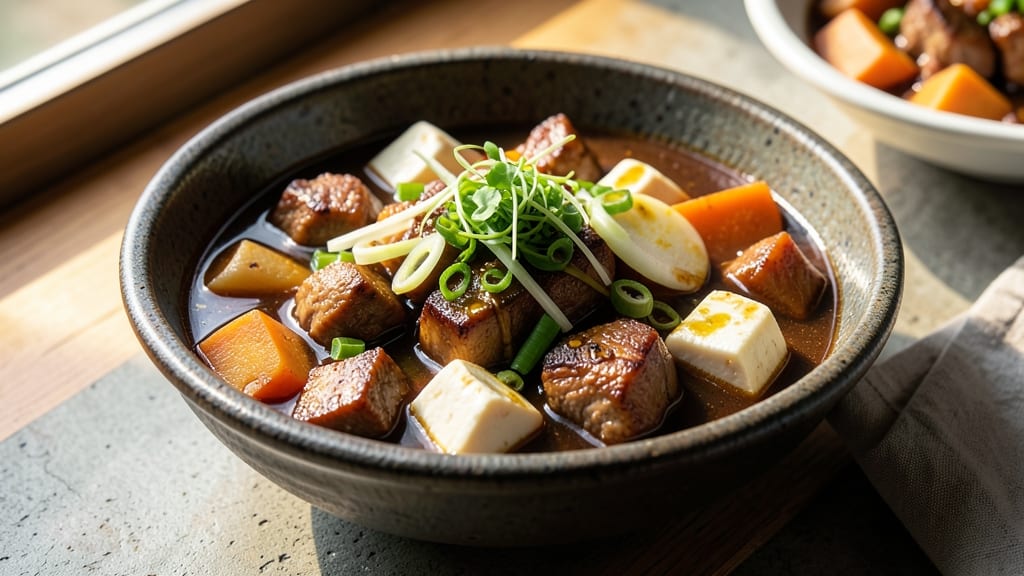
This Korean bean paste stew recipe delivers the deep, savory comfort of doenjang jjigae—a one-pot wonder where fermented soybean paste transforms simple ingredients into a restaurant-worthy dish. The secret lies in slow simmering, where the paste's umami-rich complexity melds with tofu, vegetables, and pork into a harmonious broth.
I first tasted this stew in a Seoul pojangmacha (street tent), and its warmth and depth have stayed with me ever since.
The beauty of this recipe is its balance—earthy bean paste meets sweet potatoes and silky tofu, while a splash of soy sauce and a sprinkle of sesame oil add layers of flavor.
Unlike quick soups, this dish rewards patience: the longer it simmers, the more the flavors develop into a velvety, aromatic stew that pairs perfectly with steamed rice. No fancy techniques are needed, just time and attention to the simmer.
What you’ll end up with is a steaming bowl of umami-rich depth, where every spoonful delivers tender pork, caramelized vegetables, and a broth so flavorful it tastes like it’s been simmering for hours.
The texture is a perfect balance—soft tofu, tender pork, and slightly sweet potatoes—all enveloped in a sauce that clings to each bite. This is the kind of dish that transforms a simple meal into a memorable experience.
Serve it with a side of kimchi and a bowl of steamed rice to soak up every last drop of that savory broth. The leftovers, if there are any, taste even better the next day as the flavors continue to meld.
Let’s get started on creating this Korean classic in your own kitchen.
Ingredients for bean paste stew korean
Nine core ingredients, one pot, endless umami-packed flavor waiting to unfold.
| Ingredient | Amount | Notes |
|---|---|---|
| Doenjang (Korean Bean Paste) 🥫 | ½ cup | Fermented soybean paste, store-bought or homemade |
| Pork Shoulder 🥩 | 1 lb | Cut into 1-inch cubes, boneless |
| Soft Tofu 🧀 | 14 oz | Silken or regular, cut into cubes |
| Sweet Potatoes 🍠 | 2 medium | Peeled, cut into 1-inch cubes |
| Korean Radish (Mu) 🥬 | 1 medium | Peeled, cut into 1-inch cubes |
| Green Onions 🧅 | 4 whole | Cut into 2-inch pieces, whites and greens |
| Sesame Oil 🫒 | 1 tbsp | Toasted, for finishing |
| Soy Sauce 🥫 | 2 tbsp | Korean or Japanese preferred |
| Garlic Cloves 🧄 | 4 cloves | Minced, for depth |
| Ginger 🍃 | 1 tbsp | Fresh, grated, for aroma |
| Water 💧 | 4 cups | For simmering broth |
| Sesame Seeds 🌾 | 1 tbsp | Toasted, for garnish |
| Salt 🧂 | 1 tsp | Kosher or sea salt |
| Black Pepper 🌶️ | ½ tsp | Freshly ground |
The doenjang is non-negotiable here—this fermented soybean paste is the soul of the stew. Korean grocery stores carry it in jars, or grab Maeil Food Hall's brand if you're shopping online. If you can't find it, miso paste is a decent backup, but it won't have that same funky depth. The pork shoulder? Ask your butcher to cut it into 1-inch cubes—this saves time and ensures even cooking. For the tofu, silken holds up better than regular, but either works if you're in a pinch. Sweet potatoes should be firm, not waxy—they caramelize beautifully when simmered.
No doenjang? Miso paste plus 1 tsp soy sauce gets you close, though it'll lack that signature tang. Short on pork? Substitute firm tofu or mushrooms—just add a splash of soy sauce to mimic the meatiness. The Korean radish (mu) can be swapped for daikon if you're outside Korea, but it's worth tracking down for that authentic texture. Green onions add freshness, but skip the whites if you're sensitive to texture. Sesame oil should be toasted—Trader Joe's sells it pre-toasted, which is a lifesaver. The ginger and garlic are where the real magic happens—don't skip mincing them finely for maximum flavor.
This stew tastes even better the next day, so make a double batch if you can. Store leftovers in the fridge for 4-5 days or freeze for 3 months. The broth thickens as it cools, so add a splash of water when reheating. Garnish with toasted sesame seeds right before serving—they add crunch and a nutty finish. Serve with steamed rice and kimchi to soak up every last drop of that savory broth. Leftovers reheat beautifully—just stir in a splash of water if it's too thick.
Why You'll Love This Recipe
- Here’s what sold me: a whole meal for under $15 using ingredients that last. Pork shoulder stretches forever, sweet potatoes keep in the pantry, and doenjang? A little goes a long way. It’s the kind of dish that makes grocery bills feel less scary.
- One-Pot Magic: Honestly, this stew is my lazy-day hero—just a heavy pot, some chopping (five minutes max), and simmering while you do everything else. The pork shoulder falls apart on its own, and the doenjang does all the flavor work for you.
- Umami Bomb: That first spoonful of doenjang? It’s like a warm, salty hug in a bowl. The deep, funky richness of the bean paste pairs perfectly with the sweetness of caramelized radish and the creaminess of soft tofu—savory, sweet, and slightly tangy all at once.
- Leftovers That Beg: Between us, this stew only gets better the next day. The flavors meld into something even richer, and reheating it is a breeze—just a splash of water, a quick stir. I’ve brought it to potlucks, packed it for work, and even frozen portions for those nights when I’m too tired to cook.
Step-by-step instructions for Korean bean paste stew
Here's how to build rich umami flavor layer by layer—no shortcuts, just deep taste.
Sear the Pork Shoulder for Deep Flavor
Heat a large Dutch oven over medium-high heat until hot. Add the 1 lb pork shoulder cubes in a single layer, letting them sear undisturbed for 3-4 minutes until they develop a deep golden crust. This step is non-negotiable—it locks in meaty flavor that will infuse the stew.
Once browned on one side, gently flip the pork and repeat until all sides are golden. Remove the pork and set it aside temporarily. The remaining browned bits in the pot are pure flavor—don't scrape them out. This is where the magic starts.
Build the Umami Base with Doenjang
Reduce heat to medium and add the 0.5 cup Doenjang (Korean Bean Paste) to the Dutch oven. Stir continuously for 1-2 minutes until the paste darkens and begins to bubble. The aroma will be intense—this is your umami foundation.
Add the 4 cloves minced garlic and 1 tbsp grated ginger, stirring for 30 seconds until fragrant. The garlic should sizzle slightly but not burn—watch it closely. Pour in the 2 tbsp soy sauce and scrape up any browned bits from the bottom of the pot. This step creates the stew's signature depth of flavor.
Simmer the Vegetables and Tofu
Pour in the 4 cups water and bring the mixture to a gentle boil. Add the 2 medium sweet potatoes and 1 medium Korean radish (Mu) cubes, stirring once to distribute. Return to a simmer and cook for 15 minutes until the vegetables begin to soften but aren't falling apart.
Add the 14 oz soft tofu cubes and 1 tsp salt, then stir gently. The tofu will absorb the rich flavors as it cooks. Keep the stew at a gentle simmer—too vigorous a boil will break up the tofu. Taste the broth now; you should detect layers of savory, slightly sweet, and umami notes.
Finish with Aromatics and Balance
Return the seared pork shoulder to the pot and add the 4 whole green onions cut into 2-inch pieces. Simmer together for 30-40 minutes until the pork is fork-tender and the vegetables are completely soft. The stew should reduce slightly, intensifying the flavors.
Season with 0.5 tsp black pepper and adjust salt if needed. The pork should pull apart easily, and the broth should coat the back of a spoon. Remove from heat and let it rest for 5 minutes—this allows all the flavors to meld together perfectly.
Garnish and Serve with Confidence
Ladle the stew into bowls and drizzle each serving with 1 tbsp toasted sesame oil. Sprinkle with 1 tbsp toasted sesame seeds for texture and visual appeal. The contrast between the silky broth, tender pork, and crisp seeds makes every bite satisfying.
Serve immediately with steamed rice to soak up the rich flavors. The stew will taste even better the next day as the flavors continue to develop, but the first bite is always the most rewarding. This is comfort food at its finest—simple ingredients transformed into something extraordinary through patience and technique.
Pro Tips For Making Bean Paste Stew Korean
- SEAR THE PORK HARD: I used to treat the pork shoulder gently, and the stew ended up bland. Now I sear it over high heat until the edges are deep brown—almost black in spots—before adding anything else. That crust carries the umami flavor through the whole dish.
- SALT THE RADISH FIRST: Skip this, and your Korean radish (mu) will stay bitter and watery. Cut it into thick slices, toss with 1 teaspoon of salt, and let it sit for 10 minutes while you prep the rest. Rinse and drain before adding to the stew—it makes all the difference.
- DON’T BOIL THE DOENJANG: After burning my first batch of bean paste, I learned to keep the heat medium-low once the doenjang is added. Let it simmer gently—just enough to melt and thicken, not bubble violently. High heat turns it bitter, and you’ll regret it.
- USE COLD TOFU: Sounds weird, but it works: take the soft tofu straight from the fridge and drop it into the stew. The cold shock keeps it from falling apart, and it absorbs the broth better than room-temperature tofu. (Yes, even if you’re impatient like me.)
Creative variations of these flavors
Spicy Kimchi Twist
Transform this classic stew into a fiery kimchi doenjang jjigae by adding ½ cup chopped kimchi during the final 10 minutes of simmering. The tangy, spicy kimchi cuts through the richness of the bean paste, adding vibrant color and a bold kick.
I like to use spicy kimchi from H Mart for authentic flavor. For extra heat, stir in 1 tsp gochugaru (Korean chili flakes) with the kimchi. 🌶️
Vegetarian Version
Skip the pork entirely and use 1 lb extra-firm tofu or shitake mushrooms for a hearty vegetarian stew. Press the tofu for 20 minutes to remove excess water, then cube and pan-fry until golden before adding to the stew.
Boost umami with 1 tbsp mushroom powder or an extra 1 tbsp soy sauce. This version still delivers that satisfying, savory depth without meat.
Winter Comfort Upgrade
For a cozier winter stew, add ½ cup chopped daikon radish and 1 cup baby potatoes along with the sweet potatoes. The potatoes absorb the broth beautifully, adding a creamy texture.
I also like to include ½ cup chopped napa cabbage for extra heartiness. Serve with a side of steamed mandu (Korean dumplings) for a full winter meal experience. ❄️
Quick Weeknight Hack
Cut prep time by using pre-cut frozen sweet potatoes and pre-minced garlic/ginger from the store. Swap fresh tofu for 14 oz firm tofu (it holds up better during shorter simmering).
Reduce simmering time to 25 minutes by using a pressure cooker or Instant Pot on high pressure for 12 minutes. The flavors will still develop beautifully, making this perfect for busy nights.
Protein Swaps
Need something other than pork? Try chicken thighs (bone-in for extra flavor) or firm white fish like cod (add in the last 10 minutes to avoid overcooking). For a seafood twist, use 1 lb shrimp—add them in the final 5 minutes of cooking so they stay tender.
Each protein brings a unique texture and flavor profile to the stew. 🦞
Gluten-Free Adaptation
For a gluten-free version, use tamari instead of soy sauce and ensure your doenjang** is certified gluten-free (some brands contain wheat). Check labels on sesame oil and broth for hidden gluten.
The stew remains rich and flavorful without compromising texture or depth. This adaptation works especially well for those with gluten sensitivities or celiac disease. 🌱
Nutrition facts
Frequently asked questions
What makes Korean bean paste stew different from other stews?
The magic lies in the fermented soybean paste (doenjang), which creates a deep, funky umami flavor that's distinct from Western stews. Unlike creamy or tomato-based stews, this one balances earthy, salty, and slightly sweet notes through slow simmering. The pork and tofu absorb these flavors while the vegetables add natural sweetness—it's a perfect harmony of textures and tastes.
Can I make this stew without a Dutch oven?
Yes! A heavy-bottomed pot or even a large stainless steel skillet works perfectly. The key is to sear the pork properly and simmer gently—avoid aluminum pots as they can react with acidic ingredients. For even cooking, use medium-low heat and stir occasionally to prevent sticking. A slow cooker also works well for hands-off cooking.
How do I know when the pork is fully cooked?
The pork should be fork-tender with no pink center when cut. For safety, use a meat thermometer—it should reach 165°F internally. If you're using thicker cuts, plan for 30-40 minutes of simmering time after adding the pork back to the stew. The broth will also thicken slightly as it cooks, signaling doneness.
What's the best way to store leftovers?
Let the stew cool completely, then store in an airtight container in the fridge for up to 5 days. The flavors actually improve overnight! For freezing, portion into meal-sized containers and freeze for up to 3 months. When reheating, add a splash of water if the stew seems too thick—it should be soupy but not watery.
Can I make this stew spicier?
Add 1-2 tsp gochugaru (Korean chili flakes) when you stir in the soy sauce, or swap ½ cup of the broth for chopped spicy kimchi in the last 10 minutes of cooking. For extra heat, top each serving with red pepper flakes or a drizzle of gochujang (Korean chili paste). Start with less and adjust to taste.