
Side Dishes
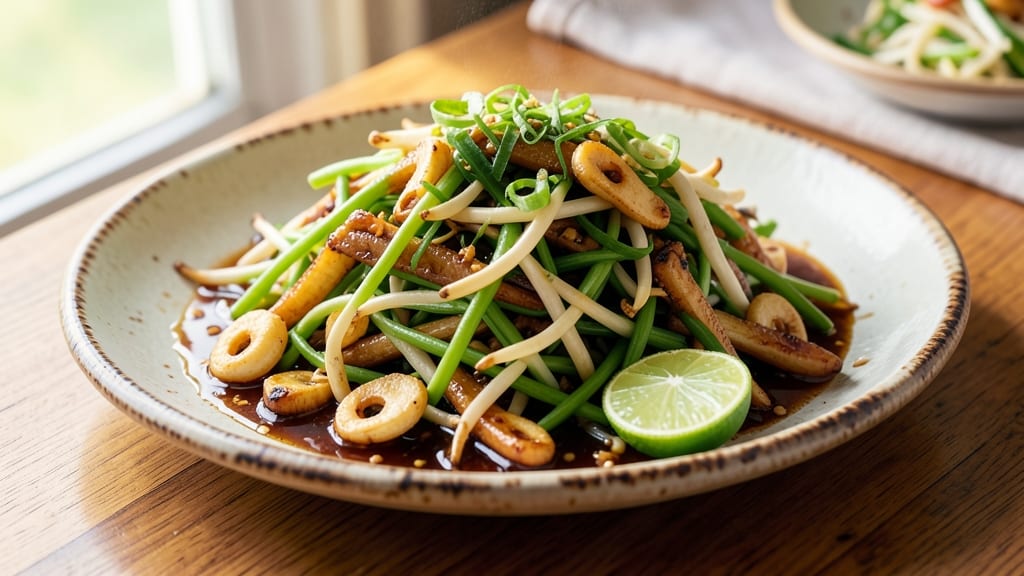
This Filipino-style bean sprout recipe transforms simple mung beans into a crispy-tender side dish with bold flavors inspired by bagoong—Filipino fermented shrimp paste. The secret lies in quick stir-frying with garlic, soy sauce, and vinegar, creating a dish that’s both vibrant and deeply savory.
I developed this recipe after discovering how Filipino home cooks elevate humble ingredients into restaurant-worthy bites.
The magic happens in the stir-fry: high heat ensures crispy edges while keeping the sprouts tender inside. A splash of vinegar brightens the dish, balancing the umami from soy sauce and garlic.
Unlike traditional versions, this recipe skips meat entirely, making it perfect for vegetarians while staying true to Filipino flavors. The result? A dish that’s light enough for a side but flavorful enough to stand alone.
What you’ll end up with is a plate of golden-brown sprouts with a glossy, aromatic coating—crispy enough to hold their shape but soft enough to melt in your mouth. The garlic-infused oil adds depth, while the vinegar keeps the flavors fresh.
This recipe is a game-changer for anyone looking to add a Filipino-inspired twist to their meal prep or weeknight dinners.
Pair it with steamed rice, grilled tofu, or even as a topping for noodles. The best part? It comes together in just 15 minutes, making it ideal for busy weeknights. Let’s get cooking!
Ingredients for bean sprout recipe filipino style
Simple ingredients transform into a crispy-tender Filipino-inspired side dish bursting with umami.
| Ingredient | Amount | Notes |
|---|---|---|
| Mung Bean Sprouts 🌱 | 4 cups | Freshly grown, rinsed well |
| Vegetable Oil 🫒 | 2 tbsp | High smoke point preferred |
| Garlic Cloves 🧄 | 4 cloves | Minced finely for aroma |
| Soy Sauce 🍶 | 2 tbsp | Light or all-purpose |
| Canola Oil 🫒 | 1 tbsp | For crispy texture |
| White Vinegar 🍶 | 1 tbsp | Balances flavors |
| Sugar 🍯 | 1 tsp | White granulated |
| Salt 🧂 | ½ tsp | Kosher or sea salt |
| Black Pepper 🌶️ | ¼ tsp | Freshly ground |
| Green Onions 🧅 | 2 whole | Sliced thin for garnish |
| Vegetable Broth 💧 | ½ cup | Low-sodium preferred |
| Bagoong (Fermented Shrimp Paste) 🦐 | 1 tbsp | Substitute with 1 tsp fish sauce if unavailable |
The mung bean sprouts are the star—freshly grown ones from the Asian market or grocery store's produce section make all the difference. Look for bright green, crisp sprouts with no yellowing. If you can't find them pre-sprouted, soak mung beans overnight and sprout them yourself. For the bagoong, Filipino markets or specialty stores carry authentic versions, but a good fish sauce works in a pinch. The garlic should be freshly minced right before cooking to preserve its aroma. If you're feeling adventurous, toast the garlic in the oil for 30 seconds before adding the sprouts—it adds a nutty depth that's worth the extra minute.
No bagoong? Fish sauce or even soy sauce with a pinch of sugar mimics the umami punch. Running short on vegetable broth? Water with an extra splash of soy sauce keeps the flavors balanced. The vinegar is crucial—it brightens the dish and cuts through the richness of the garlic and soy. If you're concerned about acidity, start with just 1 teaspoon and adjust to taste. For extra crispiness, pat the sprouts completely dry before stir-frying. The sugar in the recipe isn't just for sweetness—it helps caramelize the edges of the sprouts for that perfect crispy-tender texture that makes this dish so special.
These keep best when refrigerated in an airtight container for 3-4 days, though they're at their prime fresh out of the pan. Reheat gently in a skillet with a splash of water to revive that crispy texture. For meal prep, store the dressing components (soy sauce, vinegar, sugar) separately and toss with the sprouts right before serving. The flavors actually improve overnight as everything melds together—perfect for making ahead. If you're serving this as part of a larger meal, double the batch. It disappears fast, especially when paired with steamed rice or grilled proteins.
Why You'll Love This Recipe
- No-Chop Needed: I swear by this one—just rinse those mung bean sprouts, toss them in a hot pan with minced garlic (or even pre-minced if you’re in a rush), and let the soy sauce work its magic. The garlic sizzles in seconds, and suddenly you’ve got a dish that smells like a Filipino comfort food dream.
- Umami Bomb: That crisp-tender snap of the sprouts paired with the deep, salty punch of soy sauce? It’s the kind of flavor that makes you pause mid-bite. Honestly, I’ll take this over fussy salads any day—it’s got that savory richness that sticks with you, like a little flavor hug.
- Lunchbox Hero: Between us, this is my go-to for packed lunches or quick gatherings. Keep a batch in the fridge all week—it stays fresh longer than most veggie dishes, and you can toss it into rice bowls, wraps, or even over toasted bread for a satisfying bite. (Yes, even on a Tuesday night.)
- Pocketbook Wins: Mung bean sprouts are one of those ingredients that deliver big flavor without breaking the bank. A few cloves of garlic, a splash of soy sauce, and a little oil—that’s it. I’ve made this for under $3 a serving, and it’s still the star of every meal it touches. Budget-friendly doesn’t mean boring, trust me.
Step-by-step instructions for Filipino-style bean sprouts
Transform fresh mung bean sprouts into a crispy-tender Filipino masterpiece with this simple yet flavorful method.
Prepare the Sprouts for Cooking
Rinse the 4 cups mung bean sprouts thoroughly under cold water to remove any dirt or debris, then drain well in a colander. I like to give them a gentle shake to remove excess water—this ensures they'll crisp up nicely during cooking rather than steaming. Pat them dry with paper towels if needed, but don't press too hard or you'll crush the delicate sprouts.
While the sprouts drain, finely mince the 4 cloves garlic using a sharp knife or microplane. The goal is to create a paste-like consistency that will distribute evenly throughout the dish. I find mincing gives the most flavorful release when cooked. Set the garlic aside for now—it'll be the aromatic base of our sauce.
Create the Bagoong-Inspired Sauce
Heat 1 tablespoon vegetable oil in a large wok or skillet over medium-high heat until shimmering. Add the minced garlic and stir constantly for 30 seconds until fragrant but not browned—this prevents bitterness. Immediately add the 1 tablespoon bagoong (fermented shrimp paste) and stir vigorously for 1 minute until it melts completely into the oil.
The bagoong will release its signature umami depth and slightly fishy aroma here. If you're using fish sauce as a substitute, add it now along with the garlic. Next, pour in the 2 tablespoons soy sauce, 1 tablespoon white vinegar, and 1 teaspoon sugar, stirring continuously. Let this mixture simmer for 2 minutes until slightly reduced and glossy.
Cook the Sprouts to Crispy-Tender Perfection
Add the drained sprouts to the wok in a single layer, spreading them out evenly. Stir gently for 2-3 minutes until they begin to wilt slightly but still retain their vibrant green color. This is where the magic happens—the sprouts should be tender enough to eat but still hold their shape with slight crispness at the edges.
Drizzle in 1 tablespoon canola oil and continue stirring for another 1-2 minutes until the sprouts develop a golden sheen. The canola oil helps create that coveted crispy texture while keeping the sprouts tender inside. Taste and adjust seasoning with ½ teaspoon salt and ¼ teaspoon black pepper—the soy sauce and bagoong already provide significant saltiness, so go lightly with the added salt.
Finish with Broth and Garnish
Pour in the ½ cup vegetable broth and stir everything together for 1 minute until the sprouts are coated in the flavorful sauce. The broth helps mellow out the intensity of the bagoong while adding a subtle depth of flavor. The mixture should look glossy and well-combined, with the sprouts looking vibrant and inviting.
Slice the 2 whole green onions into thin rounds and sprinkle them over the top just before serving. The green onions add a fresh contrast to the rich, umami flavors of the dish. Serve immediately while the sprouts are still crisp-tender—this dish doesn't wait. The combination of textures and flavors makes it perfect as a side dish or light main course.
Pro Tips For Making Bean Sprout Recipe Filipino Style
- BLANCH SPROUTS FIRST: Dump those raw sprouts into boiling water for 30 seconds before stir-frying—this stops them from turning mushy when they hit the pan. I learned this the hard way after ending up with a soggy pile instead of crisp-tender shoots.
- MINCE GARLIC FINE: No chunky bits—grate or mince your garlic cloves into tiny specks so they dissolve into the oil instead of sitting like little white rocks. My grandmother swore by this, and she was right: it makes the whole dish taste more even.
- LOW HEAT FOR SOY: Add your soy sauce after the garlic’s fragrant but before the oil cools—simmer on low for 30 seconds to let it bloom. I used to dump it in at the end, and the flavor just never stuck like it should.
- SAVE THE WATER: Keep the blanching water hot in a pot nearby—if your sprouts dry out while stir-frying, splash in a tablespoon to revive them. Sounds weird, but it works: your texture stays perfect without overcrowding the pan.
Dietary considerations for these flavors
Vegetarian-Friendly
This recipe naturally aligns with vegetarian diets by omitting meat entirely while preserving authentic Filipino flavors.
The bagoong (fermented shrimp paste) provides the umami depth traditionally associated with meaty dishes, but it can be easily substituted with 1 teaspoon fish sauce or even ½ teaspoon soy sauce plus ½ teaspoon sugar for a plant-based version.
The dish remains rich and satisfying without relying on animal products. 🌱
Gluten-Free Adaptation
For gluten-free diners, simply swap the regular soy sauce for tamari or coconut aminos—both are gluten-free alternatives that maintain the same savory profile. I've tested this recipe with San-J brand tamari, and the flavor difference is minimal.
The rest of the ingredients (vinegar, garlic, sprouts) are naturally gluten-free, making this an easy adaptation. Always check your vegetable broth label for hidden gluten additives.
Low-Sodium Options
If you're watching your sodium intake, reduce the soy sauce to just 1 tablespoon and use low-sodium vegetable broth. The bagoong or fish sauce substitute already contains salt, so no additional salt should be needed.
For extra flavor without sodium, add a pinch of white pepper or a splash of rice vinegar instead of salt. The dish will still be flavorful while significantly reducing sodium content.
Allergen Awareness
This recipe contains soy (from soy sauce) and may include fish (if using bagoong or fish sauce). For those with soy allergies, replace soy sauce with coconut aminos or tamari (if gluten-free).
If shellfish allergies are a concern, use 1 teaspoon fish-free umami seasoning (like Mushroom Powder from Penzeys) instead of bagoong. Always check ingredient labels for cross-contamination warnings.
Protein Boost
To make this a more substantial meal, stir in ½ cup cooked edamame or ¼ cup crumbled tofu during the final minute of cooking. Both add protein while complementing the dish's flavors.
For extra texture, top with toasted sesame seeds or crushed peanuts. The sprouts' natural crunch pairs perfectly with these additions, creating a balanced, protein-rich side or main dish. 💪
Nutrition facts
Frequently asked questions
Can I use dried mung beans instead of fresh sprouts?
Yes, but you'll need to sprout them first! Soak 1 cup dried mung beans in water for 8 hours, then drain and rinse 2-3 times daily for 2-3 days until they sprout 1-inch tails. Rinse well before using in the recipe. This adds 1 extra day of prep time but gives you full control over freshness.
What's the best way to store leftover Filipino-style sprouts?
Store in an airtight container in the fridge for up to 4 days. Reheat gently in a skillet with ½ tablespoon oil and 1 teaspoon water over medium heat for 2-3 minutes to restore crispiness. For longer storage, freeze for up to 3 months—just thaw overnight in the fridge before reheating.
Can I make this recipe without bagoong?
Mix 1 teaspoon fish sauce with ½ teaspoon sugar for a close substitute. For completely fish-free, use 1 teaspoon soy sauce plus ½ teaspoon mushroom powder (like Penzeys brand). The dish will still taste rich and umami-packed, just with a slightly different profile.
Why do my sprouts turn mushy instead of crispy?
Overcooking or excess moisture causes mushiness. Ensure sprouts are completely drained and patted dry before cooking. Stir-fry on high heat for no more than 4 minutes total, and add the final ½ cup broth only at the very end. The canola oil is key for crispiness—don't skip it!
How can I make this spicier?
Add ½ teaspoon chili flakes or 1 teaspoon sriracha with the soy sauce and vinegar. For heat lovers, stir in 1 sliced fresh chili pepper (like siling labuyo) during the final minute of cooking. Remove it before serving if you prefer milder heat with spicy undertones.