
Appetizers
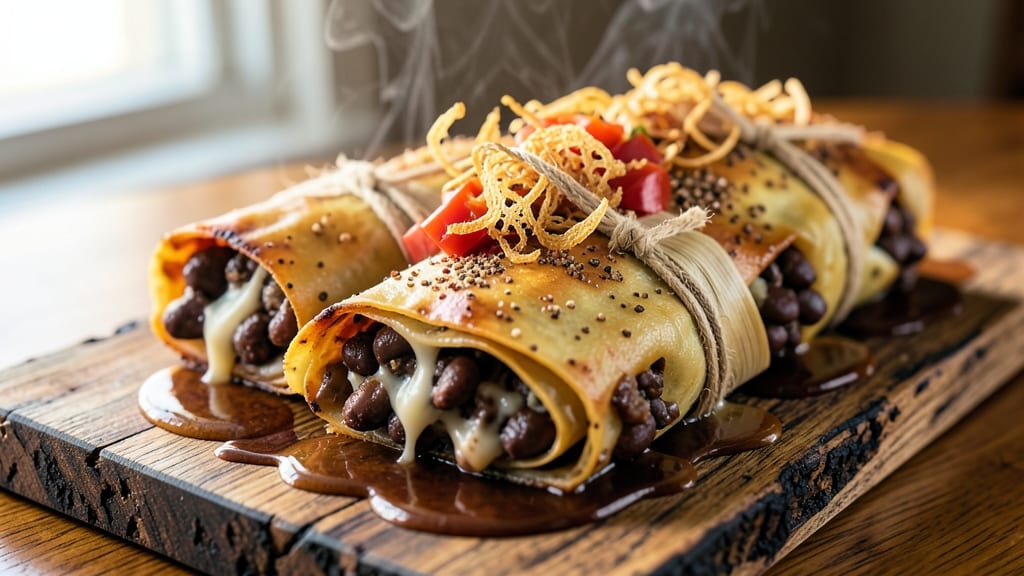
This black bean and cheese tamale recipe transforms simple ingredients into a restaurant-quality dish with smoky cumin crust and melty bean filling—perfect for gatherings or cozy nights in. The secret lies in balancing tender masa dough with bold flavors, creating tamales that are both traditional and approachable.
Whether you're wrapping them in corn husks or using foil for convenience, the result is always hearty and satisfying.
What sets these tamales apart is the rich, savory filling—black beans simmered with garlic, cumin, and cheese that melts into a creamy, flavorful center.
The crust gets its signature smokiness from a blend of spices and lard (or vegan butter for a plant-based version), ensuring every bite is packed with texture and depth. This recipe bridges tradition and ease, making it accessible for home cooks while delivering professional results.
The process is straightforward but rewarding: prepare the masa dough, mix the filling, assemble the tamales, and steam until tender. The aroma alone will fill your kitchen with warmth, and the first bite delivers that perfect balance of creamy, smoky, and slightly spicy flavors.
These tamales are versatile enough for weeknight dinners or festive occasions, and leftovers reheat beautifully.
For dietary flexibility, swap out lard for coconut oil or use vegan cheese without sacrificing flavor. Serve with salsa, guacamole, or a dollop of sour cream for the full experience. Let’s get started on creating tamales that taste like a celebration.
Ingredients for black bean and cheese tamale
Twelve ingredients deliver restaurant-quality tamales with smoky crust and creamy bean-cheese filling.
| Ingredient | Amount | Notes |
|---|---|---|
| Dried Black Beans 🌱 | 2 cups | Soaked overnight or quick-soaked |
| Masa Harina 🌾 | 4 cups | For dough, Maseca brand preferred |
| Lard 🧈 | ½ cup | Vegetarian rennet-free preferred |
| Shredded Monterey Jack Cheese 🧀 | 2 cups | Sharp flavor preferred, vegan alternative |
| Garlic Cloves 🧄 | 6 cloves | Minced for filling, fresh preferred |
| Ground Cumin 🌿 | 2 tbsp | Toasted for deeper aroma |
| Dried Oregano 🍃 | 1 tbsp | Mexican oregano for authenticity |
| Smoked Paprika 🌶️ | 1 tbsp | For signature smoky crust |
| Chicken Broth 💧 | 2 cups | Vegetable broth for vegetarian version |
| Corn Husks 🌽 | 24 whole | Soaked 30 minutes, large size |
| Bay Leaves 🌿 | 2 whole | For filling depth, remove before serving |
| Salt 🧂 | 1 ½ tsp | Diamond Crystal preferred |
| Black Pepper 🌶️ | ½ tsp | Freshly ground for heat |
| Vegetable Oil 🫒 | 2 tbsp | For crust oiliness |
The masa harina and lard form the foundation of these tamales, so Maseca brand is ideal—it's the standard in Mexican kitchens. For a vegetarian version, substitute lard with coconut oil or vegan butter without compromising texture. The black beans should be soaked overnight for best texture, though quick-soaking works in a pinch. Monterey Jack cheese melts beautifully, but Oaxaca or Chihuahua add even more depth. Corn husks are essential for traditional wrapping, but foil works too if you're short on time.
No lard? Vegan butter or coconut oil delivers similar richness, though texture may vary slightly. The cumin and smoked paprika are non-negotiable for that signature smoky flavor—Penzeys Spices carries excellent toasted cumin. Fresh garlic and bay leaves add complexity, but dried oregano at half the amount works if you're in a hurry. For the cheese, vegan cheddar or nutritional yeast creates a satisfying melt. The broth can be swapped for vegetable stock to keep it vegetarian, though chicken broth adds depth.
Tamale dough keeps for 3 days in the fridge, wrapped tightly in plastic. The filling can be prepped ahead and stored for 2 days, though fresh is always better. Assembled tamales can be refrigerated for 1 day before steaming. For meal prep, steam a batch, then reheat wrapped in foil at 350°F for 15 minutes. The aroma alone makes these worth the effort—every bite delivers that perfect balance of smoky crust and creamy filling.
Why You'll Love This Recipe
- No-Soaking Needed: I’ll admit, I used to dread soaking beans—until I discovered these tamales. Just toss the dried black beans in a pot with garlic, a splash of broth, and let them simmer while you prep the masa. By the time the cheese melts into that creamy, stretchy filling, the beans are tender and packed with flavor. No waiting, no fuss.
- Cheesy Crispy Magic: That moment when you pull apart a tamale and the Monterey Jack pulls—just enough to crisp at the edges while staying gooey inside? It’s the kind of texture that makes people pause mid-bite. The lard in the masa gives it that golden crust, and the garlic? Oh, it’s the unsung hero here, turning every bite into something you’ll reach for again.
- Potluck Party Star: Between us, these tamales are my secret weapon for gatherings. They reheat like a dream (just wrap in foil and warm for 10 minutes), and everyone assumes they’re way more complicated than they are. Bring a tray of them to a picnic, a birthday, or even a casual game night—no one will question why you’re the host they always invite back.
- Pantry Goldmine: Honestly, this recipe saved me during those tight grocery weeks. Dried beans and masa harina last forever, and lard? A little goes a long way. Stash extras in the freezer, and you’ve got a hearty, budget-friendly meal ready in minutes. Plus, the leftovers? Even better the next day when the flavors meld into something deeper.
Step-by-step instructions for black bean and cheese tamales
Here's the professional method for crafting authentic tamales with a smoky cumin crust and rich, melty black bean filling.
Prepare the Black Bean Filling
Begin by combining the 2 cups dried black beans, 2 cups chicken broth, 6 minced garlic cloves, 2 whole bay leaves, 2 tablespoons ground cumin, 1 tablespoon dried oregano, 1 tablespoon smoked paprika, 1.5 teaspoons salt, and 0.5 teaspoon black pepper in a large pot. Bring to a boil over medium-high heat, then reduce to a simmer for 1.5 to 2 hours until the beans are fork-tender and the liquid has reduced to a thick, spreadable consistency.
Real talk: The beans should break down but still hold their shape slightly—you want them creamy yet textured. If the mixture looks too dry, add 1 to 2 tablespoons of broth at a time. Once ready, remove the bay leaves and stir in the 2 cups shredded Monterey Jack cheese until fully melted and evenly distributed. Let the filling cool completely before assembling the tamales—this prevents the masa from becoming soggy.
Make the Masa Dough
In a large mixing bowl, combine the 4 cups masa harina, 0.5 cup lard, and 2 tablespoons vegetable oil. Using your hands or a dough mixer, work the ingredients together until the mixture resembles coarse crumbs with pea-sized lard pieces distributed throughout. The texture should be dry but pliable—like damp sand.
Gradually add 1 cup of hot chicken broth, 1 tablespoon ground cumin, and 1 tablespoon smoked paprika while mixing. Continue combining until the dough forms a smooth, pliable ball that holds together when pressed. If it feels too dry, add 1 tablespoon of broth at a time. The dough should be soft enough to roll out thinly but not sticky. Cover with a damp towel and let rest for 15 minutes—this relaxes the gluten and makes rolling easier.
Assemble the Tamales
Soak the 24 corn husks in warm water for 30 minutes to soften them. Drain and pat dry with a clean towel, then arrange them on a flat surface with the pointed end facing up. Spread a thin layer of the masa dough (about 1/8-inch thick) over the husks, leaving a 1-inch border at the top. Using your fingers, gently press the dough into the husks, smoothing it evenly.
Scoop 1/4 cup of the black bean filling onto the center of each husk, then fold the sides inward and roll tightly from the bottom up, sealing the tamale completely. The husks should feel snug but not stretched. Place the assembled tamales seam-side down in a large steamer basket lined with parchment paper, leaving a 1-inch gap between each tamale for steam circulation.
Steam to Perfection
Bring a large pot of water to a rolling boil, then place the steamer basket with tamales inside. Cover tightly with a lid and steam over medium-high heat for 60 to 75 minutes. The tamales are done when the corn husks peel away easily from the masa and the filling is hot throughout. Avoid lifting the lid during steaming—this releases steam and can make the tamales soggy.
For the ultimate test, carefully peel back one husk: the masa should be golden brown and slightly crispy on the edges, while the filling remains creamy and melty. If the masa isn't browned enough, return the tamales to steam for an additional 5 to 10 minutes. Once done, let the tamales rest for 10 minutes before serving to allow the flavors to meld and the filling to set slightly.
Pro Tips For Making Black Bean And Cheese Tamale
- SOAK BEANS OVERNIGHT: Dried black beans are stubborn—skip the overnight soak, and you’ll end up with a mushy filling. Toss them in cold water with a pinch of baking soda (yes, really) and let them sit 12+ hours. This cuts cooking time by half and keeps the texture firm, not gluey.
- MELT LARD SLOWLY: I learned this the hard way—dumping lard straight into a hot pan makes it splatter like a grease bomb. Instead, heat it on low until just liquid, then stir it into the warm mashed beans. The slow melt keeps the masa from turning greasy or separating later.
- CHILL THE MASA: Stuffing warm masa into corn husks is a recipe for sad, soggy tamales. After mixing, spread the masa on a tray and refrigerate 30 minutes—it firms up enough to hold shape without sticking to your hands or the husks. (Pro move: Use a bench scraper to slice it neatly.)
- SALT THE BEANS RIGHT: Black beans need salt during cooking, not just at the end. Add 1½ teaspoons salt to the soaking water, then another ½ teaspoon when simmering. This balances the richness of the cheese and lard, so you’re not left with a bland, cheesy mouthful.
Troubleshooting great black bean and cheese tamale
Dough Too Dry?
If your masa dough feels too dry and crumbly, gradually add 1 tablespoon of hot broth at a time while mixing. The goal is a pliable, slightly tacky texture—not sticky.
I’ve found that vegetable oil (instead of lard) can make dough drier, so add an extra 1 tablespoon if substituting. Over-kneading also dries it out, so handle gently. 🌾
Filling Too Wet?
If your black bean filling is too soupy after simmering, reduce the heat and let it cook uncovered for 5-10 minutes to evaporate excess liquid. For extra thickness, mash the beans slightly with a potato masher.
Pro tip: Stir in 1-2 tablespoons of masa harina mixed with 1 tablespoon cold water to absorb moisture without altering flavor. 💧
Husks Tearing?
Corn husks tear when they’re not properly soaked or handled roughly. Soak them in warm water for 30+ minutes until pliable, then drain well and pat dry. If they still crack, place a damp paper towel over the husks before adding dough to keep them flexible.
For extra security, use large husks (small ones tear easily) or wrap tamales in foil as a backup. 🌽
Tamales Undercooked?
If tamales feel dense or doughy inside after steaming, they likely need more time. Check the internal temperature—they’re done at 190-200°F. If the filling isn’t hot, return to steam for 10-15 minutes.
A quick fix: Wrap undercooked tamales in extra foil and bake at 350°F for 10 minutes to finish cooking. 🔥
Masa Sticking?
Grease your hands with vegetable oil or lard before handling dough to prevent sticking. If dough clings to the work surface, dust with 1 tablespoon masa harina and re-knead lightly.
For assembly, use a lightly oiled rolling pin to spread dough evenly on husks. A damp towel under the husks also helps prevent slipping. ✨
Cheese Not Melting?
Low heat or insufficient simmering can leave cheese unmelted. Ensure the filling reaches a gentle boil for 5 minutes after adding cheese to fully incorporate. For extra melt, stir in 1 teaspoon of broth to create steam.
Vegan cheeses may require 1-2 extra minutes of heat—stir constantly to avoid clumping. 🧀
Nutrition facts
Frequently asked questions
Can I make these tamales without corn husks?
While corn husks are traditional, you can use heavy-duty aluminum foil as a shortcut. Simply fold the foil into a long rectangle, spread the masa, add filling, and fold tightly. Steam for 60-75 minutes just like husk-wrapped tamales. For extra crispiness, brush the foil with a little oil before folding.
How do I store leftover tamales?
Store cooked tamales in an airtight container in the fridge for up to 5 days or freeze for 3 months. To reheat, wrap tamales in foil and bake at 350°F for 15 minutes or steam for 10-15 minutes. The filling stays creamy when reheated properly—just avoid microwaving, which can make the masa soggy.
What's the best cheese substitute for vegan tamales?
For a fully plant-based version, use vegan shredded cheddar or a mix of nutritional yeast and cashew cream. Add 1 teaspoon of tapioca starch to help the filling hold together. The flavor won't be identical, but it still delivers that satisfying melt. For extra richness, stir in 1 tablespoon of vegan butter to the filling.
Why does my masa dough keep cracking?
Dough cracks when it's too dry or overworked. Ensure your dough has a pliable, slightly tacky texture (like wet sand). If it's still cracking, add 1 tablespoon of hot broth at a time while kneading gently. Avoid over-kneading—just mix until combined. For extra flexibility, let the dough rest 15 minutes before rolling.
Can I make these tamales in an Instant Pot?
Yes! Assemble tamales in foil packets (not husks) and place them in the Instant Pot with 1 cup of water. Cook on high pressure for 12 minutes, then quick-release. The pressure method gives a slightly different texture but works well for busy cooks. For best results, finish with 5 minutes of steaming to crisp the edges.