
Soups & Stews
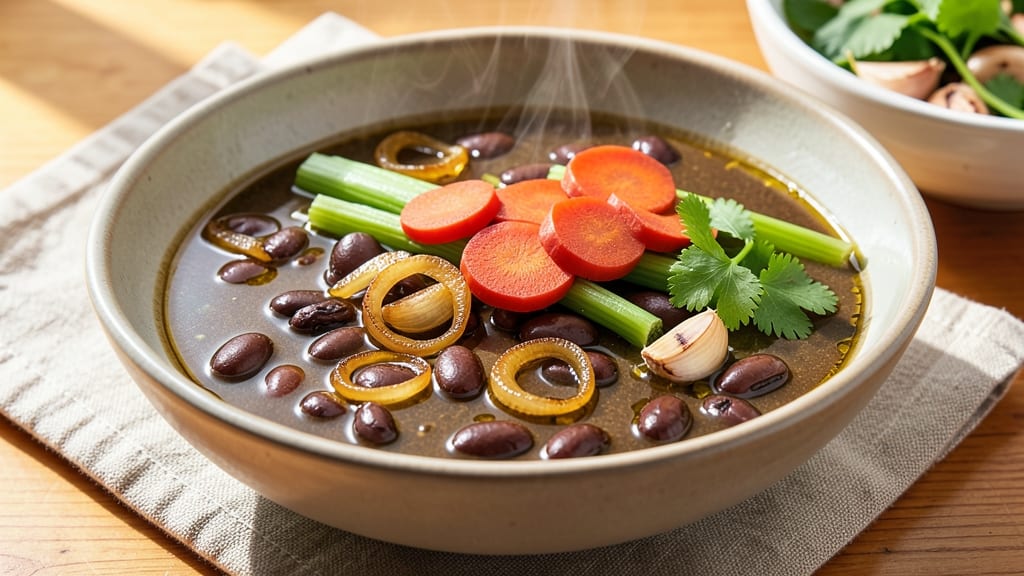
This black bean broth recipe transforms simple pantry staples into a deeply flavorful, umami-rich base for plant-based meals that tastes like it simmered all day. The secret lies in slow-cooked beans and aromatic vegetables that develop complex flavors through gentle heat—no fancy techniques required.
What starts as a humble pot of ingredients becomes a velvety, savory broth perfect for soups, stews, or as a rice accompaniment.
Unlike store-bought versions, this homemade broth builds layers of flavor through a simple three-step process: sautéing aromatic vegetables, simmering with beans and herbs, and finishing with a touch of acidity.
The result is a rich, deeply satisfying liquid that's packed with plant-based protein and earthy notes from cumin, garlic, and bay leaves. It's the kind of broth that makes every bite of your meal more delicious.
This recipe delivers restaurant-quality depth with minimal effort—just 30 minutes of active time and 1.5 hours of simmering transforms basic ingredients into something extraordinary. The broth's versatility means you can use it as a soup base, cooking liquid for grains, or even a marinade for tofu or beans.
Each batch yields enough for multiple meals, making it a kitchen essential.
Pair it with warm tortillas, steamed rice, or crusty bread to create a complete plant-based meal. The broth's natural richness means you can adjust seasoning to taste, ensuring every bowl is perfectly balanced. Here's how to make it—simple, satisfying, and full of flavor.
Ingredients for black bean broth
Transform humble pantry staples into a restaurant-quality umami broth with these 14 ingredients.
| Ingredient | Amount | Notes |
|---|---|---|
| Dried Black Beans 🌱 | 1 ½ cups | Rinsed before simmering |
| Yellow Onion 🧅 | 1 whole | Diced, medium size preferred |
| Garlic Cloves 🧄 | 6 cloves | Peeled, lightly smashed |
| Carrot 🥕 | 1 whole | Medium, chopped into chunks |
| Celery Stalks 🌿 | 3 whole | Trimmed, chopped into 1-inch pieces |
| Ground Cumin 🌶️ | 1 tbsp | Toasted for deeper aroma |
| Dried Oregano 🍃 | 1 tsp | Mexican oregano preferred |
| Bay Leaves 🌿 | 2 whole | Standard dried leaves |
| Extra-Virgin Olive Oil 🫒 | ¼ cup | For sautéing vegetables |
| Vegetable Broth 💧 | 4 cups | Low-sodium preferred |
| Lemon Juice 🍋 | 1 tbsp | Freshly squeezed |
| Salt 🧂 | 1 ½ tsp | Diamond Crystal preferred |
| Black Peppercorns 🌶️ | ½ tsp | Freshly cracked |
| Fresh Cilantro 🌿 | ¼ cup | Chopped, stems removed (optional) |
The black beans are the flavor foundation here—dried over canned for superior texture and depth. Look for organic beans at Whole Foods or bulk bins at natural grocery stores for the best quality. The aromatic trio of onion, garlic, and celery forms the classic mirepoix—don't skip the carrot for its natural sweetness that balances the earthy notes. Toast the cumin seeds whole for 30 seconds in a dry pan before grinding to unlock their full aroma. Fresh herbs like cilantro and bay leaves add complexity, but dried will work in a pinch if you're short on time.
No cumin? Smoked paprika at half the amount adds warmth, though it won't replicate the earthy depth. Substitute vegetable broth with water plus 1 tsp soy sauce or miso paste for umami punch. Prefer canned beans? Rinse thoroughly to remove excess sodium, then simmer with a pinch of baking soda to soften them faster. The lemon juice is crucial—skip it only if you dislike acidity, but it brightens the broth beautifully. For extra richness, stir in 1 tbsp nutritional yeast at the end, especially if serving over grains.
This broth freezes beautifully—portion into ice cube trays for easy single-use servings. Keeps in the fridge for 5-6 days or frozen for up to 3 months. For maximum flavor development, simmer uncovered and skim any foam that rises to the surface. The longer it cooks, the deeper the flavor—2-3 hours yields the most complex profile. Store in airtight containers with a layer of oil on top to preserve freshness.
Why You'll Love This Recipe
- Pantry Magic: I swear by this recipe when I forget to meal prep. Just toss dried black beans, onion, garlic, carrot, and celery into a pot with water—no fancy prep, no stress. The beans soften while you chop veggies for dinner, turning into a flavor bomb without extra effort.
- Umami Bomb: That deep, earthy black bean flavor? It’s ridiculously satisfying. The carrot and celery add natural sweetness, while the garlic hits just right—like a cozy hug in a bowl. Honestly, I’ll drink this straight if I’m in a rush.
- Weeknight Swiss Army: This broth is my secret weapon for lazy nights. Use it as a base for tacos, soups, or even a quick risotto—just add your favorite protein. I’ve even poured it over rice with a fried egg for a 10-minute dinner. Versatile? Absolutely.
- Budget-Friendly Staple: Dried beans and basic veggies stretch this recipe into a whole week’s worth of meals. Freeze leftovers, or simmer extra for a backup batch. Between us, it’s cheaper than takeout and way healthier—my wallet and body thank me every time.
Step-by-step instructions for black bean broth
This method transforms simple pantry staples into a deeply flavorful broth perfect for soups, stews, or sipping.
Sauté the Aromatic Vegetables
Heat the 0.25 cup extra-virgin olive oil in a large pot over medium heat. Add the diced yellow onion, chopped carrot, and celery stalks (the classic "mirepoix" trio). Cook for 8-10 minutes until the vegetables soften and begin to caramelize along the edges—this builds the foundation of flavor.
Here's the thing—don't rush this step. You'll notice the vegetables release moisture and develop a rich, sweet aroma. If the oil starts to smoke, reduce the heat slightly. The goal is even cooking without burning, which would make the broth bitter. Stir occasionally to ensure everything cooks uniformly.
Toast the Spices and Add Garlic
Once the vegetables are tender, add the toasted ground cumin and dried oregano, stirring for 30 seconds to bloom their aromatic oils. This step is crucial—it deepens the earthy, warm flavors that define this broth. Immediately add the 6 lightly smashed garlic cloves and cook for another 1 minute until fragrant but not browned.
Watch the garlic closely—it burns quickly and can make the broth bitter. When you smell that sweet, pungent garlic aroma, it's ready. Add the 2 bay leaves next, as they'll infuse subtle herbal notes during simmering. This is where the magic happens—the spices meld with the vegetables to create a complex flavor base.
Simmer with Beans and Broth
Add the rinsed 1.5 cups dried black beans and pour in the 4 cups vegetable broth. Bring everything to a gentle boil, then immediately reduce heat to low-medium to maintain a steady simmer. Partially cover the pot and cook for 45-50 minutes, stirring occasionally to prevent the beans from sticking to the bottom.
The beans will begin to break down, releasing starches that thicken the broth naturally. You'll see the liquid take on a rich, golden hue and develop a deep, earthy aroma. If the broth reduces too much and becomes too thick, add ½ cup water to maintain the proper consistency. This simmering time is where the umami develops—don't rush it.
Season and Finish
After simmering, remove the pot from heat and stir in the 1.5 teaspoons salt, 0.5 teaspoon cracked black peppercorns, and 1 tablespoon freshly squeezed lemon juice. The acidity from the lemon brightens the flavors and balances the richness. Taste and adjust seasoning—you might need a touch more salt or lemon depending on your broth's intensity.
Strain the broth through a fine-mesh sieve into a clean pot, pressing gently on the solids to extract maximum flavor. Discard the solids or save them for compost. The strained broth should be smooth with a vibrant, golden color. For extra freshness, stir in the 0.25 cup chopped fresh cilantro just before serving—it adds a bright, herbal note that cuts through the richness.
Store and Use
Let the broth cool to room temperature, then transfer it to airtight containers. It will keep in the refrigerator for 5-6 days or can be frozen for up to 3 months. When ready to use, reheat gently over low heat—never boil vigorously, as this can break down the delicate flavors you've built.
This broth is incredibly versatile. Use it as a base for soups, stews, or rice dishes, or sip it straight with a squeeze of lime and a sprinkle of cilantro. The depth of flavor comes from the slow development of umami during simmering—don't skip any steps if you want that restaurant-quality taste at home.
Pro Tips For Making Black Bean Broth
- SOAK BEANS OVERNIGHT: I learned this the hard way—rushing the soak with dried black beans leaves them tough and underflavored. Use a 1:3 bean-to-water ratio, cover, and let them sit for 12+ hours. The longer they soak, the creamier your broth will turn out.
- CHAR VEGETABLES FIRST: Skip the crowding—sauté onions, garlic, carrots, and celery in 1 tablespoon oil over medium-high heat until deeply browned (about 10 minutes). This caramelization builds depth that raw veggies just can’t match.
- SKIP THE BOIL: Once you add beans and water, bring it to a gentle simmer, then reduce to the lowest heat possible. Boiling makes beans split open and turn mushy, while a low simmer keeps them intact and lets flavors meld.
- STRAIN AND REUSE: After simmering 1–1.5 hours, strain the broth through a fine-mesh sieve, pressing gently on the solids. Save the bean pulp for soups or tacos—it’s packed with flavor, and you’ve already done the work.
Dietary considerations for this dish
Vegan-Friendly Foundation
This black bean broth is naturally vegan, packed with plant-based protein from the beans and rich umami from toasted spices. The 1.5 cups dried black beans provide a hearty 15 grams of protein per serving, making it ideal for vegan diets.
The broth also contains no dairy, eggs, or meat substitutes—just wholesome, earthy flavors that satisfy any plant-based meal. 🌱
Gluten-Free by Design
All ingredients in this recipe are inherently gluten-free, including the dried black beans, vegetables, and spices. Even the vegetable broth can be certified gluten-free brands like Imagine or Pacific Foods if you're avoiding cross-contamination.
The recipe avoids common gluten triggers like soy sauce (use tamari instead) and thickeners that might contain wheat. Perfect for gluten-sensitive diets!
Low-Sodium Adaptations
To reduce sodium, skip added salt until the end and use low-sodium vegetable broth (like Annie's Homegrown). The natural umami from beans and spices carries the flavor without excess salt.
For extra depth, add 1 tsp nutritional yeast at the end—it adds a cheesy, savory note while keeping sodium in check. Always taste before final seasoning!
Allergen Considerations
This broth is nut-free, soy-free (unless you add tamari), and dairy-free, making it safe for most common allergies. If you're avoiding FODMAPs, swap the onion and garlic for leeks and shallots (lower in oligosaccharides).
For nightshade-sensitive diets, omit the dried oregano and replace with thyme instead. Always check spice labels for potential cross-contamination.
Protein-Packed Boost
Want more protein? Stir in ½ cup cooked lentils or 1 cup chickpeas during simmering. These additions add 10-12 grams extra protein per serving while thickening the broth naturally.
For a higher-fat option (great for satiety), swirl in 1 tbsp tahini or 2 tbsp coconut milk before serving. The broth becomes even more hearty and satisfying! 💪
Nutrition facts
Frequently asked questions
Can I use canned black beans instead of dried?
Yes, but with adjustments! Canned beans cook much faster, so add them only in the last 15 minutes of simmering. Rinse thoroughly first to remove excess sodium, then simmer with a pinch of baking soda (¼ tsp) to soften them. For best flavor, use low-sodium canned beans and reduce the added salt to 1 tsp.
How can I make this broth thicker?
Simmer the beans longer (60-75 minutes) to release more starches naturally. For instant thickening, blend ½ cup cooked beans with ½ cup broth, then stir the purée back in. Alternatively, add 1 tbsp cornstarch mixed with 2 tbsp water at the end and simmer for 2 minutes.
What are the best ways to use leftover broth?
Use it as a base for soups, stews, or rice dishes! Freeze in ice cube trays for easy single-use portions. It also makes a great marinade for tofu or beans, or blend with 1 tbsp tahini and lime for a creamy dressing. The flavor intensifies when reheated slowly over low heat.
Why does my broth taste bland?
Blandness usually means insufficient simmering time or under-seasoning. Try these fixes: Simmer uncovered for 2-3 hours to deepen flavors, add 1 tsp soy sauce or miso paste for umami, or finish with 1 tbsp nutritional yeast. Taste as you go—don't be afraid to adjust salt, lemon, or spices at the end!
Can I make this broth in an Instant Pot?
Sauté the vegetables and spices as directed, then add beans and broth. Cook on High Pressure for 20 minutes, then natural release for 10 minutes. For extra depth, toast the beans in the pot for 5 minutes before adding liquid. The pressure cooker cuts time but preserves all the rich flavors!