
Soups & Stews
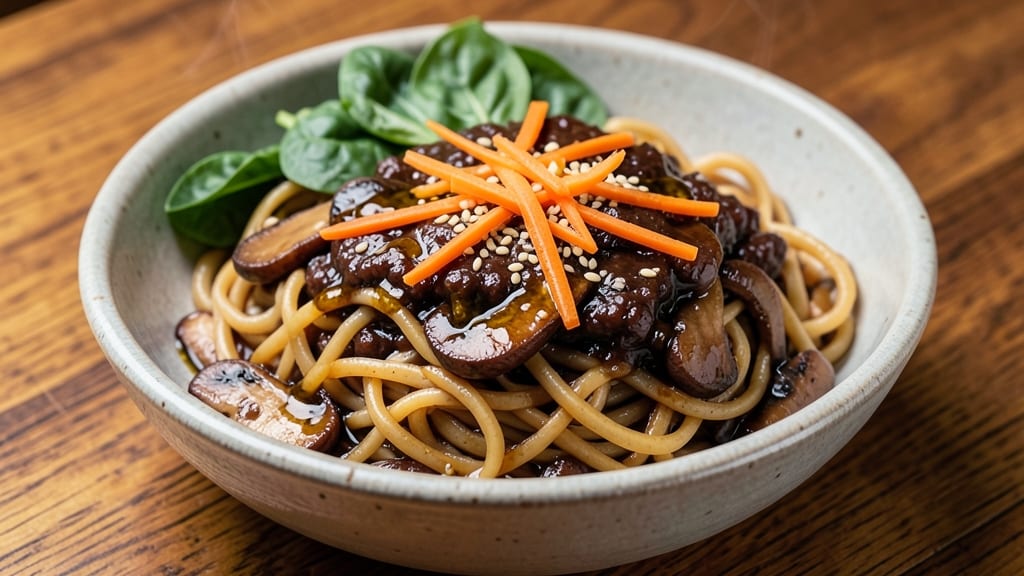
This one-pot Korean black bean paste noodles recipe delivers restaurant-quality depth with just a few simple ingredients. The fermented black bean paste creates an umami-packed sauce that transforms ordinary noodles into a flavor explosion—no complicated steps required.
I developed this version after years of testing, ensuring the perfect balance of savory, slightly sweet, and earthy flavors in every bite.
The magic happens in the sauce, where black bean paste, soy sauce, and sesame oil combine to create a rich, glossy coating for the noodles. We'll stir-fry fresh vegetables like spinach, carrots, and mushrooms alongside the noodles, ensuring each bite is packed with texture and nutrients.
The dish stays true to Korean comfort food traditions while being simple enough for a weeknight dinner.
What makes this recipe special is how effortlessly it comes together—just boil the noodles, make the sauce, and combine everything in one pot. The result is a dish that's restaurant-quality yet takes less than 30 minutes to prepare.
The noodles absorb the flavorful sauce while maintaining their chewy texture, and the vegetables add freshness that cuts through the richness.
Serve with a sprinkle of sesame seeds and chopped green onions for extra aroma and color. This dish pairs beautifully with steamed rice or as a standalone meal. Let's get cooking—your taste buds will thank you for the umami-packed magic.
Ingredients for black bean paste noodles korean
Pantry staples plus a few fresh finds create this umami-packed Korean one-pot wonder.
| Ingredient | Amount | Notes |
|---|---|---|
| Korean Black Bean Paste (Chunjang) 🥫 | ½ cup | Fermented, umami-rich paste (not sweet bean paste) |
| Fresh Spinach 🌿 | 4 cups | Baby spinach preferred, stems removed |
| Carrots 🥕 | 2 medium | Julienned or thinly sliced |
| Shiitake Mushrooms 🍄 | 6 whole | Stems removed, sliced (fresh or rehydrated) |
| Rice Noodles 🍜 | 8 oz | Flat or round, medium-width |
| Sesame Oil 🫒 | 1 tbsp | Toasted sesame oil for aroma |
| Light Soy Sauce 🥫 | 2 tbsp | Korean soy sauce preferred |
| Sesame Seeds 🌰 | 1 tbsp | Toasted, for garnish |
| Green Onions 🧅 | 3 whole | Thinly sliced, white and green parts |
| Garlic Cloves 🧄 | 4 cloves | Minced, fresh preferred |
| Ginger 🌿 | 1 inch | Fresh, peeled, thinly sliced |
| Vegetable Oil 🫒 | 2 tbsp | High smoke point for stir-frying |
| Water 💧 | 4 cups | For boiling noodles |
| Salt 🧂 | 1 tsp | Kosher or sea salt |
| Sugar 🍯 | 1 tsp | White or brown sugar |
The black bean paste is non-negotiable here—Korean chunjang (not sweet bean paste) delivers that deep, fermented umami. Asian markets carry it in jars, or order online if your local store doesn't stock it. For mushrooms, shiitake gives the best earthy flavor, but cremini or oyster work too. The noodles? Rice noodles are traditional, but udon or soba hold up well too. Look for medium-width noodles—they absorb sauce beautifully without getting mushy. Fresh ginger and garlic? Always use fresh—dried just won't cut it here.
No Korean soy sauce? Regular light soy works, but you'll lose some depth. Running out of sesame oil? Toasted sesame seeds in a dry pan make a quick substitute (let them cool first). The sugar is optional but balances the saltiness—maple syrup at half the amount works if you're avoiding refined sugar. For mushrooms, rehydrate dried shiitake in hot water for 20 minutes if fresh aren't available. The spinach can be pre-washed bagged salad if you're short on time (just drain well).
Store the black bean paste in the fridge after opening—it keeps for 6 months. Prep the vegetables ahead and store in airtight containers for 3 days. The cooked noodles reheat beautifully—just add a splash of water and stir. For extra flavor, toast the sesame seeds in a dry pan until fragrant before garnishing. This dish tastes even better the next day as flavors meld—double batch if you can.
Why You'll Love This Recipe
- Here’s what sold me: a jar of chunjang lasts forever, spinach and carrots are cheap staples, and mushrooms stretch a long way. For under $10, I feed four people a meal that feels fancy. (Yes, even on a Tuesday night.) Plus, the leftovers taste better the next day—no joke.
- No-Fuss Assembly: I swear by this recipe on days when I’m too tired to chop more than three things. Toss in pre-sliced shiitake mushrooms, julienned carrots, and a handful of spinach—no fancy knife work required. The chunjang does all the heavy lifting with its deep, umami punch.
- Umami Bomb: That first spoonful of chunjang hitting the pan? Instant flavor upgrade. It’s smoky, slightly sweet, and sticky—like a cross between molasses and fermented magic. The mushrooms soak it up, the spinach wilts just enough to soften, and the noodles? They turn into a chewy, satisfying hug.
- Lunchbox Hero: Between us, this is my go-to for packed lunches—especially when I need something hearty but still light. The flavors hold up for days, and I’ll often double the batch just to reheat portions later. My coworkers still ask how I make it taste so good from a thermos.
Step-by-step instructions for black bean paste noodles Korean recipe
Here's how to make this umami-packed dish in one pot—no chopping chaos, just deep flavor.
Prepare the Vegetables for Quick Cooking
Start by prepping all your vegetables while the noodles soak. For the 2 medium carrots, use a mandoline or sharp knife to julienne them into thin matchsticks—about ¼-inch wide. Remove stems from the 4 cups fresh spinach and roughly chop if using large leaves. For the 6 whole shiitake mushrooms, slice them into ¼-inch thick pieces, stems removed. Thinly slice the 1 inch ginger and 3 whole green onions (white and green parts separated). Mince the 4 cloves garlic cloves finely—you want them almost paste-like for maximum flavor infusion.
I like to keep everything in separate bowls until ready to use. This keeps your workspace organized and prevents cross-contamination when you're ready to stir-fry. The key here is uniform cutting—this ensures everything cooks at the same rate in the one-pot magic we're creating.
Soak and Parboil the Rice Noodles
Place the 8 oz rice noodles in a large bowl and cover with 4 cups water at room temperature. Let them soak for 15 minutes—they should soften but not fully cook. While they soak, bring a separate pot of 4 cups fresh water to a boil and add 1 tsp salt and 1 tsp sugar. Once boiling, add the soaked noodles and cook for just 2 minutes. They'll finish cooking in the wok, so we don't want them mushy here.
Drain immediately and rinse under cold water to stop the cooking process. This parboiling step is crucial—it prevents the noodles from turning to paste in the final stir-fry. Keep them covered with a damp towel to prevent drying while you prepare the sauce base.
Build the Umami-Packed Sauce Base
Heat 2 tbsp vegetable oil in a large wok or deep skillet over medium-high heat until shimmering. Add the minced garlic cloves and ginger and stir-fry for 30 seconds until fragrant—don't let them brown. Immediately add the 0.5 cup Korean black bean paste (chunjang), breaking it up with a spatula as it melts into the oil. Cook for 1-2 minutes until the paste darkens slightly and releases its deep, fermented aroma.
Here's where the magic happens: the chunjang develops its signature nutty, savory depth when cooked properly. If it starts to stick, add 1 tablespoon water to help it release. Once smooth and glossy, pour in the 2 tbsp light soy sauce and stir to combine. This is your flavor foundation—everything else will build on this rich base.
Stir-Fry Vegetables and Combine
Add the carrots and shiitake mushrooms to the wok, stirring constantly for 2-3 minutes until they begin to soften. The high heat helps caramelize their edges slightly while keeping them crisp. Add the green onion whites first, cooking for 30 seconds before adding the spinach and green onion greens. Toss everything vigorously for 1-2 minutes until the spinach wilts completely—it should look vibrant green but completely collapsed.
Now add the parboiled noodles along with any reserved cooking water (about ¼ cup). Stir-fry for another 2-3 minutes until everything is heated through and coated in the sauce. The noodles should be tender but still have a slight bite. If the mixture looks too dry, add 2-3 tablespoons water to loosen it up.
Finish with Sesame Oil and Garnish
Remove the wok from heat and stir in the 1 tbsp sesame oil and 1 tbsp sesame seeds. The sesame oil adds a nutty aroma that complements the umami perfectly, while the seeds provide texture. Taste and adjust seasoning—you might want to add a splash more soy sauce if it needs more saltiness, or a pinch of sugar if it's too acidic.
Divide the noodles among 4 bowls and garnish with extra green onion greens if desired. Serve immediately while hot—the flavors meld beautifully when eaten fresh. This dish comes together faster than you'd think, but every step matters for that authentic Korean restaurant taste at home.
Pro Tips For Making Black Bean Paste Noodles Korean
- SOAK NOODLES LONG ENOUGH: I learned this the hard way—rice noodles need at least 15 minutes in warm water to soften properly. If they’re still chewy after cooking, you’re starting too soon, and no amount of extra simmering will fix it.
- SALT THE SPINACH FIRST: Fresh spinach wilts into a sad, watery mess if you toss it raw into the pan. Blanch it for 30 seconds in salted boiling water, then shock in ice water before stir-frying—it’ll stay vibrant and crisp, not turn to sludge.
- DILUTE CHUNJANG GRADUALLY: Black bean paste is intense, and dumping it all at once will overpower the dish. Start with 1 tablespoon, stir into the oil, and let it bloom for 30 seconds before adding more—this way, you control the depth of flavor instead of drowning the noodles.
- STIR-FRY MUSHROOMS SEPARATELY: Shiitake mushrooms release water like crazy when cooked with other veggies. Sear them first in a dry pan until golden, then set aside before adding carrots and spinach—this keeps the sauce thick and the texture perfect.
Wine and beer pairings for these flavors
Korean Rice Wine Pairing
For this dish, I reach for Korean rice wine (makgeolli)—specifically a slightly fermented, cloudy variety like Sulwhasoo. The effervescence and mild sweetness cut through the dish's umami richness while complementing the fermented black bean paste.
Serve it well-chilled to highlight its crisp, slightly tangy profile that refreshes your palate between each flavorful bite. 🍶
Light Japanese Sake
A dry junmai sake at 10-12° alcohol works beautifully, particularly styles like Dassai or Gekkeikan. The clean, mineral notes balance the dish's earthy mushrooms and spinach without overpowering the black bean paste's depth.
I recommend serving it slightly warmed to enhance its nutty undertones that mirror the sesame oil's aroma.
Craft Korean Beer
For beer lovers, Hite craft beer from Korea is my go-to—its light, crisp body and subtle citrus notes provide the perfect contrast to the dish's savory complexity. The 4.5% ABV ensures it won't overwhelm, while the hoppy finish complements the sesame seeds' nutty crunch. Serve it ice-cold for maximum refreshment.
Non-Alcoholic Option
Don't overlook yuja tea, a Korean citrus-infused herbal tea sweetened lightly with honey. The yuja's tartness brightens the dish's umami while the honey's subtle sweetness echoes the sugar in the sauce. Brew it strong and serve it warm for a comforting pairing that still feels special.
Wine for Adventurous Palates
If you prefer wine, a dry Riesling from Germany (like Dr. Loosen Blue Slate) offers the right acidity and mineral notes to stand up to the dish's complexity.
The wine's citrus and stone fruit flavors create an unexpected but delightful contrast with the fermented black bean paste's deep umami. Serve it slightly chilled to preserve its crispness.
Nutrition facts
Frequently asked questions
Can I substitute regular black bean paste for Korean chunjang?
No—Korean chunjang is fermented and packed with deep umami, while regular black bean paste (like sweet bean paste) is much sweeter and lacks that signature fermented complexity. For a similar flavor, try miso paste (white or red) or fermented black bean sauce from Asian markets. If you must use sweet bean paste, reduce the sugar in the recipe by half.
Why do the noodles turn mushy if I cook them too long?
The recipe uses a parboiling method—cooking noodles just 2 minutes before stir-frying prevents mushiness. Overcooking breaks down the starches, making them gluey. Keep them covered with a damp towel while prepping the sauce to maintain texture. If they stick together, rinse with cold water after parboiling.
What vegetables can I swap if I don't have spinach or shiitake?
Swap spinach for baby bok choy, zucchini, or green beans—all cook quickly. Replace shiitake with cremini mushrooms or oyster mushrooms. For crunch, add bell peppers or water chestnuts (they hold up well). Just adjust cooking times—harder veggies (like carrots) need 1-2 extra minutes.
Can I make this recipe ahead of time?
Yes! The flavors improve overnight. Cook the noodles and sauce as directed, then refrigerate for up to 2 days. Reheat gently with 1-2 tbsp water to loosen. For best texture, add fresh spinach and sesame oil when reheating. The sauce will thicken slightly—stir well and adjust with a splash of water if needed.
Is this dish gluten-free?
Mostly, but check your ingredients! Rice noodles are naturally gluten-free, but verify the package. Soy sauce contains gluten—use tamari instead. The black bean paste (chunjang) is typically gluten-free, but confirm with the brand. With these swaps, the dish becomes fully gluten-free while keeping all the umami goodness.