
Side Dishes
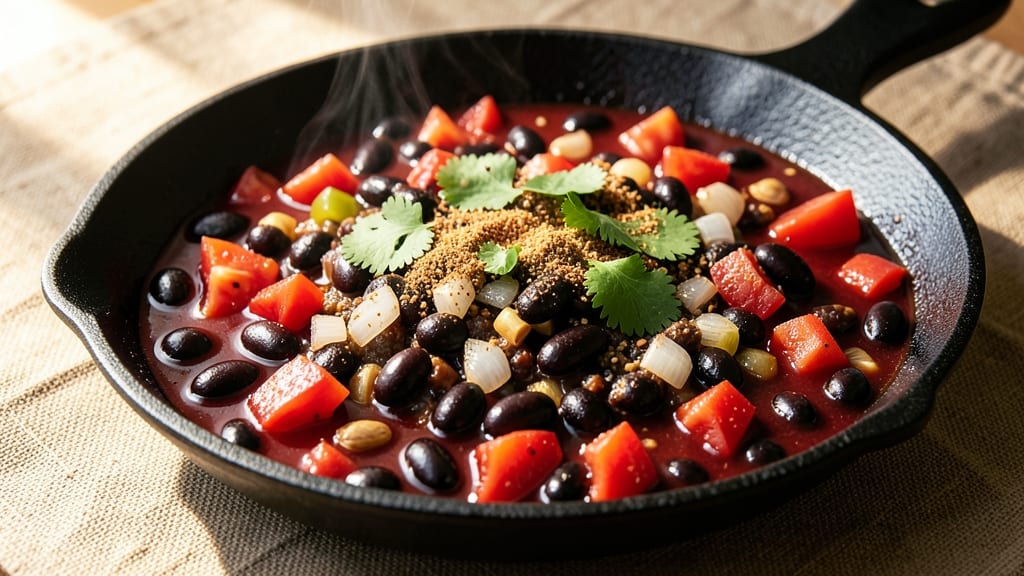
This black bean picadillo skillet recipe transforms simple ingredients into a smoky, spice-packed vegetarian masterpiece that's ready in one pan. The secret lies in toasting whole spices—cumin, coriander, and smoked paprika—for deep, aromatic layers that infuse every bite.
What starts as a sizzle of onions and garlic evolves into a rich, tomato-based sauce where black beans absorb all the warmth and complexity, creating a dish that's hearty enough to stand alone or pair perfectly with rice.
The beauty of this recipe is its foolproof simplicity: no fancy techniques, just a few key steps that build flavor progressively. You'll start by blooming spices in oil until fragrant, then layer in onions, garlic, and bell peppers until softened.
The tomatoes and black beans cook down into a thick, velvety sauce that clings to every bite, while a splash of vinegar brightens the depth. The result is a dish that's restaurant-quality at home, with smoky undertones and a perfect balance of tangy, sweet, and spicy.
By the time you're done, you'll have a plated-worthy skillet meal with tender black beans, caramelized vegetables, and a sauce so flavorful it feels like it simmered for hours.
The texture is ideal—creamy from the beans, with just enough bite from the peppers—and the aroma alone will have everyone asking what's for dinner. This is comfort food that feels special, with minimal effort and maximum reward.
Serve it as-is for a satisfying bowl, or top with avocado, cilantro, and a squeeze of lime for freshness. The skillet method means one pan to wash, making it perfect for weeknight dinners or meal prep. Let's get cooking!
Ingredients for black bean picadillo skillet
Simple ingredients, bold flavors—this vegetarian skillet delivers restaurant-quality smoky depth in one pan.
| Ingredient | Amount | Notes |
|---|---|---|
| Black Beans 🫘 | 1 ½ cups | Drained and rinsed, cooked or canned |
| Diced Tomatoes 🍅 | 1 cup | San Marzano preferred, no juice |
| Onion 🧅 | 1 whole | Yellow or red, diced small |
| Bell Pepper 🌶️ | 1 whole | Red or green, diced small |
| Garlic Cloves 🧄 | 4 cloves | Minced or finely chopped |
| Ground Cumin 🌿 | 1 ½ tbsp | Freshly toasted for depth |
| Ground Coriander 🌿 | 1 tbsp | Toasted with cumin |
| Smoked Paprika 🌶️ | 1 tbsp | For authentic smoky flavor |
| Extra-Virgin Olive Oil 🫒 | ¼ cup | For toasting spices |
| Tomato Paste 🍅 | 2 tbsp | For thickening sauce |
| Apple Cider Vinegar 🍏 | 1 tbsp | Brightens flavors |
| Salt 🧂 | 1 ½ tsp | Diamond Crystal preferred |
| Black Pepper 🌶️ | ½ tsp | Freshly ground |
| Cumin Seeds 🌿 | ½ tsp | Optional for extra aroma |
The spices are where the magic happens. Toast your cumin and coriander seeds in olive oil until fragrant—this step builds layers of warmth that can't be replicated with pre-ground spices. Whole Foods or Latin markets carry high-quality whole spices, but the bulk bins at Trader Joe's work too if you're short on time. For smoked paprika, Penzeys offers the best range, but any reputable brand will do. The black beans should be tender but not mushy—canned, drained, and rinsed is perfect, or use cooked beans from a pot. San Marzano tomatoes are worth seeking out for their sweet, rich flavor, but any good-quality canned tomatoes will work in a pinch.
No whole spices? Pre-ground cumin and coriander at half the amount will still give you flavor, though it won't be as deep. Short on smoked paprika? Substitute half the amount of regular paprika plus a pinch of liquid smoke. The apple cider vinegar adds brightness—substitute white vinegar or lemon juice if needed, but don't skip it. For the tomato paste, Trader Joe's squeeze tubes are perfect for this recipe—they're convenient and keep well. If you're using fresh bell peppers, roast them first for a deeper flavor, but the raw diced version works fine for simplicity. The onions should be finely diced so they soften quickly and blend into the sauce.
This dish tastes even better the next day as flavors meld. Store leftovers in an airtight container in the fridge for up to 5 days, or freeze for 3 months in portion-sized containers. For meal prep, double the recipe and freeze half—just reheat with a splash of water to restore moisture. The skillet method means easy cleanup, and the flavors only get more complex as it sits. Serve with warm rice or crusty bread to soak up every last bit of that smoky, spiced sauce.
Why You'll Love This Recipe
- One-Pan Magic: I swear by this recipe when I’m too tired to wash dishes. Sauté onions and peppers, toss in the beans and tomatoes, and let it all simmer—no extra pots, no fuss. That garlic? Oh, it caramelizes right into the mix, giving you rich flavor without extra effort.
- Deep Umami Bite: The black beans soak up the smoky char from the peppers while the tomatoes add bright acidity. Honestly, the way the garlic cloves soften and mingle with the onions? It’s like a little flavor explosion in every bite—savory, sweet, and just a hint of heat if you like it.
- Lunch or Dinner: Between us, this skillet is my go-to for both. Serve it over rice for a hearty dinner, or scoop it into tortillas for a quick lunch. Even my picky teenager asks for seconds when it’s on the table—proof it works for any mealtime.
- Budget-Friendly Leftovers: A can of beans, a few fresh veggies, and a pantry staple like tomatoes? This recipe costs next to nothing but tastes like a restaurant dish. And the best part? It reheats beautifully, so I make a big batch and have meals for days. No waste, all satisfaction.
Step-by-step instructions for black bean picadillo skillet
This one-pan method delivers deep, smoky flavors with minimal effort—just follow the sequence.
Toast the Spices for Maximum Flavor
Heat a large skillet over medium heat and add the 0.25 cup extra-virgin olive oil. Once the oil shimmers, add the 0.5 tsp cumin seeds and toast for 30 seconds until fragrant and lightly browned. This step unlocks the spice's full aroma—don't skip it.
Add the 1.5 tbsp ground cumin, 1 tbsp ground coriander, and 1 tbsp smoked paprika. Stir constantly for 1 minute until the spices release their oils and fill your kitchen with that unmistakable earthy, smoky scent. You'll see the spices darken slightly—this is your cue they're ready. Remove from heat immediately to prevent burning.
Sauté the Vegetables Until Soft and Sweet
Return the skillet to medium heat and add the 1 whole onion and 1 whole bell pepper, diced small. Cook for 6-8 minutes, stirring occasionally, until the onions become translucent and the peppers soften. The onions should release their moisture and caramelize slightly at the edges.
Add the 4 cloves garlic cloves, minced, and cook for another 30 seconds until fragrant. Here's the thing—garlic burns fast, so keep the heat at medium and stir constantly. You want the garlic to perfume the vegetables without turning bitter. If the vegetables start to stick, add a splash of water and scrape up any browned bits from the bottom of the pan.
Build the Sauce Base with Tomato and Vinegar
Stir in the 2 tbsp tomato paste and cook for 1 minute until it darkens slightly and blends with the spices. Add the 1 cup diced tomatoes (with no juice) and 1 tbsp apple cider vinegar. Let this mixture simmer for 3-4 minutes until the tomatoes break down and the sauce begins to thicken.
The vinegar brightens the flavors while the tomatoes add natural sweetness that balances the smoky spices. You'll notice the sauce reduce slightly and become glossy—this is when the flavors start to meld. Season with 1.5 tsp salt and 0.5 tsp black pepper, adjusting to taste. The salt should enhance all the components without making them taste salty.
Simmer the Black Beans Until Tender and Flavorful
Add the 1.5 cups black beans (drained and rinsed) to the skillet. Stir gently to combine with the sauce, then reduce heat to low. Let the mixture simmer uncovered for 10-12 minutes, stirring occasionally, until the beans are heated through and the sauce has thickened to a chunky consistency.
Your oven might run hot, so start checking at the 10-minute mark. The beans are done when they're tender but still hold their shape, and the sauce coats the back of a spoon. If the mixture looks too dry, add 2-3 tablespoons water to loosen it. The sauce should be thick enough to cling to the beans but still spoonable.
Adjust Seasoning and Serve Immediately
Taste the picadillo and adjust seasoning if needed. You might need a pinch more salt or a splash more vinegar to balance the flavors. The dish should be rich with smoky, earthy notes from the spices, slightly sweet from the tomatoes, and tangy from the vinegar.
Serve the black bean picadillo immediately while it's hot. The flavors continue to develop as it sits, so don't let it cool completely. This dish pairs beautifully with warm corn tortillas, over rice, or alongside a simple green salad. The smoky tomato-cumin flavor profile makes it versatile enough for tacos, bowls, or even stuffed into peppers.
Pro Tips For Making Black Bean Picadillo Skillet
- Sweat the Onions First: I learned this the hard way—if you toss in onions with the garlic and peppers, they’ll just sit there looking sad while everything else burns. Get them in the pan first on medium heat, cut side down, and let them soften for 5-6 minutes before adding anything else. That’s when the flavor actually starts building.
- Char the Peppers: Does it look weird? Yes. Does it work? Every single time. After the onions are soft, add the bell peppers and let them sit untouched for 3-4 minutes until blackened edges form. Those charred spots pack a smoky depth that turns a good picadillo into a great one—just scrape them into the pot when you’re ready to stir.
- Drain and Rinse Those Beans: I skip this when I’m lazy, but the dish is noticeably better when I don’t. Canned black beans have that metallic tang from the brine, and if you don’t rinse them first, your picadillo will taste like a tin can. Drain them, give them a quick cold-water rinse, and pat them dry with a towel—it makes a real difference in texture.
- Simmer the Tomatoes Low: Start hot, finish low. Dump in the diced tomatoes and let them cook hard for 5 minutes to break down the raw acidity, then drop the heat to medium-low. If you rush this, the tomatoes stay watery and dilute the flavors. Let them reduce for at least 8-10 minutes—your future self will thank you.
Pro cooking tips for black bean picadillo skillet
Spice Toasting Secrets
Toast your spices in the same oil you'll cook with—this releases their essential oils and creates a flavor base that pre-ground spices can't match. Use a large skillet (I love my 12-inch Lodge cast iron) and keep heat at medium-low to prevent burning.
Toast cumin seeds for 30 seconds until fragrant, then add ground spices and stir for 1 minute—you'll see them darken slightly. Remove immediately to avoid bitterness. 🌶️
Vegetable Prep Matters
Finely dice your onion and bell pepper (about ¼-inch pieces) so they soften quickly and blend into the sauce. For extra flavor, pulse the onion in a food processor for 2 seconds before cooking—this creates more surface area for caramelization.
If your peppers taste bitter, remove the seeds and membranes first. I always roast mine briefly in the oven before dicing for deeper flavor, but raw works in a pinch.
Sauce Thickening Tricks
Stir in tomato paste first—it thickens the sauce and deepens the tomato flavor. Let it cook for 1 minute until it darkens slightly before adding tomatoes. The apple cider vinegar should be added last to brighten flavors—don't skip this!
For a smoother sauce, blend half the cooked mixture and stir it back in. If your sauce is too thin, simmer uncovered for 2-3 extra minutes to reduce it naturally.
Bean Texture Control
Black beans should be tender but not mushy—simmer them for 10-12 minutes on low heat. If using canned beans, rinse them well to remove excess sodium. For extra creaminess, mash ¼ cup of the beans lightly with a fork before adding the rest.
The sauce should coat the beans but still be spoonable—add 1-2 tbsp water if needed. Never boil the beans or they'll turn mushy. 💫
Heat Management Tips
Medium heat is your friend—it prevents burning while allowing flavors to develop. If your skillet gets too hot, reduce to medium-low and let it cook slower. Stir frequently (especially when adding garlic) to prevent sticking.
For even cooking, use a heavy-bottomed skillet—it distributes heat better than thin pans. I always check the beans at 10 minutes since oven temps vary—some need less time, others more.
Final Flavor Boosts
Taste as you go! The vinegar might need more (add ½ tsp at a time), or the spices could use a pinch of salt. Freshly ground black pepper adds brightness at the end.
For extra depth, stir in 1 tsp soy sauce or ½ tsp liquid smoke before serving. The dish tastes even better the next day as flavors meld—just reheat gently with a splash of water to restore moisture. ✨
Nutrition facts
Frequently asked questions
Can I make this black bean skillet vegetarian?
This recipe is already fully vegetarian! The smoky tomato-cumin sauce and tender black beans create a hearty, protein-rich dish without any meat. For extra protein, consider adding 1 cup cooked quinoa or ½ cup crumbled tofu at the end of cooking. The dish is naturally vegan too—just ensure your beans are BPA-free canned or cooked from dried.
How do I adjust the spice level for sensitive eaters?
Start by reducing the smoked paprika to ½ tablespoon and omit the cumin seeds. For extra mildness, use ½ teaspoon ground cumin instead of 1.5 tablespoons. Always taste as you go—you can add more salt or vinegar to balance flavors without heat. For kids, serve with a side of plain rice or tortillas to dilute the spices.
Can I substitute other beans for black beans?
Yes! Try pinto beans (for nuttier flavor) or kidney beans (for firmer texture), but black beans are ideal—they hold their shape and absorb the smoky sauce beautifully. If using dried beans, soak them overnight and cook until tender before adding to the skillet. For a creamier texture, blend half the beans with the sauce before adding the rest.
What's the best way to reheat leftovers?
Reheat in the same skillet over medium-low heat with 2 tablespoons water to restore moisture. Cover and cook for 5-7 minutes, stirring occasionally, until warmed through. For microwave reheating, use 30-second intervals with 1 teaspoon water per serving to prevent drying. The flavors actually improve overnight—this dish tastes even better the next day!
Why did my sauce turn out too thin?
This usually happens if you didn't toast the spices long enough or skipped the tomato paste step. For future batches, simmer uncovered for 2-3 extra minutes to reduce the sauce naturally. If it's still too thin, stir in 1 teaspoon cornstarch mixed with 1 tablespoon water and cook for 1 more minute. The sauce should coat the back of a spoon when done.