
Main Courses
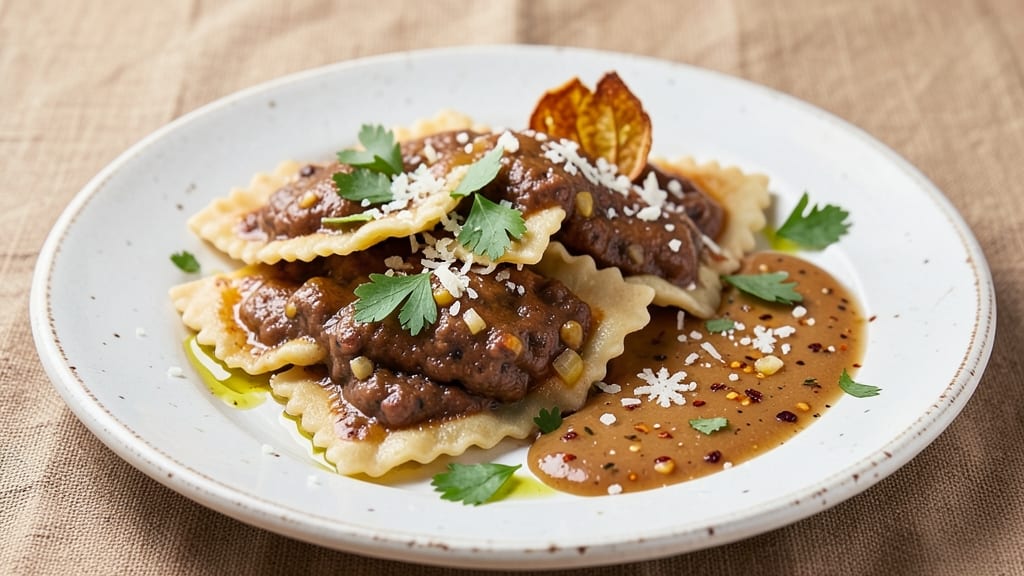
This black bean ravioli recipe transforms humble pantry staples into restaurant-worthy pasta with a protein-packed twist. The secret lies in balancing creamy mashed black beans with sharp herbs and just enough cheese to bind the filling—no dairy required for a vegan-friendly version.
What makes this recipe stand out is the delicate dough that encases the filling perfectly, creating handmade-quality ravioli without the fuss of traditional pasta-making.
The process begins with a simple dough of flour and eggs, rolled thin enough to encase the black bean mixture while maintaining structure. The filling combines mashed black beans with sautéed garlic, onions, and fresh herbs, creating a savory, herby center that holds its shape during cooking.
This isn't just another stuffed pasta—it's a complete dish that delivers hearty, satisfying flavor with every bite.
Once assembled, these ravioli cook in just 3 minutes to al dente perfection, ready to be tossed with marinara, pesto, or a simple olive oil drizzle. The result is a dish that's equally impressive as a weeknight dinner or a showstopper for guests.
With 5 simple ingredients and a method that's both approachable and professional, this recipe proves homemade ravioli doesn't require advanced skills—just patience and a little practice.
The beauty of this recipe extends beyond its versatility—it's also adaptable to dietary needs. For a vegan version, simply omit the cheese or use a dairy-free alternative, and the dish remains rich and satisfying.
Serve with your favorite sauce or a sprinkle of fresh herbs for an elegant finish that feels indulgent without being heavy.
Ingredients for black bean ravioli
Five core ingredients transform simple pasta into restaurant-quality black bean ravioli.
| Ingredient | Amount | Notes |
|---|---|---|
| All-Purpose Flour 🌾 | 2 ½ cups | For delicate, thin dough |
| Large Eggs 🥚 | 3 whole | Room temperature preferred |
| Black Beans 🫘 | 1 ½ cups | Cooked, mashed, no liquid |
| Garlic Cloves 🧄 | 4 cloves | Minced for filling flavor |
| Yellow Onion 🧅 | ½ cup | Finely diced, sautéed |
| Fresh Parsley 🌿 | ¼ cup | Chopped, stems removed |
| Fresh Basil 🌿 | 0.2 cup | Chopped, for herby flavor |
| Parmesan Cheese 🧀 | ½ cup | Freshly grated, vegetarian |
| Extra-Virgin Olive Oil 🫒 | 2 tbsp | For dough and sautéing |
| Salt 🧂 | 1 ½ tsp | Kosher or sea salt |
| Black Pepper 🌶️ | ½ tsp | Freshly ground preferred |
| Semolina Flour 🌾 | ¼ cup | For dusting work surface |
| Marinara Sauce 🍅 | 1 ½ cups | For serving, optional |
The flour is non-negotiable here—King Arthur or Caputo Tipo 00 yield the best results for delicate dough. Eggs should be at room temperature for even mixing, and Whole Foods or local farms often carry fresher options. For the black beans, canned low-sodium varieties like Goya work perfectly—just rinse and mash thoroughly. The cheese matters too: Parmigiano-Reggiano grated fresh from a wedge adds depth that pre-grated can't match. If you're short on fresh herbs, dried parsley or basil at half the amount will suffice in a pinch.
No semolina? All-purpose flour dusted lightly works for rolling, though semolina provides better texture. For a vegan version, simply omit the cheese or use nutritional yeast for a cheesy flavor. The olive oil should be extra-virgin with fruity notes—none of that cheap cooking oil. If your dough feels too sticky, add 1 tsp more flour at a time until it's pliable but not dry. The filling should be packed with flavor: sauté the garlic and onion until soft, then mix with the mashed beans, herbs, and cheese until fully combined.
Store the dough between parchment paper in an airtight container for up to 2 days—it's best used fresh, though. The filling can be prepped ahead and kept in the fridge for 3 days. Once assembled, these ravioli freeze beautifully: lay them on a tray to freeze first, then transfer to a bag for 3 months. For serving, a quick toss in marinara or a drizzle of olive oil with fresh herbs elevates them instantly—3 minutes of boiling is all they need to reach al dente perfection.
Why You'll Love This Recipe
- No-Knead Magic: I swear by this dough—just flour, eggs, and a splash of water. You mix, rest, roll. No standing at the counter for hours, no rolling pins flying across the kitchen. The beans handle the heavy lifting while you do the easy part.
- Umami Bomb: That black bean filling? It’s where the real magic happens. Sautéed onion and garlic caramelize into something deep and savory, then the beans soak it all up like a sponge. One bite and you’ll forget about store-bought ravioli.
- Potluck Star: Between us, these are my go-to for gatherings. They reheat like a dream, freeze without getting mushy, and even my picky uncle asks for seconds. Toss them with a simple marinara or olive oil and herbs—no one will guess they’re secretly budget-friendly.
- Pantry Rescue: I keep a can of black beans and a bag of flour on hand just for this. When I’m low on groceries or short on time, this recipe saves me. Plus, the filling stretches far—enough for dinner tonight and lunch tomorrow without breaking the bank.
Step-by-step instructions for black bean ravioli
Here's how to craft delicate pasta shells with a hearty black bean filling and herbed cheese twist.
Prepare the Black Bean Filling
In a food processor, combine the 1.5 cups black beans, 4 cloves minced garlic, 0.5 cup finely diced yellow onion, 0.25 cup chopped parsley, 0.2 cup chopped basil, 0.5 cup freshly grated Parmesan cheese, 1.5 teaspoons salt, and 0.5 teaspoon black pepper. Pulse until smooth but still slightly textured—you want a thick, spreadable consistency that won't leak through the dough.
Transfer the mixture to a bowl and stir in 1 tablespoon of the extra-virgin olive oil. This helps bind the filling and adds richness. Taste and adjust seasoning if needed—black beans can vary in saltiness, so this ensures perfect balance. Cover and refrigerate until ready to use; the filling will firm up slightly, making it easier to handle.
Make the Ravioli Dough
On a clean work surface, mound the 2.5 cups all-purpose flour and create a well in the center. Add the 3 whole eggs and 1 tablespoon extra-virgin olive oil, then gradually incorporate the flour from the edges, mixing with your hands until a shaggy dough forms. Knead for 8-10 minutes until smooth and elastic, adding a splash of water if needed to prevent stickiness.
Wrap the dough in plastic wrap and let it rest for 30 minutes at room temperature. This resting period relaxes the gluten, making it easier to roll thin. While waiting, dust your work surface with 0.25 cup semolina flour—this prevents sticking and adds a subtle nutty flavor to the finished ravioli.
Roll and Cut the Dough
Using a rolling pin, roll the rested dough into a 1/16-inch thick sheet, about 8 inches square. If the dough sticks, dust lightly with more semolina flour. Cut the sheet into 3-inch squares—these will be your ravioli shells. Repeat with the remaining dough, stacking the cut squares between sheets of parchment paper to prevent drying.
For the filling, use a piping bag fitted with a 1/2-inch round tip to create small mounds (about 1 teaspoon each) in the center of each dough square. Leave a 1/2-inch border around the edges—this ensures the filling stays contained when sealed. Be generous but precise; the filling should be centered and evenly distributed.
Seal and Boil the Ravioli
Dip your finger in water and trace a seal around each filled square, pressing gently to adhere the edges. Use a fork to crimp the edges tightly, creating a secure seal. If any filling leaks, pat it back inside with a damp paper towel. Bring a large pot of salted water to a rolling boil—1 tablespoon salt per gallon—and add the ravioli in batches to avoid overcrowding.
Cook for 3-4 minutes until they float to the surface, then 1-2 minutes more until al dente. Drain immediately and toss with a little extra-virgin olive oil to prevent sticking. For serving, warm the 1.5 cups marinara sauce in a separate pan and toss the ravioli gently to coat. Garnish with additional chopped parsley and a sprinkle of Parmesan cheese for freshness.
Pro Tips For Making Black Bean Ravioli
- Mash the Beans Thoroughly: Black beans should be smooth—no visible chunks. I used to hit them with a fork and wonder why my filling was grainy. Use a potato masher or fork and press hard until it’s like a thick paste. If it’s still too chunky, pulse in a food processor just until combined.
- Chill the Dough Before Rolling: Warm dough sticks like glue. Wrap the rolled-out dough in plastic and refrigerate for 15 minutes before cutting circles. This keeps it from tearing when you press the ravioli mold—or worse, sticking to your fingers like a nightmare.
- Salt the Pasta Water Like the Sea: Yes, it sounds extreme, but black bean filling is mild. Taste your pasta water—if it’s not intensely salty, your ravioli will taste bland. Aim for a tablespoon of salt per quart of water, then add more if you’re using low-sodium beans.
- Dry the Filling Before Sealing: Wet filling = soggy ravioli. After mixing, spread the bean filling on parchment and let it sit uncovered for 10 minutes. This evaporates excess moisture so your ravioli holds its shape when cooked—no sad, flat dumplings here.
Pro cooking tips for perfect results
Dough Perfection
For flawless ravioli dough, I swear by the 8-10 minute kneading rule—this develops gluten properly without overworking it. Use a stand mixer with a dough hook on medium speed for consistency, or knead by hand on a lightly floured surface.
The dough should be smooth, elastic, and spring back when poked. If it cracks or feels dry, add 1 teaspoon water at a time until pliable. 💫
Let the dough rest for 30 minutes—this critical step prevents cracking when rolling. Wrap it tightly in plastic wrap and place it on your counter. The room temperature matters here: cold dough resists rolling, while warm dough sticks.
If your kitchen is chilly, let it sit for 10 extra minutes before rolling.
Filling Consistency
The black bean filling needs to be thick but spreadable—like hummus but slightly firmer. I blend the beans until mostly smooth, leaving just a hint of texture for better binding. For extra richness, add 1 tablespoon nutritional yeast if making a vegan version.
The filling should hold its shape when piped but still be easy to work with—if it's too wet, add 1 tablespoon cooked quinoa to absorb excess moisture.
Season the filling generously—black beans need extra salt and acid to shine. I add 1 teaspoon lemon juice and ½ teaspoon smoked paprika to deepen the flavor.
Taste as you go: the filling should be vibrant, not bland. For a nutty depth, toast 1 tablespoon pine nuts and mix them in before assembling.
Rolling Like a Pro
Use a pasta machine for even thickness—set it to the thinnest setting (usually #6 or #7) and roll the dough through 2-3 times for perfect consistency. If you're rolling by hand, start with a ¼-inch thickness and gradually reduce to 1/16-inch by rolling in both directions.
The goal is delicate but sturdy—thin enough to cook quickly but strong enough to hold the filling.
Work in small batches to prevent drying. Keep unused dough covered with a damp towel while you assemble ravioli. For extra insurance, brush the rolled sheets with a little olive oil before cutting—this keeps them supple.
If the dough tears, patch it with a tiny scrap and continue; perfection isn't required!
Sealing Secrets
Moisten your fingers with water (not oil) to seal the ravioli—water creates a stronger bond than oil. Press firmly along the edges to fully encase the filling, then use a fork to crimp for a classic look.
For extra security, add a tiny dab of egg wash (1 egg + 1 tbsp water) to the edges before sealing. This prevents leaks during cooking and gives a professional finish.
If filling leaks during boiling, it’s usually from uneven distribution or overfilling. Keep the mounds small and centered, leaving a ½-inch border around the edges. For faster assembly, use a cookie cutter to shape the dough squares consistently.
Once sealed, let them rest on a floured tray for 5 minutes before cooking to set the shape.
Nutrition facts
Frequently asked questions
Can I make this black bean ravioli recipe without a pasta machine?
Use a rolling pin to achieve the same results. Roll the dough on a lightly floured surface starting with ¼-inch thickness, then gradually reduce to 1/16-inch by rolling in both directions. For even thickness, fold the dough in half after each roll. A measuring cup or wine bottle can help check thickness—aim for delicate but sturdy sheets.
How do I prevent the filling from leaking when boiling?
Keep filling mounds small and centered, leaving a ½-inch border around edges. Seal with moistened fingers (water, not oil) and crimp edges with a fork. For extra security, add a tiny dab of egg wash before sealing. If leaks occur, your filling may be too wet—add 1 tablespoon cooked quinoa to absorb moisture.
What's the best way to store leftover black bean ravioli?
Cooked ravioli keep in an airtight container in the fridge for 3 days. For longer storage, freeze them on a tray first (to prevent sticking), then transfer to a bag for up to 3 months. Thaw overnight in the fridge before reheating—never microwave directly from frozen. Toss with fresh sauce and herbs after reheating to revive flavors.
Can I make this recipe vegan?
Yes! Omit the Parmesan cheese or use nutritional yeast for a cheesy flavor. Replace eggs in the dough with 2 tablespoons ground flaxseed + 6 tablespoons water (let sit for 5 minutes). The filling remains vegan as-is. For binding, add 1 tablespoon aquafaba (chickpea brine) to the filling mixture. All other steps remain identical.
What's the ideal sauce pairing for these ravioli?
Classic options include marinara sauce (light and tangy) or brown butter sage sauce (rich and nutty). For a vegan twist, try white wine reduction with sun-dried tomatoes. Keep sauces simple—these hearty ravioli stand up to bold flavors. A drizzle of extra-virgin olive oil with fresh herbs works beautifully for a lighter option.