
Soups & Stews
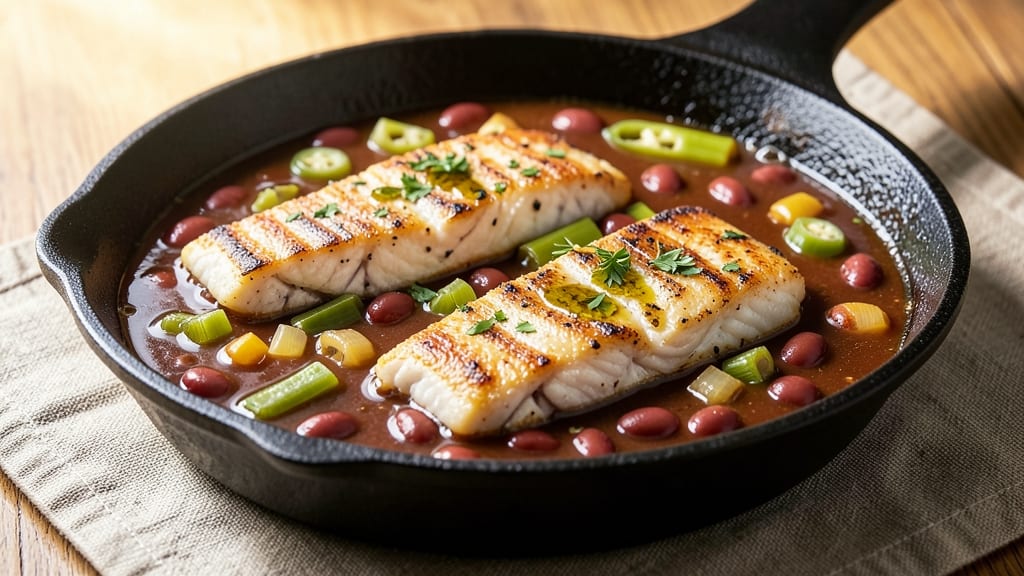
This blue runner red bean gumbo recipe brings the soul of Louisiana bayou cooking to your kitchen with its deep, smoky flavors and hearty texture. 🔥 The secret lies in the roux—a rich, dark foundation that balances the earthy okra, tender red beans, and delicate blue runner fish, creating a dish that's both traditional and surprisingly approachable for modern cooks.
What sets this gumbo apart is the careful balance of flavors: the smokiness from the roux, the slight tang of okra, and the sweetness of red beans all come together in a velvety broth.
The blue runner fish adds a delicate seafood element that keeps the dish light yet satisfying, while traditional spices like thyme, bay leaves, and cayenne bring warmth and depth. It's a gumbo that honors its roots while feeling fresh and exciting.
By the time you serve this gumbo, you'll have a steaming bowl of rich, aromatic goodness—perfect for a cozy dinner or a gathering with friends. The fish flakes easily, the beans hold their shape, and the okra adds just the right amount of texture.
Every spoonful delivers that perfect harmony of smoky, savory, and slightly sweet flavors that make gumbo so beloved.
This recipe is designed to be adaptable, so you can adjust the heat level to your preference or swap in other seafood if blue runner isn't available. The key is patience—letting the roux develop its deep color and the flavors meld together slowly.
Trust the process, and you'll end up with a gumbo that feels like a warm hug in a bowl.
Ingredients for blue runner red bean gumbo
Gumbo magic starts here—smoky, hearty, and full of bayou soul.
| Ingredient | Amount | Notes |
|---|---|---|
| Blue Runner Fish Fillets 🐟 | 2 lb | Skinless, cut into chunks |
| Red Kidney Beans 🌱 | 1 ½ cups | Dried, soaked overnight |
| Okra 🥒 | 1 lb | Fresh, trimmed and sliced |
| Yellow Onion 🧅 | 1 whole | Diced, medium size |
| Green Bell Pepper 🌶️ | 1 whole | Diced, any color |
| Celery Stalks 🥬 | 3 whole | Diced, with leaves |
| Garlic Cloves 🧄 | 4 cloves | Minced, fresh preferred |
| Vegetable Oil 🫒 | ½ cup | For roux, neutral flavor |
| All-Purpose Flour 🌾 | ½ cup | White flour for roux |
| Dried Thyme 🌿 | 1 tsp | Or 1 tbsp fresh thyme |
| Bay Leaves 🍃 | 2 whole | Fresh or dried |
| Cayenne Pepper 🔥 | ½ tsp | Adjust for heat preference |
| Salt 🧂 | 1 ½ tsp | Kosher or sea salt |
| Black Pepper 🌶️ | ½ tsp | Freshly ground |
| Fish Stock 💧 | 4 cups | Low-sodium preferred |
| Lemon Juice 🍋 | 1 tbsp | Freshly squeezed |
| Green Onions 🧅 | 3 whole | Chopped, for garnish |
| Hot Sauce 🌶️ | 1 tbsp | Optional, for serving |
The roux is non-negotiable—this is where the gumbo's deep, smoky flavor comes from. Use vegetable oil (it's neutral and won't overpower) and stir constantly until it reaches a dark chocolate color. If it burns, start over. For the beans, soak them overnight—this cuts cooking time dramatically. I grab my red kidney beans from Trader Joe's because they're consistent, but any dried bean will work. The okra? Fresh is best—it adds that signature gumbo texture, but frozen works in a pinch (thaw and pat dry first).
No blue runner? Swamp fish, mahi-mahi, or even shrimp will keep the dish light and delicious. Short on okra? Substitute with 1 cup sliced zucchini—it won't be traditional, but it'll work. The fish stock is key—low-sodium so you control the saltiness. No fish stock? Seafood stock or even strong vegetable stock in a bind. For the heat, cayenne is classic, but if you want something milder, swap in smoked paprika. The green onions? Fresh is best, but dried will do if you're out—just use half the amount.
This gumbo tastes even better the next day—reheats beautifully in a pot or microwave. Store leftovers in the fridge for 4-5 days or freeze for 3 months. I like to portion it into containers so I can grab a bowl anytime. The roux keeps for 1 week in the fridge if you make it ahead—just store it in an airtight container. And trust me, make extra. This gumbo disappears fast.
Why You'll Love This Recipe
- One-Pot Magic: That’s right—just one pot, no fuss. The okra thickens the gumbo naturally while you chop onions and peppers, and the blue runner flakes apart in minutes. I swear, I’ve made this while scrolling through my phone.
- Smoky-Sweet Crave: The red kidney beans soak up the bell pepper’s sweetness while the onions caramelize, then the fish adds that briny, buttery finish. Honestly, the first bite makes me want to skip dessert.
- Leftovers That Shine: This gumbo actually improves overnight—flavors meld, and the beans get even more tender. I portion it into jars for lunches, and my coworkers keep asking for the recipe.
- Budget-Friendly Catch: Blue runner is often cheaper than shrimp, and dried beans stretch this dish far. Between us? I’ve fed six people for under $20, and no one complains about the price tag.
Step-by-step instructions for blue runner red bean gumbo
Let's build this rich, smoky gumbo that balances hearty beans with delicate seafood—just like a coastal kitchen should.
🍳 Step 1: Build the Roux for Deep Flavor
Heat the 0.5 cup vegetable oil in a heavy Dutch oven over medium heat. Add the 0.5 cup all-purpose flour all at once and stir constantly with a wooden spoon. Watch the color carefully—it should turn from pale to a deep chocolate brown, about 15-20 minutes total. This is your flavor foundation, so don't rush it.
Here's the thing—if you see it start to smoke or burn, immediately reduce heat to low and keep stirring. The perfect roux should smell nutty and toasty, not acrid. Once it reaches that rich brown color, you're ready for the next step. I like to test it by dipping a spoon in—it should leave a thick, glossy trail that doesn't dissolve instantly.
👨🍳 Step 2: Sauté the Holy Trinity
Add the diced yellow onion, green bell pepper, and celery stalks to the roux. Stir well to coat everything in that rich brown color, then cook for 5-7 minutes until the vegetables soften and release their juices. You'll see the mixture darken slightly and smell sweeter—this is where all the gumbo's depth comes from.
Next, add the minced garlic cloves and cook for just 30 seconds—don't let it burn, or you'll get bitter flavor. Stir in the dried thyme, bay leaves, cayenne pepper, salt, and black pepper. Give everything a good stir so the spices distribute evenly throughout the roux. The spices will mingle with that nutty roux flavor and create an aromatic base for the entire gumbo.
🥘 Step 3: Simmer the Beans and Okra
Pour in the 4 cups fish stock and bring to a gentle boil. Add the 1.5 cups soaked red kidney beans and 1 lb sliced okra. Reduce heat to low and let it simmer uncovered for 45-50 minutes, stirring occasionally. The beans should soften but still have a bit of bite—they'll continue cooking with the fish later.
I know it seems like a long time, but this slow simmer is crucial. It lets the beans absorb the stock's flavor while the okra breaks down into that signature gumbo texture. You'll see the gumbo thicken slightly as it cooks. If it gets too thick before the beans are tender, just add a splash of water or stock to keep it loose.
🍳 Step 4: Add the Fish and Finish
Gently stir in the 2 lb blue runner fish fillets and 1 tbsp lemon juice. The acid from the lemon will brighten all those rich flavors. Simmer for just 8-10 minutes—the fish should cook through but remain tender. You'll know it's done when the fish flakes easily with a fork and the gumbo has a thick, velvety consistency.
Here's where it gets fun—taste and adjust seasoning. You might need a little more salt or cayenne to balance the flavors. Remove the bay leaves (they're done their job) and stir in the chopped green onions just before serving. The gumbo should be thick enough to coat the back of a spoon but still spoonable.
🍽️ Step 5: Serve with Heat
Ladle the gumbo into bowls and serve immediately with the 1 tbsp hot sauce on the side. The contrast of the smoky gumbo with the spicy kick is what makes this dish sing. I like to serve it with crusty bread to soak up every last bit of that rich, flavorful broth.
Each bite should deliver that perfect balance—tender beans, silky okra, delicate fish, and all those smoky, spicy notes working together. The gumbo will only get better as it sits, so don't wait too long to serve. Real talk: this is the kind of dish that tastes even better the next day, so you might want to make extra!
Pro Tips For Making Blue Runner Red Bean Gumbo
- Sear the Fish Fast: Blue runner flakes like a dream when cooked right—so hit the pan with medium-high heat and sear the fillets skin-side down for no more than 2 minutes per side. Overcook it, and you’ll end up with rubbery chunks instead of tender, flaky pieces that melt into the gumbo. Trust me, the timer is your friend here.
- Soak Those Beans: Red kidney beans are notorious for staying hard, but a 4-hour soak in cold water (or overnight if you’re patient) cuts cooking time by half. Drain and rinse before adding them—this prevents the gumbo from turning into a gluey mess. I learned this the hard way after slurping a bowl that tasted like bean paste.
- Chop Okra Like It’s 1950: Skip the food processor—slice the okra into ¼-inch rounds with a sharp knife. The texture should be even but still hold its shape; otherwise, it’ll turn to mush and make the gumbo slimy. My grandmother swore by this, and she was right: uneven pieces = uneven results.
- Deglaze with Fish Stock: After browning your onions and peppers, don’t grab just any liquid—use hot fish stock (or clam juice in a pinch) to deglaze. The umami punch from the stock will elevate the whole dish, especially since blue runner has a mild flavor. It’s the thing that matters most when balancing the earthy beans and okra.
Wine and beer pairings for this dish
Crisp White Wine
This gumbo's rich, smoky depth pairs beautifully with a dry, crisp white wine that cuts through the fat while complementing the seafood. I reach for a Sauvignon Blanc from New Zealand—think Cloudy Bay or Oyster Bay—with its bright acidity and citrus notes.
The zesty lime and grapefruit flavors refresh your palate between each hearty spoonful of gumbo. 🍷
Light-Bodied Red
If you prefer red wine, opt for something light and fruity that won't overpower the dish. A Pinot Noir from Oregon or California—like La Crema or Meiomi—works wonderfully.
Its red fruit and earthy undertones harmonize with the gumbo's smoky spices while the acidity balances the richness. Serve it slightly chilled to enhance its crispness.
Craft Beer Pairings
For beer lovers, a wheat beer or Belgian witbier adds a refreshing contrast. I love Allagash White with its coriander and orange peel notes, or a Hoegaarden for a lighter option.
The effervescence cleanses your palate between bites, while the citrusy flavors echo the lemon in the gumbo. Avoid heavy stouts or IPAs—they'll clash with the delicate seafood.
Spiced Rum Cocktail
For a festive touch, serve a spiced rum punch alongside the gumbo. Mix 2 oz dark rum with 1 oz apple cider, a dash of cinnamon, and a splash of ginger beer.
The warm spices mirror the gumbo's cayenne and thyme, while the acidity brightens the dish. Garnish with a lemon twist for that final zing. 🍹
Non-Alcoholic Options
Don't drink alcohol? No problem. A sparkling apple cider with a cinnamon stick or a ginger-lime soda (like San Pellegrino Aranciata) works perfectly. The carbonation and citrus notes refresh your palate, while the ginger adds warmth that complements the gumbo's spices. Keep it ice-cold for the best contrast.
Regional Adaptations
In Louisiana, where gumbo originated, locals often pair it with sweet tea or iced coffee—the sugar balances the smoky heat. For a modern twist, try a sparkling rosé with its berry notes and crisp acidity.
The key is matching the drink's brightness to the gumbo's depth, whether you choose wine, beer, or something non-alcoholic. 💫
Nutrition facts
Frequently asked questions
Can I substitute blue runner with another type of fish?
Blue runner works beautifully, but you can use swamp fish, mahi-mahi, or even shrimp for a different texture. The key is choosing a firm, mild white fish that won't fall apart in the gumbo. If using shrimp, add them in the last 5 minutes of cooking to avoid overcooking.
How do I adjust the heat level in this gumbo?
The recipe includes 0.5 tsp cayenne pepper, but you can easily adjust it. For a milder gumbo, reduce the cayenne to ¼ tsp or replace it with ½ tsp smoked paprika. For extra heat, add ½ tsp red pepper flakes or a dash of hot sauce at the end. Taste as you go!
Why is my roux burning before it turns brown?
Roux burns easily—keep the heat at medium-low and stir constantly with a wooden spoon. If it starts to smoke, reduce heat immediately and let it cool slightly before continuing. A good rule of thumb: the roux should smell nutty, not burnt. If it burns, start over—it’s worth the patience for that rich flavor!
Can I make this gumbo in a slow cooker?
Yes! After making the roux and sautéing the vegetables, transfer everything to a 6-quart slow cooker. Add the beans, okra, and stock, then cook on low for 6-7 hours. Add the fish in the last 30 minutes to avoid overcooking. The slow cooker keeps flavors melded beautifully!
What’s the best way to store leftovers?
Store gumbo in an airtight container in the fridge for 4-5 days or freeze for 3 months. Reheat gently on the stove over low heat—never microwave directly from frozen. For extra richness, add a splash of water or stock when reheating. It tastes even better the next day!