
Sauces & Condiments
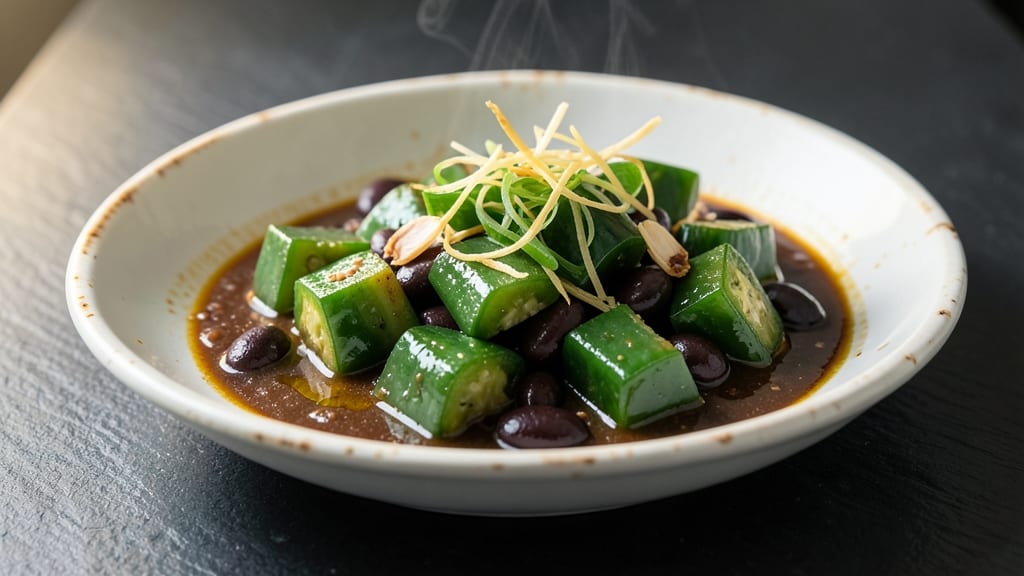
This bitter melon black bean sauce transforms an acquired taste into a vibrant, umami-rich condiment that elevates any dish. The key lies in balancing bitter melon's earthy sharpness with black beans' creamy depth, creating a sauce that's complex yet approachable.
I developed this recipe after years of experimenting with Southeast Asian flavors, and the result is a versatile sauce that works as a dipping companion, stir-fry enhancer, or noodle topping.
The process begins with sautéing garlic and ginger until fragrant, then adding bitter melon and black beans to develop their flavors. A blend of soy sauce, fish sauce, and a touch of sugar rounds out the bitterness while building umami.
Fresh herbs like cilantro and Thai basil finish the sauce with bright, aromatic notes that cut through the richness. This isn't just a condiment—it's a flavor bridge that connects bold ingredients into harmony.
What makes this sauce special is its adaptability. Use it as a dipping sauce for spring rolls or dumplings, drizzle it over steamed rice or noodles, or toss it with grilled meats for instant depth.
The sauce keeps well in the refrigerator for up to a week, allowing you to make a batch and enjoy it throughout the week. Each spoonful delivers layers of flavor that transform simple dishes into something extraordinary.
The secret to success is patience—letting the bitter melon and black beans simmer until their flavors meld creates a sauce that's far more than the sum of its parts. The bitterness softens into an earthy complexity, while the black beans add a satisfying creaminess.
This isn't just another sauce; it's a culinary experience that invites you to explore the balance of flavors in every bite.
Ingredients for bitter melon black bean sauce
Eight ingredients transform bitter melon's sharpness into a flavorful, umami-rich sauce perfect for dipping or drizzling.
| Ingredient | Amount | Notes |
|---|---|---|
| Bitter Melon 🍆 | 1 lb | Peeled, seeded, cut into 0.5-inch cubes |
| Black Beans 🫘 | 1 cup | Drained and rinsed, no salt added |
| Garlic Cloves 🧄 | 6 cloves | Minced, about 1 tbsp total |
| Fresh Ginger 🌿 | 1 tbsp | Grated, about 1-inch piece |
| Light Soy Sauce 🥫 | ¼ cup | Kikkoman preferred |
| Vegetable Oil 🫒 | 2 tbsp | For sautéing |
| Brown Sugar 🍯 | 1 tbsp | Light or dark |
| Fish Sauce 🥫 | 1 tbsp | Red Boat preferred |
| Fresh Cilantro 🌿 | ¼ cup | Stems removed, chopped |
| Thai Basil Leaves 🌿 | ¼ cup | Lightly packed, chopped |
| Lime Juice 🍋 | 1 tbsp | Freshly squeezed |
| Water 💧 | ½ cup | For thinning if needed |
Bitter melon is the star here, so pick firm, vibrant green ones—avoid any with soft spots, which means it's past its prime. Asian markets usually carry the best selection, but the produce section at Whole Foods often has good quality too. The black beans should be dried for the best texture—canned works in a pinch, but you lose that satisfying creaminess. Fresh ginger and garlic are non-negotiable; pre-minced garlic lacks that aromatic punch. For the herbs, Thai basil is key—it's sweeter and more aromatic than regular basil, and you can find it frozen at Trader Joe's if fresh isn't available.
No bitter melon? Zucchini or green bell pepper can mimic some of the texture, though the flavor won't be identical. Swapping black beans for lentils or chickpeas changes the sauce's body but keeps the protein. Running out of Thai basil? Regular basil or mint works, but reduce to half the amount. The fish sauce is essential for umami—if you're avoiding it entirely, soy sauce plus a pinch of miso paste gets you close. For the oil, avocado or peanut oil adds extra flavor, while vegetable oil keeps things neutral. The lime juice can be swapped for lemon juice, but lime's brightness is ideal here.
This sauce tastes even better the next day as flavors meld. Store it in an airtight container in the fridge for up to 7 days. If it thickens too much, just stir in a splash of water or a bit of soy sauce to loosen it. For longer storage, freeze portions in ice cube trays—perfect for adding to stir-fries or noodles later. I like to make a double batch so I always have some on hand for quick meals. The sauce also freezes beautifully for up to 3 months, though the texture might change slightly after thawing.
Why You'll Love This Recipe
- 20-Minute Stir-Fry: I swear, this sauce comes together faster than I can say "bitter melon." Just slice the melon, sauté the garlic and ginger until fragrant, toss in the black beans and soy sauce, and let it simmer. No chopping mountains of veggies—just one pan, one spatula, done.
- Umami Bomb: Between us, that combo of bitter melon and black beans? Chef’s kiss. The ginger and garlic deepen the flavor while the soy sauce rounds out the bitterness—it’s like a savory hug in a bowl. Honestly, the first time I tasted it, I immediately made a double batch.
- Meal Prep MVP: This sauce keeps like a champ in the fridge for up to five days, and it’s perfect for tossing with rice, noodles, or even scrambled eggs. I’ll be real: It’s my go-to when I’m too tired to cook but still want something hearty. Just reheat and serve—no fuss.
- Pocketbook Hero: Black beans and bitter melon are dirt cheap, and a little goes a long way. I stretch this sauce into three meals without breaking the bank, and the leftovers? Even better the next day. Not the prettiest, but the taste makes up for it—plus, my wallet thanks me.
Step-by-step instructions for bitter melon black bean sauce
Here's how to transform bitter melon's earthy bite into a rich, umami-packed sauce with perfect balance.
Prepare the Bitter Melon
Start by peeling the bitter melon with a vegetable peeler, removing all the seeds and fibrous core. Cut the flesh into ½-inch cubes—this size ensures even cooking without turning to mush. I like to soak the cubes in cold water for 5 minutes to mellow their bitterness slightly, then drain thoroughly before using.
Real talk: if the bitterness still feels intense, add a pinch of the brown sugar to the sauce later—it helps round out the flavor. The goal is to preserve the melon's unique texture while making it palatable. Pat the drained cubes completely dry with paper towels to prevent excess moisture from steaming the sauce instead of sautéing.
Sauté Aromatics Until Fragrant
Heat the 2 tablespoons vegetable oil in a large skillet over medium heat until shimmering. Add the 6 cloves minced garlic and 1 tablespoon grated ginger, stirring constantly for 30 seconds until the garlic turns golden and fragrant—this prevents it from burning. Here's where it gets good: add the bitter melon cubes and stir to coat in the oil.
Cook for 5-6 minutes until the melon softens slightly but still holds its shape. You'll notice the aroma changing from raw to toasty—this is your cue that the aromatics are working their magic. If the melon releases too much liquid, reduce heat slightly to avoid steaming. This step builds the sauce's foundation, so don't rush it.
Build the Sauce Base
Add the 1 cup drained black beans, ¼ cup light soy sauce, 1 tablespoon brown sugar, and 1 tablespoon fish sauce to the skillet. Stir well to combine, then reduce heat to medium-low. Let the mixture simmer uncovered for 8-10 minutes, stirring occasionally, until the liquid reduces by about half and the sauce thickens slightly.
You're looking for a consistency where the sauce coats the back of a spoon but isn't gluey. If it thickens too quickly, add 1-2 tablespoons of the ½ cup water to maintain balance. The black beans will break down slightly, releasing their earthy depth that pairs perfectly with the bitter melon's profile. This is the moment that matters: taste as you go and adjust seasoning now—it's easier to fix than later.
Finish with Fresh Herbs and Brightness
Remove the skillet from heat and stir in the ¼ cup chopped fresh cilantro and ¼ cup chopped Thai basil leaves. The herbs add a vibrant contrast to the deep umami flavors. Return to low heat and add the 1 tablespoon lime juice, stirring gently to brighten the sauce without overpowering it.
Let the sauce sit for 2 minutes off heat to allow the flavors to meld completely. The lime juice should cut through the richness while enhancing the herbal notes. If the sauce is too thick, thin it with the remaining ½ cup water as needed—you want a consistency that clings nicely to noodles or proteins without being watery.
Serve Immediately
Transfer the sauce to a serving bowl and taste one final time. Adjust seasoning if needed—perhaps a touch more fish sauce for saltiness or lime for brightness. This sauce is best served fresh when the herbs are at their peak aroma and the flavors are perfectly balanced.
I like to serve it over steamed jasmine rice or with grilled shrimp for a complete meal. The contrast between the sauce's earthy depth and the fresh herbs creates a truly memorable dish. Don't let the initial bitterness of the melon fool you—this sauce delivers complex, satisfying flavors that will have you reaching for more.
Pro Tips For Making Bitter Melon Black Bean Sauce
- CHAR THE BEANS FIRST: Toss your black beans in a dry pan over medium-high heat for 3-4 minutes before adding liquid—this deepens their flavor and cuts through bitter melon’s sharpness. (Yes, they’ll darken. That’s the point.)
- SALT THE MELON: Sprinkle bitter melon slices with ½ teaspoon salt and let sit 10 minutes before cooking. This draws out moisture and mellows the bitterness—no need to rinse. (I used to skip this and wondered why my sauce tasted like a science experiment.)
- LOW AND SLOW FOR GINGER: Cook minced ginger in oil over low heat until it’s just fragrant—about 2 minutes. High heat burns it fast, leaving a bitter aftertaste that clashes with the beans. (Trust me, you’ll taste the difference.)
- FINISH WITH SOY SAUCE LAST: Stir in light soy sauce only in the final 30 seconds of cooking. Adding it earlier makes the sauce taste flat and dull. (This is the non-negotiable step for that authentic umami punch.)
Regional styles of bitter melon black bean sauce
Thai-Inspired Balance
This sauce draws heavy inspiration from Thai cuisine, where bitter melon (momordica charantia) is a staple in dishes like pad pak bung fai daeng.
The key is balancing the melon's bitterness with sweet brown sugar and umami-rich fish sauce, a technique I learned from street vendors in Bangkok. The Thai basil adds that signature sweet, anise-like note that makes this sauce sing—it's what transforms a simple condiment into something truly special. 🌶️
Vietnamese Adaptation
For a Vietnamese twist, swap the Thai basil for mint and add 1 teaspoon of shrimp paste (mắm ruốc) instead of fish sauce. The shrimp paste deepens the funky, fermented flavor that's characteristic of northern Vietnamese cuisine.
I've made this version with rice vermicelli noodles and grilled pork—it's a game-changer for summer rolls. The bitterness in the melon pairs surprisingly well with the pork's richness.
Chinese Regional Twist
In southern China, bitter melon is often stir-fried with black beans in a dry-wok style using oyster sauce instead of soy sauce. For this adaptation, reduce the water by half and add 1 tablespoon of oyster sauce along with 1 teaspoon of Shaoxing wine during the simmering step.
The result is a glossier, slightly sweeter sauce that works beautifully with steamed dumplings or as a dipping sauce for wonton skins. The wine adds a subtle floral note that complements the melon's earthiness.
Filipino-Inspired Version
Filipino ampalaya (bitter melon) dishes often include garlic and chili for heat. For this regional take, add 1-2 chopped Thai chili peppers with the garlic and ginger, and finish with 1 teaspoon of calamansi juice (or extra lime) instead of regular lime.
The heat cuts through the bitterness while the citrus brightens the black beans' earthy flavor. Serve this version with grilled chicken skewers or as a dip for egg rolls—it's a crowd-pleaser at family gatherings. ✨
Japanese Umami Boost
To give this sauce a Japanese-inspired depth, replace the fish sauce with 1 tablespoon of dashi powder dissolved in 2 tablespoons of water, and add 1 teaspoon of mirin with the brown sugar. The dashi adds a clean, oceanic umami that pairs beautifully with the melon's bitterness.
This version works wonderfully as a dipping sauce for sushi rolls or as a glaze for grilled eel. The mirin also helps balance the flavors without overpowering the herbs.
Modern Fusion Idea
For a contemporary twist, blend in ½ avocado after removing the skillet from heat—this adds a creamy texture that softens the bitterness while keeping the sauce vibrant. Top with toasted sesame seeds and a drizzle of chili oil for a fusion sauce that's perfect for bowls or grain salads.
I've used this version as a dressing for quinoa bowls with roasted vegetables, and it adds a luxurious touch without being heavy. 💫
Nutrition facts
Frequently asked questions
Why does my bitter melon sauce taste too bitter?
The bitterness comes from the melon itself, but you can balance it by adding 1 extra teaspoon of brown sugar or a splash of lime juice at the end. If the bitterness is overwhelming, try soaking the melon cubes in cold water for 10 minutes before cooking to mellow the flavor. The black beans and fish sauce also help round out the taste.
Can I make this sauce without fish sauce?
Yes! Replace the 1 tablespoon fish sauce with 1 tablespoon soy sauce plus ½ teaspoon miso paste for umami depth. For a vegetarian option, use 1 tablespoon tamari or coconut aminos and add ½ teaspoon nutritional yeast for a cheesy, savory note. The sauce will still be delicious but with a slightly different flavor profile.
How can I use this sauce beyond dipping?
This versatile sauce works as a stir-fry glaze, noodle topping, or rice bowl enhancer. Drizzle it over grilled shrimp or tofu, toss with rice noodles, or use it as a marinade for chicken skewers. It also pairs well with steamed vegetables like bok choy or broccoli for a quick side dish.
What if my sauce turns out too thick?
Simply thin it with 1-2 tablespoons of water or a splash of soy sauce while reheating. Stir well and adjust to your preferred consistency. If it's too thin, simmer uncovered for 2-3 minutes to reduce the liquid. The ideal texture should coat the back of a spoon but still be pourable.
Can I substitute canned black beans?
Canned beans work fine, but drain and rinse them thoroughly to remove excess sodium. For a creamier texture, mash ½ of the beans slightly before adding them to the sauce. The sauce will still turn out delicious, though the texture may be slightly softer than with dried beans.