
Main Courses
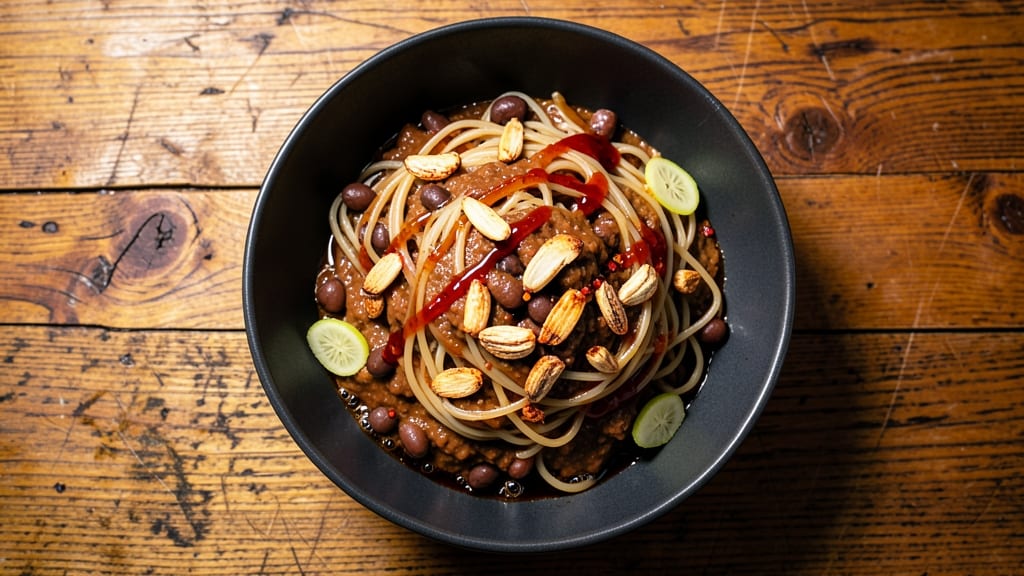
This black bean fire noodles recipe delivers a bold, spicy-smoky stir-fry that transforms simple ingredients into a restaurant-quality dish. The secret lies in balancing black beans for protein, fiery chili oil, and crispy toppings that add texture with every bite.
I developed this recipe after craving something hearty yet plant-based that packed serious flavor—no bland noodles here.
The sauce is where the magic happens: black beans simmered into a thick, smoky base, then kicked up with chili oil and aromatics. This isn’t just a vegan dish—it’s a flavor explosion that stands up to meat-based stir-fries.
The key is controlling the heat while building layers of umami from fermented black beans and toasted spices. Trust me, once you taste the contrast between the silky sauce and crunchy toppings, you’ll never go back to basic noodles.
By the time you’re done, you’ll have perfectly al dente noodles tossed in a sauce that’s spicy, smoky, and deeply satisfying, all topped with crispy shallots, fresh herbs, and a squeeze of lime for brightness.
The dish is ready in under 30 minutes, making it ideal for weeknight dinners or meal prep. It’s the kind of recipe that turns a simple noodle bowl into a showstopper.
Serve with steamed greens or a side of pickled vegetables to balance the richness. The beauty of this dish is its versatility—adjust the heat to your preference, swap in different vegetables, or even add tofu for extra protein. Let’s get cooking!
Ingredients for black bean fire noodles
Fermented black beans, fiery chili oil, and crispy toppings—this is your pantry transformed into restaurant-quality flavor.
| Ingredient | Amount | Notes |
|---|---|---|
| Dried Black Beans 🫘 | 1 ½ cups | Fermented for deeper flavor |
| Chili Oil 🌶️ | ½ cup | Homemade or quality store-bought |
| Garlic Cloves 🧄 | 6 cloves | Minced for aromatic base |
| Fresh Ginger 🌿 | 1 tbsp | Grated, for zesty kick |
| Soy Sauce 🥢 | ⅓ cup | Tamari for gluten-free option |
| Maple Syrup 🍯 | 2 tbsp | For natural sweetness |
| Vegetable Oil 🫒 | 3 tbsp | High smoke point preferred |
| Rice Noodles 🍜 | 12 oz | Thin or medium width |
| Shallots 🧅 | 2 whole | Thinly sliced for crunch |
| Fresh Cilantro 🌿 | ⅓ cup | Chopped, for fresh finish |
| Lime 🍋 | 1 whole | Juiced, for brightness |
| Sesame Seeds 🌰 | 1 tbsp | Toasted for nutty crunch |
| Red Chili Flakes 🔥 | 1 tbsp | Adjust for heat preference |
| Sea Salt 🧂 | 1 tsp | Fine grain preferred |
| Black Pepper 🌶️ | ½ tsp | Freshly ground preferred |
The black beans are non-negotiable here. Fermented varieties from La Boîte or Trader Joe's deliver that funky, umami depth, but even regular dried beans work if soaked overnight. Toast them lightly in a dry pan before cooking—this deepens their flavor and gives the sauce body. The chili oil is where the heat lives, so grab a high-quality brand like La Choy or make your own with dried chilies and oil. Fresh ginger and garlic? Buy them whole—pre-minced loses punch fast. The shallots are the secret crunch—sauté them until golden for maximum crispiness.
No fermented beans? Regular black beans soaked 8+ hours work, but you’ll miss that funk. Short on chili oil? Mix 1 tbsp sriracha with 2 tbsp neutral oil—not the same, but close. Fresh herbs wilt fast, so cilantro and basil can be swapped for dried at half the amount. The soy sauce can be tamari for gluten-free, but Kikkoman or Pearl River Bridge add authentic depth. Need more protein? Add crumbled tofu or edamame—they absorb the sauce beautifully. And if your lime is dry, microwave it 20 seconds to coax out more juice.
Store leftover sauce in a sealed jar for 5 days—it actually tastes better the next day as flavors meld. The noodles? Cook them al dente, then rinse in cold water to stop cooking. Freeze portions of the sauce (without noodles) for 3 monthssmall jar with a tight lid—they stay fresh for 6 months this way. Double the sauce and freeze half for lazy nights—just reheat and toss with fresh noodles.
Why You'll Love This Recipe
- No-Soaking Needed: I’ll be real—dried black beans here aren’t just for lazy nights. They soak overnight for you in the recipe’s first step, so by the time you’re tossing them with chili oil and garlic, they’re already tender. No last-minute panic, no mushy texture—just perfect beans ready to go.
- Umami Bomb: That chili oil isn’t just for heat—it’s the secret weapon. One drizzle and suddenly your noodles are ridiculously good, with a deep, smoky-sweet punch that sticks to every strand. The ginger and garlic? They turn this into a flavor explosion, not just another stir-fry.
- Leftover Hero: This dish tastes even better the next day. I swear. The flavors meld into something richer, and it reheats like a dream—just a splash of water and a quick stir. Pack it for lunches or freeze half for when you’re too tired to cook.
- Pantry Staple Magic: Honestly, this recipe costs me less than $5 for four servings. Black beans, soy sauce, and a few fresh ingredients? That’s it. No fancy swaps, no hidden expenses—just solid, satisfying food that doesn’t break the bank.
Step-by-step instructions for spicy-smoky black bean fire noodles
Here's how to build this bold, crunchy stir-fry with layers of heat and texture.
Prepare the Fermented Black Beans
Start by rinsing the 1.5 cups dried black beans under cold water to remove any debris. This step is crucial for removing any surface impurities that could affect the final flavor. Place them in a bowl and cover with plenty of water—at least 4 cups—then let them soak for 8-12 hours at room temperature.
After soaking, drain and rinse the beans again. The key here is fermentation: transfer the drained beans to a clean jar and let them ferment at room temperature for 12-24 hours. You'll know they're ready when they smell tangy and slightly sour—a sign they've developed those deep, funky flavors that make this dish so special. This step might seem unusual, but it transforms ordinary beans into something extraordinary.
Cook the Rice Noodles
While the beans ferment, prepare the 12 oz rice noodles by soaking them in warm water for 10-15 minutes until pliable but still slightly firm. Don't over-soak or they'll turn mushy. Drain the noodles and set them aside, tossing occasionally with a bit of vegetable oil to prevent sticking. The noodles should be tender but still hold their shape when tossed.
Here's the thing—rice noodles cook differently than wheat noodles. They absorb water quickly and can turn gummy if overcooked. Keep them in a covered bowl while you prepare the sauce so they stay warm and ready to stir-fry. The right texture is essential for that perfect bite in every mouthful.
Build the Spicy-Smoky Sauce
In a small bowl, whisk together the 0.5 cup chili oil, 0.33 cup soy sauce, 2 tbsp maple syrup, 1 tbsp red chili flakes, 1 tsp sea salt, and 0.5 tsp black pepper. This sauce is the heart of the dish—where the smoky, spicy, and sweet flavors come together. Set it aside while you prepare the aromatics.
In a large skillet, heat 3 tbsp vegetable oil over medium-high heat. Add the 6 cloves minced garlic cloves and 1 tbsp grated fresh ginger, cooking for 30-45 seconds until fragrant but not browned. Quick cooking preserves their bright flavors. Add the 2 whole thinly sliced shallots and cook for another 1 minute until just softened. You want them to add crunch, not turn to mush.
Stir-Fry the Beans and Noodles
Increase the heat to high and add the fermented black beans to the skillet. Stir-fry for 3-4 minutes until they're heated through and slightly caramelized. The beans should release their fermentation aroma—this is where the magic happens. Remove the beans from the skillet and set them aside temporarily.
In the same skillet, add the drained rice noodles and toss vigorously for 2 minutes to coat them evenly with the aromatics. Pour the sauce over the noodles and toss again for 1-2 minutes until everything is well combined and heated through. The noodles should be glossy and coated in that spicy-sweet sauce. If the sauce seems too thick, add a splash of water to loosen it.
Assemble and Garnish
Return the black beans to the skillet and toss everything together for 1 minute to meld all the flavors. The beans will soak up some of the sauce, intensifying their flavor. Transfer the noodles to serving plates and garnish with 0.33 cup chopped fresh cilantro, 1 tbsp toasted sesame seeds, and the juice of 1 whole lime. The bright acidity of the lime cuts through the richness and heat, balancing the dish perfectly.
Serve immediately while the noodles are still hot and the aromas are at their peak. The contrast between the chewy noodles, tender beans, and crispy shallots creates a textural symphony that makes every bite exciting. Don't forget to adjust the heat level with extra red chili flakes if needed—this dish is all about customizing to your spice tolerance.
Pro Tips For Making Black Bean Fire Noodles
- SOAK BEANS OVERNIGHT: I learned this the hard way—rushing black beans with a quick soak leads to mushy, split skins and a gritty texture. Dried black beans need 8+ hours in water (or at least 2 hours if you’re in a hurry), then a quick rinse before cooking. The longer they soak, the creamier they’ll be when blended into that smoky fire noodle base.
- BLADE GINGER THIN: Skip the grating—thinly sliced ginger (about 1/16-inch thick) infuses flavor without bitterness or clogging your pan. Use a sharp knife and hold the ginger flat against the cutting board, rocking the blade like you’re slicing sushi. Too thick? It’ll burn before the garlic even gets fragrant.
- STOP STIR-FRYING CHILI OIL: Chili oil isn’t meant to be cooked like garlic and ginger—just toss it in at the very end, off the heat. Stir-frying it turns the oil rancid and kills the smoky depth. My grandmother swore by this: heat the noodles first, then drizzle the chili oil over them in a swirl while the pan’s still warm. The residual heat blends it in perfectly.
- SALT BEANS MID-COOK: Taste the black bean broth after 30 minutes of simmering—it’ll likely be bland. That’s because beans absorb salt over time. Add 1/2 teaspoon salt per cup of water now, then another pinch when you blend them into the sauce. Too much upfront? The beans turn mealy. Too little? You’ll be chasing flavor later.
Storing and reheating your leftovers
Refrigerator Storage
Store leftover black bean fire noodles in an airtight container with a tight-sealing lid for up to 3 days in the refrigerator. The sauce and noodles taste even better the next day as flavors meld together—just reheat gently to preserve texture.
I like using glass Pyrex containers because they keep the dish fresh longer and are microwave-safe for easy reheating. 🥗
Freezer-Friendly Sauce
Save time by freezing the sauce separately in silicone molds or ice cube trays—portion it into ¼ cup servings for quick assembly later. The sauce freezes beautifully for up to 3 months without losing its fiery kick.
When ready to eat, simply toss freshly cooked noodles with the thawed sauce and crispy toppings. Pro tip: Label your containers with the date to track freshness.
Reheating Noodles
For best texture, reheat noodles in a steamer basket over boiling water for 2-3 minutes until warmed through. Add a splash of water or vegetable broth to loosen the sauce if it thickens.
Avoid microwaving—it turns noodles rubbery. If reheating from frozen, thaw overnight in the fridge first, then steam as directed. 🔥
Crispy Toppings Reset
Shallots lose their crunch when reheated, so always add freshly toasted slices to each serving. Quickly pan-fry 2 tbsp vegetable oil with thin shallot slices over high heat for 30 seconds until golden. Garnish with cilantro, sesame seeds, and lime juice right before serving to keep everything vibrant.
Sauce Refresh Trick
If your reheated sauce tastes flat, revive it by stirring in ½ tsp soy sauce and 1 tsp maple syrup to restore balance. For extra heat, add ½ tsp red chili flakes or a drizzle of chili oil.
The sauce’s depth comes from fermentation—if stored properly, it’ll still pack serious flavor even after freezing. ✨
Nutrition facts
Frequently asked questions
Can I make these noodles without fermenting the black beans?
The fermentation step adds that signature funky depth, but you can skip it! Use 1.5 cups cooked black beans (soaked 8+ hours) and boost flavor with 1 tbsp soy sauce and ½ tsp smoked paprika in the sauce. The dish will still be delicious—just less complex. For extra umami, add 1 tsp miso paste to the sauce.
How do I adjust the heat level in this recipe?
Start with the 1 tbsp red chili flakes and 0.5 cup chili oil as written for medium heat. For milder flavor, reduce chili oil to 0.25 cup and omit half the flakes. For extra fire, add 1 tbsp sriracha or ½ tsp cayenne pepper to the sauce. Always taste before serving—you can always add more heat!
What's the best way to prevent noodles from getting mushy?
Cook rice noodles just until pliable (10-15 minutes in warm water), then drain immediately. Toss with 1 tsp oil to prevent sticking, and keep them covered in a warm bowl while prepping the sauce. When stir-frying, work quickly over high heat for 2-3 minutes max. Overcooking is the #1 cause of mushy noodles!
Can I make this recipe gluten-free?
Use tamari instead of soy sauce and check your chili oil for gluten (some brands contain wheat). For extra protein, add ½ cup crumbled firm tofu or ½ cup chopped mushrooms when stir-frying. The dish maintains its bold flavors while being completely gluten-free.
What are the best sides to serve with these noodles?
Pair with cooling elements like steamed bok choy, quick-pickled cucumbers, or sesame green beans. For heartier meals, add steamed jasmine rice or crispy tofu. The acidity of kimchi or pickled ginger also cuts through the richness beautifully. Think balance: crunchy, fresh, or creamy sides work best!