
Soups & Stews
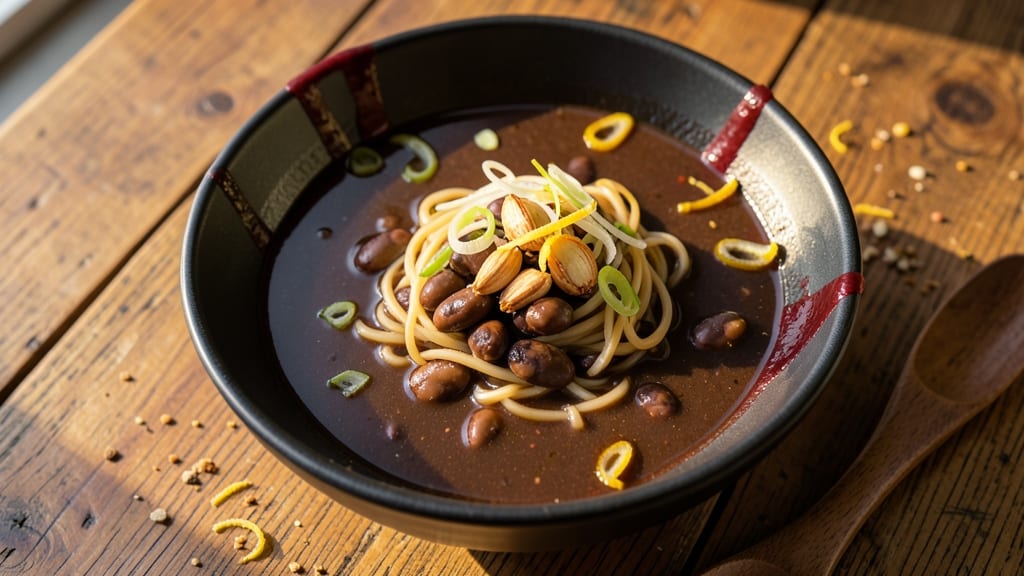
This black bean ramen recipe transforms humble pantry staples into a restaurant-worthy bowl bursting with umami depth and plant-powered protein. The secret lies in a rich, savory broth built from fermented miso, soy sauce, and black beans—simmered until the flavors meld into something deeply satisfying.
I developed this recipe after realizing how much I missed ramen's complexity while exploring vegan cooking, and it's become my go-to for cozy weeknights.
The beauty of this dish is in its simplicity—just a handful of ingredients work together to create bold, comforting flavors.
You'll start with a foolproof broth that's packed with umami from white and red miso, soy sauce, and black beans, then layer in chewy ramen noodles, crisp-tender bok choy, earthy mushrooms, and fresh green onions. The contrast between the silky broth and the crunchy, vibrant toppings makes every bite exciting.
What sets this ramen apart is how it delivers restaurant-quality results without any shortcuts. The broth simmers for 45 minutes, allowing all the flavors to develop fully, while the noodles cook just right—tender yet still holding shape.
Topped with toasted sesame seeds and a drizzle of chili oil, this bowl becomes a complete meal that's equally nourishing and indulgent.
Perfect for meal prep or a quick dinner, this black bean ramen adapts easily to your preferences. Add extra vegetables for more crunch, swap in different mushrooms, or serve it over rice for a heartier bowl.
The possibilities are endless, but the foundation remains the same—a deeply flavorful, plant-based ramen that proves comfort food can be both satisfying and nutritious.
Ingredients for black bean ramen
Pantry staples and fresh produce combine for a deeply flavorful, umami-rich black bean ramen.
| Ingredient | Amount | Notes |
|---|---|---|
| Dried Black Beans 🫘 | 1 ½ cups | Unsoaked, rinsed thoroughly |
| White Miso Paste 🧈 | ¼ cup | High-quality, fermented |
| Red Miso Paste 🧈 | ¼ cup | For depth of flavor |
| Tamari or Soy Sauce 🍶 | ½ cup | Gluten-free if needed |
| Fresh Ginger 🧅 | 2 tbsp | Finely grated, aromatic |
| Garlic Cloves 🧄 | 6 cloves | Minced, fresh preferred |
| Ramen Noodles 🍜 | 2 packages | Fresh or dried, vegan |
| Bok Choy 🥬 | 2 whole | Baby or regular, halved |
| Shiitake Mushrooms 🍄 | 8 whole | Stemmed, sliced |
| Green Onions 🧅 | 4 whole | Thinly sliced, white and green |
| Sesame Seeds 🌰 | 2 tbsp | Toasted lightly |
| Chili Oil 🌶️ | 2 tbsp | Vegan, for finishing |
| Vegetable Oil 🫒 | 2 tbsp | For stir-frying |
| Water 💧 | 8 cups | For broth and cooking |
| Sea Salt 🧂 | 1 ½ tsp | Diamond Crystal preferred |
The miso pastes are non-negotiable here—look for brands like Honten or Marukome at specialty stores or the Asian aisle. White miso adds sweetness, while red brings that deep, fermented punch. Trader Joe's carries a solid white miso, but if you're near a H Mart, their bulk bins are unbeatable for freshness. Black beans? Dried is best—they pack more flavor than canned, but if you're short on time, rinse well to remove excess sodium. The ginger and garlic are your aromatic anchors—freshly grated and minced makes all the difference. Pre-minced garlic lacks the same punch, so take the 30 seconds to chop it yourself.
No white miso? Double the red miso plus 1 tbsp maple syrup gets you close. Tamari out of stock? Coconut aminos work in a pinch, though the flavor profile shifts slightly. Fresh mushrooms unavailable? Shiitake stems or cremini mushrooms hold up well when dried and rehydrated. The bok choy can be swapped for napa cabbage or spinach if that's what you've got—just adjust cooking time. For extra protein, toss in crumbled tofu or extra black beans. The ramen noodles? Fresh vegan ramen is ideal, but dried works if you cook them separately. Just don't overcook—al dente is key for that satisfying bite.
Broth keeps for 5 days in the fridge or 3 months frozen—make a double batch, trust me. The noodles are best eaten fresh, but you can par-cook and store them separately for up to 2 days. For meal prep, assemble the bowls without the noodles, store components separately, and cook noodles fresh when ready. The sesame seeds toast best in a dry pan over medium heat for 2-3 minutes—watch them like a hawk so they don't burn. Chili oil? Store it in the fridge after opening, and it'll last for 6 months. This ramen only gets better with time—flavors meld overnight in the fridge.
Why You'll Love This Recipe
- I’ll be real: dried black beans are a steal, and a little goes a long way. That jar of miso? Lasts forever. Tamari’s cheaper than most soy sauces, and ginger’s one of those ingredients that makes everything taste better without breaking the bank. It’s the kind of meal that feeds four for under $10, yet somehow still feels like a treat.
- One-Pot Magic: Honestly, I swear by this recipe when I’m too tired to dirty three pots. Soak the black beans overnight (or use canned if you’re really pressed), then toss everything—miso, tamari, ginger—into the same pot. Simmer until the broth is rich and the beans are tender, and boom: zero extra dishes. The ginger’s sharp bite cuts through the umami bomb of the miso, but you’d never know how little effort went into it.
- Umami Explosion: Here’s what sold me—the way the white and red miso pastes blend into this deep, savory-sweet broth. The tamari adds a salty punch without overpowering, and the black beans? They soak up all that flavor like little flavor sponges. It’s the kind of dish where every spoonful tastes like you put in way more work than you actually did.
- Weeknight to Party Fix: Between us, this ramen is my go-to when I’ve got friends over but zero energy to impress. Double the batch, and you’ve got leftovers for lunch the next day—or freeze half for when you’re too lazy to cook. Add a fried egg on top for brunch, or serve it in bowls with quick-pickled veggies for a dinner that feels fancy but takes 20 minutes.
Step-by-step instructions for black bean ramen with rich umami broth
This recipe delivers deep, savory flavors through careful layering—don't rush the process, and you'll end up with a bowl that's both hearty and perfectly balanced.
Soak and Pressure Cook the Black Beans for Maximum Flavor
Rinse the 1.5 cups dried black beans thoroughly under cold water to remove any debris. Transfer them to a large pot and cover with 8 cups water by about 2 inches. Let them soak for at least 8 hours (overnight works best) or quick-soak for 2 hours—this ensures they soften evenly without splitting.
Drain and rinse the beans again, then transfer them to a pressure cooker with 6 cups fresh water. Cook on high pressure for 30 minutes after the pressure builds. The beans should be fork-tender with no resistance—this is your base for that rich, earthy broth. If they're not tender enough, cook another 5 minutes and check again. Reserve about 1 cup of the cooking liquid for later use.
Build the Umami-Packed Broth with Miso and Aromatics
In a large stockpot, combine the cooked black beans, 0.25 cup white miso paste, 0.25 cup red miso paste, and 0.5 cup tamari or soy sauce. Stir gently to dissolve the miso pastes—this is where the deep umami magic happens. Add 2 tbsp finely grated fresh ginger and 6 cloves minced garlic, then bring to a gentle simmer over medium-low heat. You want the broth to bubble softly, not boil vigorously.
Simmer uncovered for 20 minutes, stirring occasionally. The broth will thicken slightly and develop a rich, caramelized aroma. Taste and adjust seasoning with the 1.5 tsp sea salt—you're aiming for a balance between savory, slightly sweet, and tangy. If it's too thick, add ¼ cup water to reach your desired consistency. Keep the heat low to prevent burning the miso.
Stir-Fry the Vegetables for Crisp-Tender Texture
While the broth simmers, heat 2 tbsp vegetable oil in a wok or large skillet over medium-high heat until shimmering. Add the 8 whole shiitake mushrooms, sliced, and stir-fry for 3-4 minutes until they release their moisture and begin to brown. Remove them to a plate and set aside.
In the same pan, add the 2 whole bok choy, halved, and stir-fry for 2 minutes until the stems soften slightly but still retain a crisp bite. Add the 4 whole green onions, sliced, and toss for 30 seconds until just wilted. Return the mushrooms to the pan and toss everything together for 1 minute to combine flavors. Remove from heat and keep warm.
Cook the Noodles and Assemble the Bowls
Bring a large pot of water to a rolling boil and cook the 2 packages ramen noodles according to package instructions—usually 3-4 minutes for fresh or 4-5 minutes for dried. Drain immediately and rinse briefly under cold water to stop cooking. Divide the noodles evenly among 4 bowls. Ladle 1½ cups hot broth over each serving, making sure every noodle is well-coated.
Top each bowl with the stir-fried vegetables, then drizzle with 2 tbsp chili oil and sprinkle with 2 tbsp toasted sesame seeds. Garnish with additional green onions if desired. The contrast of the crisp vegetables against the silky broth and chewy noodles makes every bite satisfying. Serve immediately while the noodles are still hot and the broth is steaming.
Pro Tips For Making Black Bean Ramen
- SOAK BEANS OVERNIGHT: I learned this the hard way—rushing black beans with a quick soak leaves them tough and mealy. Cover them in cold water (at least 3 cups per cup of beans) and let them sit 12+ hours. No, you won’t forget: the smell is unmistakable when they’re ready.
- BLOOM MISO SEPARATELY: Tossing miso paste directly into hot broth kills its delicate flavor. Instead, whisk red and white miso into cold water first, then stir into the simmering broth. This keeps the umami intact and prevents that bitter, clumpy mess.
- GINGER JUICE, NOT SLICES: Grated ginger loses punch when simmered whole. Use a microplane to juice it directly into the broth—about 1 teaspoon of liquid per inch of root. The raw juice brightens the miso-tamari base without turning the broth into a ginger bath.
- SALT THE BEAN WATER: Black beans absorb flavor like sponges. Add 1 teaspoon of salt to their soaking water (and cooking water) to season them from the start. Skimp here, and your ramen will taste like you forgot the tamari entirely.
Common mistakes when making perfect results
Overcooking Noodles
I’ve ruined more ramen bowls than I’d like to admit by overcooking the noodles—trust me, it’s a crime against texture. These noodles should be al dente, with just a slight bite in the center.
The moment they turn mushy, your entire bowl loses its structure and becomes a sad, soupy mess. Cook them for 30 seconds less than the package suggests, then taste-test one noodle. If it’s still firm, they’re perfect. 🍜
Skipping the Broth Simmer
Rushing the 20-minute simmer for the broth is a huge mistake. This isn’t the time to multitask—let the miso and black beans meld together properly. If you skip this step or simmer too quickly, your broth will taste flat and one-dimensional.
The longer it simmers, the deeper the umami flavor becomes. Think of it like making a fine wine—patience is key. ⏰
Burning the Miso
Miso is delicate and burns easily, especially when exposed to high heat. If your broth starts to bubble vigorously or you see any browned bits at the bottom of the pot, you’ve crossed the line.
Always keep the heat at medium-low and stir occasionally to prevent scorching. A burnt miso paste will make your broth bitter and unpleasant. Stir gently and keep an eye on it! 🔥
Using Pre-Minced Garlic
Pre-minced garlic lacks the freshness and potency you need for this recipe. The aroma and flavor of freshly minced garlic are essential for building the broth’s depth. Take the extra 2 minutes to peel and mince your own garlic—it makes a world of difference.
If you’re short on time, at least rinse pre-minced garlic under cold water to remove some of the preservatives. 🧄
Ignoring the Vegetable Texture
The contrast between crisp vegetables and silky noodles is what makes this ramen exceptional. If you overcook the bok choy or mushrooms, you lose that satisfying crunch. Stir-fry them just until they’re tender-crisp—about 2-3 minutes total.
Bok choy should still have a slight bite, and mushrooms should be browned but not mushy. Taste as you go! 🥬
Not Toasting Sesame Seeds
Untosted sesame seeds won’t give you that nutty, aromatic kick that elevates the dish. Toast them in a dry pan over medium heat for just 2-3 minutes, shaking the pan frequently to prevent burning.
They’re ready when they’re fragrant and lightly golden. Skipping this step means missing out on a simple but crucial layer of flavor. 🌰
Nutrition facts
Frequently asked questions
Can I make this black bean ramen without a pressure cooker?
Yes! If you don't have a pressure cooker, simmer the 1.5 cups dried black beans in 8 cups water for 1.5-2 hours until fork-tender. For extra flavor, add 1 bay leaf and 1 tsp smoked paprika to the water. The broth will develop more depth during this longer cook time, so let it simmer uncovered for 30 minutes instead of 20.
How can I make this ramen spicier?
Add 1-2 tbsp gochujang (Korean chili paste) to the broth while simmering, or stir in 1 tsp chili flakes directly. For heat without spice, increase the chili oil to 3 tbsp per bowl and add ½ tsp cayenne pepper to the broth. Garnish with sliced jalapeños or red pepper flakes for extra kick.
What's the best way to store leftovers?
Store the broth separately (up to 5 days in fridge or 3 months frozen) and keep noodles uncooked. When reheating, cook noodles fresh and assemble bowls with hot broth. The vegetables are best eaten fresh, but you can store them separately for 2 days in an airtight container. Never reheat chili oil—add it fresh when serving.
Can I substitute canned black beans?
Canned beans will work in a pinch, but they lack the rich depth developed from pressure cooking. If using 2 (15 oz) cans, rinse thoroughly to remove excess sodium. For best results, simmer the beans in the broth for 15 minutes to infuse more flavor. The texture will be softer, so balance with extra crisp vegetables.
Why does my broth look cloudy?
Cloudiness usually means the miso paste didn't fully dissolve or the beans broke down too much. Stir more vigorously while simmering to emulsify the miso, and strain the broth through a fine-mesh sieve if needed. For a clearer broth, simmer at medium-low heat and avoid boiling. The flavor won't be affected—it's just about texture.